
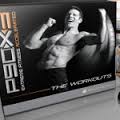
Today we have a legend of fitness …
Tony Horton is the master behind the best selling fitness program P90X®.
They have helped millions get fit. They have sold a whopping $500+ million in sales of fitness programs like the highly acclaimed P90X®, Power 90®, and the newest 30min workout P90X3.
Watch the Full Episode









Tony Horton has personally trained a list of clients that included celebrities such as Billy Idol, Tom Petty, Bruce Springsteen, and even developed workout plans for television programs such as the Dr. OzShow.
Check out his book, The Big Picture: 11 Laws that will change your life
Here’s a glimpse of what you’ll learn:
- How did he end up being a fitness expert after driving cross country?
- How did Tony make his rent and food money early on?
- What were some of the struggles before Tony made it?
- Who were his mentors?
- What is his one best piece of advice to those who would like to enter the fitness world?
- Being a fitness expert, what are few of his daily rituals he finds most important?
FUN FACT:
How did he earn food and rent money early on to survive?
Hint: He can do impersonations and he would go to the pier with a hat in hand and do his mime routine.
Tony wanted to be an actor and ended up earning money as stand-up comedian.
Resources Mentioned on this episode
- Billy Idol
- Tom Petty
- Bruce Springsteen
- Dr. Oz Show
- Beach Body
- P90 X, P90X3, Power 90®, One on One with Tony Horton
- The Big Picture: 11 Laws that will change your life
- Bucket List Interview at end with Dustin Maher and Tony Horton
- Steve Nash – Steve Nash Foundation
- Blake Griffin
- Elon Musk
Background:
Tony Horton, is the master behind the best selling fitness program in America P90X®. Tony helps people get fit all over the world by keeping them motivated in health, physique, and lifestyle. Over the last 20 years Tony has acquired, perfected, and shared his fitness expertise with countless individuals across America. From professional athletes, sports teams, television and major movie stars, recording artists to the average American, Tony has helped people turn their lives around with the perfect mix of encouragement, humor, discipline and fun.
His expertise includes post-rehabilitation training, advanced stretching, yoga, weight/resistance training, cardiovascular/aerobic training, boxing and kickboxing, plus circuit, cross and interval training. Aside from his powerful programs with Beachbody and operating ASH Fitness, a state-of-the-art training facility in Santa Monica, California, Tony hosts a minimum of three fitness camps per year where he personally helps scores of people meet their goals.
His first book “Bring It,” with Rodale books debuted January 2010, and his second eBook “Crush It,” debuted in May 2012. Tony completed a fourth tour with Armed Forces Entertainment – the Tony Horton “Ripped and Ready” Tour, where he traveled overseas to Japan, Italy, Bosnia, Kosovo and Germany. Here he reached our soldiers, airmen, sailors and their families motivating them with a fitness regime geared especially for them. Tony loved helping teach and lecture on how working out is the practical tool that helps them prepare for the rigors of their job. Tony also regularly goes to Washington, D.C., where he is the race marshal for the National Press Club’s 5K yearly Race. He also whips about 140 members of Congress into shape on Capitol Hill at the Results Gym. He did his first workout at the Pentagon this June. He has also warmed up the crowd for our First Lady, Michelle Obama and her “Let’s Move Campaign.”
Tony has been featured in numerous national publications like Men’s Fitness, Fitness, SELF, Women’s Health, People, LA HEALTH, ESPN, Washington Post, Washington Examiner, Politico, LA Times, Roll Call, Military Times and has made multiple appearances on National Television, including CNN, ABC, A&E, NBC, CBS, FOX and TV Guide Network. His training techniques have produced amazing results for TV celebrities such as Without a Trace’s Poppy Montgomery and Roselyn Sanchez, Brothers and Sisters star Rob Lowe, James Bond star Sean Connery and legendary film star Shirley MacLaine. Music celebrities such as Bruce Springsteen, Usher, Tom Petty, Billy Idol, Annie Lennox and Sheryl Crow credit Tony for their mean touring machines. Former New York Giant Carl Banks. Finally, current Philadelphia Eagle David Akers, credits the P90X® Extreme Home Fitness program with helping him set the NFL record for most consecutive post-season field goals in 2011.
With a whopping $500+ million in sales of an extremely impressive library of fitness programs like the highly acclaimed P90X®, Power 90®, One on One with Tony Horton, Ten Minute Trainer, Power Half Hour™, Tony & the Kids! (for ages 5 to 12), Tony & the Folks! (for senior citizens), and Great Body Guaranteed!™, this East Coast (Rhode Island, CT) native incorporates his personal training experience and engaging personality to get people of all ages moving and digging deep to get their best results.
Sponsor for this episode
At Rise25, we’re committed to helping you connect with your Dream 100 referral partners, clients, and strategic partners through our done-for-you podcast solution.
We’re a professional podcast production agency that makes creating a podcast effortless. Since 2009, our proven system has helped thousands of B2B businesses build strong relationships with referral partners, clients, and audiences without doing the hard work.
What do you need to start a podcast?
When you use our proven system, all you need is an idea and a voice. We handle the strategy, production, and distribution – you just need to show up and talk.
The Rise25 podcasting solution is designed to help you build a profitable podcast. This requires a specific strategy, and we’ve got that down pat. We focus on making sure you have a direct path to ROI, which is the most important component. Plus, our podcast production company takes any heavy lifting of production and distribution off your plate.
We make distribution easy.
We’ll distribute each episode across more than 11 unique channels, including iTunes, Spotify, and Google Podcasts. We’ll also create copy for each episode and promote your show across social media.
Cofounders Dr. Jeremy Weisz and John Corcoran credit podcasting as being the best thing they have ever done for their businesses. Podcasting connected them with the founders/CEOs of P90x, Atari, Einstein Bagels, Mattel, Rx Bars, YPO, EO, Lending Tree, Freshdesk, and many more.
The relationships you form through podcasting run deep. Jeremy and John became business partners through podcasting. They have even gone on family vacations and attended weddings of guests who have been on the podcast.
Podcast production has a lot of moving parts and is a big commitment on our end; we only want to work with people who are committed to their business and to cultivating amazing relationships.
Are you considering launching a podcast to acquire partnerships, clients, and referrals? Would you like to work with a podcast agency that wants you to win?
Contact us now at [email protected] or book a call at rise25.com/bookcall.
Rise25 Cofounders, Dr. Jeremy Weisz and John Corcoran, have been podcasting and advising about podcasting since 2008.
Insider Stories from Top Leaders & Entrepreneurs…
Episode Transcript
Intro: 00:14
Dr. Jeremy Weisz here, founder of InspiredInsider.com, where I talk with inspirational entrepreneurs and leaders and how they overcome big challenges in life and business. Today we have a legend of fitness. Tony Horton is the master behind the best selling fitness program, P90x. They’ve helped millions get fit. They have sold a whopping over 500 million in sales of fitness programs that include P90x, Power 9, 1 on 1 with Tony Horton and the newest one, check out P90x 3, which is a 30 minute workout.
He’s personally trained a list of clients that includes celebrities such as Billy Idol, Tom Petty, Bruce Springsteen, and many more, and develop workout plans for television programs like The Dr. Oz Show. Go check out his book, The Big Picture 11 Laws That Will Change Your Life.
Tony, thanks for joining me.
Tony Horton: 01:05
Jeremy. Great to be here, my brother.
Dr. Jeremy Weisz: 01:07
Now, I’m excited to hear your big lessons learned, mistakes in your journey, what worked? What didn’t work? I always like to include a fun fact, which is hard with you because you’ve done so many interviews that people know everything. And the fun fact you were telling me is you did something to survive. Will you tell people about that?
Tony Horton: 01:25
Well, you know, when I first moved to Los Angeles from Connecticut. I didn’t have much of a skill set. You know, I came out to California on a vacation and I realized, oh, wow, I don’t have mom and dad anymore, and I’ve run out of money. And so I survived doing different things. You know, carpentry was one I was waiting tables, washing dishes, that kind of thing.
But when I was back in Rhode Island, I had two years of mime, pantomime training, and because I was a bit shy. But I also wanted to entertain people. Mine was the perfect outlet for me because I didn’t have to talk. Right. And so, but I got to be able to move physically.
And I did the walk in the wind and the in the box. And, you know, I’d blow up a fake bubble and try to get my way out of it. And, you know, all kinds of I do the whole climb the ladder, tug of war kind of thing. And when I was flat broke on several occasions, I would have to, you know, throw on the my makeup and go down to either the Hermosa Pier, Santa Monica Pier, or sometimes I go into Westwood near UCLA and I put that hat down and I would, you know, try to make enough money so I could eat for the next couple of days. And typically I would survive on yogurt and Cheerios. That was sort of my meal of choice.
But those were brutal times. You know, it’s very different to, to perform for the fun of it, for the joy of it. You know, when you’re, you’re doing a show and people come to see you, that’s a completely different energy than one that involves you having to go down to a pier at, you know, for about 4 or 5 hours, put a hat in the ground and perform for the sole purpose of surviving. And yeah, so it’s a different energy altogether, especially if you’re out there and you’re not making any money and you’re starving to death and people are stealing your hat filled with, you know, 30, $0.35 in there.
Yeah, it was pretty brutal back in the day, but it’s a great lesson learned. And so if you really kind of want to go to the next level, in my opinion, you’ve got to have those kinds of experiences. And I had that particular experience dozens of times.
Dr. Jeremy Weisz: 03:15
That’s really tough, especially if you’re trying to feed yourself. What strategies worked when you were mine to actually get money from people?
Tony Horton: 03:22
Well, I mean, the same strategies that I use now when I’m doing one of my programs, I mean, humor is certainly part of it. You know, I mean, being very animated and being very silly and having a lot of fun. I wasn’t the kind of mime that would make fun of people. You know, a lot of mimes would see somebody who was walking funny or had a funny face, and they would kind of do that. You know, mine was a very, very physical performance.
You know, I mean, I was, you know, when I did a, a glass box or something, you know, there’s a lot of physical movement there. You know, when I’m pounding, pounding the glass, you know, and Really working, you know, to try to make my way. Oh, wait a minute. I’m in one now. Hold on. Let me lift up the window. Stick my head through. You know, I mean, it was a. I would be soaking wet. Soaking sopping wet, you know, because it’s in a way, it’s, it’s a form of, of, of using two types of movements, you know, isometrics are certainly part of mine.
Like, you know, I could keep my hand here in one place to make it feel like there’s a, there’s a glass there, but there’s a whole lot of other things that have to go on. I’ve got to keep tension here in my hand, but there’s things happening with my shoulder and my core. And at that time I didn’t you know, all I knew was that I was working my butt off and I was sweating at the end. And if I ended up with 35 bucks, I was thrilled.
Dr. Jeremy Weisz: 04:34
So you’re from the East Coast. What brought you to California?
Tony Horton: 04:38
I came out to California in 1980 for a summer vacation. I was supposed to move to Boston after four years at the University of Rhode Island and to wait tables, and with the hope that there was a modeling agency in Boston that I thought maybe I would work with occasionally, you know? But I didn’t know Boston very well. I had $400 in my pocket. And my friend from high school, Bob Hennessey, called me up.
He changed my life. And he said, do you want to come to Orange County and hang out with me for three months with the possibility of staying there? And so yeah, that sounded cool, you know, and I didn’t even get I got to Colorado Springs. No, I got to, I think I got to Colorado Springs, I ran out of money and had to break out the mime and earned.
Dr. Jeremy Weisz: 05:17
Really? It’s amazing.
Tony Horton: 05:19
Yeah. So I ran out of money there. Or was it somewhere else in Colorado? I can’t quite think of where it was, but. But Boulder, Colorado. Oh, God. I’m glad I got that fact right. Yeah. So in Boulder, I ran out of money, broke out the mime, did it, made about 125 bucks and had enough money for, you know, roadside campgrounds and gasoline and fast food before I got to Orange County.
And after the three months were up, I fell in love with this place. I mean, it was just so it was, it was the complete antithesis of what I had known on the East Coast. There’s a certain energy, a certain vibe, a certain way of thinking in New England and New York, New Jersey, you know. It’s just completely different than California. And I think it’s more homogenized now east to west because of the internet. And, you know, I mean, back in those days, you know, my mother would say, let’s keep this call under a minute because it’s going to cost you an arm and a leg.
Tony Horton: 06:12
You know.
Tony Horton: 06:14
Make doing mine for three hours at the pier. So you had to be really careful back then. And I just fell in love with it because there were opportunities here that I just didn’t exist for me on the East Coast. And I’m still on my 38 year vacation.
Dr. Jeremy Weisz: 06:27
So how did you get into fitness then? Because I read also, you did stand up comedy too.
Tony Horton: 06:32
Well, yes I did. Let me tell you how well that turned out for me.
Dr. Jeremy Weisz: 06:38
Well, it comes in handy in your videos though, right?
Tony Horton: 06:41
Yeah. I mean, I did a lot of improv comedy, a lot of sketch comedy, and I attempted stand up, which is, you know, the bear? The bear bear’s getting up there and being very raw with the hope that you’re doing something that entertains people because it’s, you know, it’s so constant. It’s, you know, you set up the joke, there’s the punchline. Well, actually set up, act out punchline tag. That’s like sort of the traditional yoga. I’m sorry, yoga. We got him back into yoga, traditional comedy sequence. And, you know, there’s a list of three. There’s all these, you know, it’s a formula like anything else.
And it was a great experience. I mean, being up on stage and being, you know, having that raw experience with an audience certainly has helped me today, especially with interviews like this or in front of a live group of people, you know, 1000, 2000, 7000 people. You know, I’m more comfortable in front of large groups of people on a camera than I am, you know, at a cocktail party.
Dr. Jeremy Weisz: 07:32
So do you still get nervous, like after doing it so many times? Do you ever get nervous or is it just come natural to you now?
Tony Horton: 07:39
Very rarely. I think if I believe that the stakes are pretty high, you know, say for example, I’m on a live morning News Network show. You know, if I’m on Fox and Friends or Today show or something like that. But you know, it’s funny. The last time I did rounds, I did a press, a press tour for X3 and the big picture.
I thought to myself, no, I’m not nervous even doing this anymore, you know, because I know what I’m talking about. Yeah, a degree that I don’t, I don’t hesitate and I don’t, I’m not that attached to the outcome. It’s like I used to be these crazy expectations of how I would like it to go. And so it would sometimes adversely affect the moment. And now I don’t care about that so much anymore because I’ve got so many kind of fun things going on that this is just one more experience in the course of my day, you know?
Dr. Jeremy Weisz: 08:25
Yeah.
Tony Horton: 08:26
So the nerves don’t exist.
Dr. Jeremy Weisz: 08:27
I was just wondering what people like the audience when they’re thinking, well, they get nervous. So one thing they could do is just detach from the outcome. And then the kind of nervousness kind of goes away.
Tony Horton: 08:37
It’s just that, you know, being okay with what’s happening right then and there and, and not being attached to what you hope will happen. And knowing your material when you sit down and talk to somebody, that’s kind of important to you.
Dr. Jeremy Weisz: 08:47
Yeah. So when did you get into fitness?
[Continue to Page 2]

Trackbacks/Pingbacks