
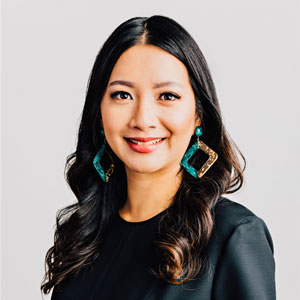
Alice Chen is the Partner & U.S. Leader at Pender Hastings Capital, a private equity firm specializing in niche, high‑return land development and real estate strategies. A former corporate and M&A lawyer, she pivoted into private equity and has built, operated, and exited multiple businesses across international trade, financial services, CPG, and technology. Named a “Top 40 Under 40” and featured in publications such as The Wall Street Journal, Forbes, and Success Magazine, Alice regularly shares her expertise through thought leadership and podcasts. She is deeply engaged in scaling U.S. land developers with strategic capital and advancing the firm’s mission to partner with founders driving long‑term value.






Here’s a glimpse of what you’ll learn:
- [03:21] How Alice Chen transitioned from law to private equity
- [04:16] Pender Hastings Capital’s unique real estate investment strategies
- [07:50] The significance of multiplex development in housing markets
- [10:16] Why major home builders outsource land development
- [11:28] How Alice discovered land development as a high-return niche
- [17:05] The strategy behind fund sizing and risk-managed growth
- [20:00] Who qualifies as an investor for Alice’s active fund
- [23:32] Qualities Alice looks for in new team members and general partners
- [36:18] Alice’s morning routine for peak productivity
- [41:34] Alice’s approach to diet and supplementation
In this episode…
Many investors struggle to find real estate opportunities that balance risk, scalability, and meaningful returns — especially in a volatile interest rate environment. Traditional multifamily strategies have become saturated or unstable, and it’s hard to identify truly differentiated theses. How can investors uncover high-return niches that are both under-the-radar and backed by strong fundamentals?
Alice Chen, an investor and private equity expert, shares how her firm navigated away from unstable multifamily deals and toward land development — an overlooked segment with a high barrier to entry. Alice explains how land development offers a built-in moat due to long-standing relationships and operational expertise that are hard to replicate. She advises investors to pursue strategies aligned with macroeconomic tailwinds, like the U.S. housing shortage, and stresses the importance of timing, mentorship, and relationship-building in achieving sustained success.
In this episode of the Inspired Insider Podcast, Dr. Jeremy Weisz interviews Alice Chen, Partner at Pender Hastings Capital, about seizing overlooked investment opportunities. Alice discusses how to evaluate land development as a private equity strategy, the importance of choosing the right co-founders, and the role personal routines play in professional success. She also shares insights on portfolio diversification, healthy habits, and early career lessons from M&A law.
Resources mentioned in this episode:
- Alice Chen LinkedIn | Website
- Pender Hastings Capital
- Mexi Seltzer
- MyFO
- Lumen Metabolism Tracker
- CALM
- Grüns
- Holos
- TripIt
- The David Ghiyam Podcast
- Mindvalley
Special mentions:
- James Livingstone on LinkedIn
- Brent Laucher on LinkedIn
- Simran Kang on LinkedIn
- Rand Fishkin on LinkedIn
- Nude Beverages
- Poppi
Related episodes:
- “[Top Agency Series & EO Chicago] Driving Digital Dominance With Mark Bealin of SearchLab Digital” on the Inspired Insider Podcast
- “[EO Chicago] Embracing Innovation and Conquering Business Plateaus With Mike Maddock” on the Inspired Insider Podcast
- “[SaaS Series & EO Nashville] How To Transform Catering Chaos Into Calm With Michael Attias” on the Inspired Insider Podcast
Quotable moments:
- “Sometimes in business, you just kind of encounter a lucky break.”
- “You can’t really engineer such a unicorn exit. You have to just work on something that you are naturally drawn to.”
- “It’s very important as a founder to just really focus on what really calls you and intrigues you.”
- “Whoever harnesses capital can do a lot of good things, right? And could do a lot of big things.”
- “A really calm nervous system — that’s really the source of all good decision-making, right?”
Action steps:
- Embrace continuous learning: Regularly updating your skills helps you adapt to market shifts and seize new opportunities.
- Build meaningful relationships: Strong partnerships and client connections open doors to new ventures.
- Stay adaptable: Pivoting strategies in response to economic shifts helps navigate uncertainty and capture emerging opportunities.
- Prioritize health and wellness: Incorporating wellness routines boosts energy and leadership effectiveness in high-stress environments.
- Invest in technology: Leveraging tools like AI improves decision-making and operational efficiency in an increasingly digital world.
Sponsor for this episode
At Rise25 we help B2B businesses give to and connect to your ‘Dream 200’ relationships and partnerships.
We help you cultivate amazing relationships in 2 ways.
#1 Podcasting
#2 Strategic Gifting
#1 Our Predictable Podcast ROI Program
At Rise25, we’re committed to helping you connect with your Dream 200 referral partners, clients, and strategic partners through our done-for-you podcast solution.
We’re a professional podcast production agency that makes creating a podcast effortless. Since 2009, our proven system has helped thousands of B2B businesses build strong relationships with referral partners, clients, and audiences without doing the hard work.
What do you need to start a podcast?
When you use our proven system, all you need is an idea and a voice. We handle the strategy, production, and distribution – you just need to show up and talk.
The Rise25 podcasting solution is designed to help you build a profitable podcast. This requires a specific strategy, and we’ve got that down pat. We focus on making sure you have a direct path to ROI, which is the most important component. Plus, our podcast production company takes any heavy lifting of production and distribution off your plate.
We make distribution easy.
We’ll distribute each episode across more than 11 unique channels, including iTunes, Spotify, and Amazon Podcasts. We’ll also create copy for each episode and promote your show across social media.
Cofounders Dr. Jeremy Weisz and John Corcoran credit podcasting as being the best thing they have ever done for their businesses. Podcasting connected them with the founders/CEOs of P90x, Atari, Einstein Bagels, Mattel, Rx Bars, YPO, EO, Lending Tree, Freshdesk, and many more.
The relationships you form through podcasting run deep. Jeremy and John became business partners through podcasting. They have even gone on family vacations and attended weddings of guests who have been on the podcast.
Podcast production has a lot of moving parts and is a big commitment on our end; we only want to work with people who are committed to their business and to cultivating amazing relationships.
Are you considering launching a podcast to acquire partnerships, clients, and referrals? Would you like to work with a podcast agency that wants you to win?
Rise25 Cofounders, Dr. Jeremy Weisz and John Corcoran, have been podcasting and advising about podcasting since 2008.
#2 Our Comprehensive Corporate Gifting Program
Elevate business relationships with customers, partners, staff, and prospects through gifting.
At Rise25, thoughtful and consistent gifting is a key component of staying top of mind and helps build lasting business relationships. Our corporate gift program is designed to simplify your process by delivering a full-service corporate gifting program — from sourcing and hand selecting the best gifts to expert packaging, custom branding, reliable shipping, and personalized messaging on your branded stationary.
Our done-for-you corporate gifting service ensures that your referral partners, prospects, and clients receive personalized touchpoints that enhance your business gifting efforts and provide a refined executive gifting experience. Whether you’re looking to impress key stakeholders or boost client loyalty, our comprehensive approach makes it easy and affordable.
Discover how Rise25’s personalized corporate gifting program can help you create lasting impressions. Get started today and experience the difference a strategic gifting approach can make.
Email us through our contact form.
You can learn more and watch a video on how it works here: https://rise25.com/giftprogram/
Contact us now at [email protected] or message us here https://rise25.com/contact/
Insider Stories from Top Leaders & Entrepreneurs…
Episode Transcript
Intro 00:15
You are listening to Inspired Insider with your host, Dr. Jeremy Weisz.
Dr. Jeremy Weisz 00:22
Dr. Jeremy Weisz here, founder of InspiredInsider.com, where I talk with inspirational entrepreneurs and leaders. Today is no different. I’ve Alice Chen of AliceChenCompanies.com where you’ll see she’s got a portfolio of companies and Alice has quite a background and she’s got a diverse set of companies in her portfolio which we will go to.
Alice, I always like to, before I formally introduce you, I always like to point out other episodes of the podcast people should check out. You know, since this is going to go on in Inspired Insider also Rising Entrepreneurs where we feature top EO members, some of the top EO members I’ve had on the podcast include Mark Baelin, where he talked about driving digital dominance. He’s got an agency. I also had on Mike Maddock. He talked about innovation and conquering business plateaus and that was a great episode. Also, Michael Attias has a SaaS company, caters in a SaaS company, else for restaurants to offer catering, you know, and that was a great one. There’s many more on Insider.com and check it out.
This episode is brought to you by Rise25. At Rise25, we help businesses give to and connect their dream relationships and partnerships. We do that in two ways. One, we’re an easy button for a company to launch and run a podcast. We do the strategy, accountability, and the full execution and production behind the scenes.
Number two, we’re also an easy button for a company’s gifting. So we make gifting and staying top of mind to your best clients, partners, prospects, even staff. Very easy. You just give us the addresses and we do everything else. Everything’s branded to your company.
You know, Alice, we call ourselves the magic elves that run in the background and make it as stress free as possible for companies to build amazing relationships so they can focus on running their business. And for me, over the past decade, the number one thing for me is relationships. And I found no better way over ten years plus to feature the people I admire in my podcast and also send them sweet treats in the mail. So you can go to Rise25.com or email us at [email protected].
I am excited to introduce Alice Chen. She’s an investor, private equity fund manager and much more. And over the past 15 years, she’s founded, scaled and successfully exited multiple businesses. We could say across international trade, financial services, consumer products, technology and investment fund management. She’s been featured in major publications like The Wall Street Journal, Forbes, Canadian Business, LA Times, and Success Magazine. She, like my business partner John Corcoran, was a practicing attorney.
And I guess John calls himself a recovering attorney. But she transitioned from practicing as a mergers and acquisitions and securities attorney and parlayed her skill set into investing across, you know, allocating capital across private equity, venture capital, tax advantaged strategies and public equity. She’s a partner at Pender Hastings Capital, which is a private equity firm specializing in niche, high return land development investments in the US and Canada. I had to get all that in because it’s impressive, Alice. But thanks for joining me.
Alice Chen 03:38
Well, thank you for having me.
Dr. Jeremy Weisz 03:40
You know, what’s interesting is I want you to talk about, you know, Pender Hastings and what you do. And there’s a couple key things that you point out when I’ve done my research is one you talk about, there’s a big moat, right? There’s actually a big barrier to entry, which is always good in a business. And also, do you plan for the exit from the get go?
So those are two things that are kind of music to my ears with what you’re doing. So talk about Pender Hastings Capital and what you do. And I’m going to pull up your site as we talk.
Alice Chen 04:16
Sure. Yeah. And thanks for doing research. I love that I was your workout companion in the past week. So clearly you’ve done your homework.
So as you said, I’m a partner at Pender Hastings Capital. We are a real estate private equity firm. We have strategies in both Canada and in the US. So as a private equity firm, what we’re looking for are big problems to solve, big problems to solve with capital as well as strategy. And real estate is actually hyper local.
You know, I’m sure yourself and also people in the audience that have reinvested in real estate, you would know that what works for one market does not necessarily translate to another. So for us in our home market, which is Vancouver, Canada, what we do is specifically something called multiplex development strategy. So it’s a subset of multifamily development. And what happens in Vancouver is that because of the lack of housing, the government passed a new law about two years ago to exempt zoning. If you want to convert a single family home lot into a multiplex, meaning a four plex, a five plex or six plex, right?
So that works for cities that have very confined land to build on. So urban centres like Vancouver and then, you know, going south into Seattle, Bay area, San Diego .We call it ADU, accessory dwelling units. So ADU increasing density through add build outs. That’s the term we use in the States. But in Canada we call it multiplex development.
So we have a fun family that’s focused on that. And in the States, my business partner James, who you see here on the website, we’ve spent the last couple of years actually taking our time to look into different potential strategies. So in 2022, James actually spent the entire year in Texas, mostly around the Dallas area, looking at value-add multifamily. But of course, we know that the interest rate started to hike up in the second half of the year. And so with that happening, as well as some of the rents falling in certain geographies, that basically wiped out a lot of the equity in the deals in multifamily.
So that makes that strategy not a thing to pursue. Right? So since then we, you know, focus on the Canadian strategies and then look at different things. We looked at building single family homes in Florida in scale, you know. Build to rent communities. We looked at different things and I would say sometimes in business, you just kind of encounter a lucky break. And that’s kind of what happened to us. So about a year ago. I attended a real estate conference, and I bumped into a best in class land developer.
We are now capital partners to best in class land developers in the country, in the US that turn raw land into finished lots for national home builders like the D.R. Horton, Lennar. You know Toll Brothers, these really skilled home builders. And so land development is not something that you hear about every day, right? So certainly, you know, in everyday conversations, it’s rare that someone would be talking about that.
And so it feels to me that well, one, it’s a very refreshing thesis. And we like a big problem. It’s a big problem because I don’t know if you know, but there’s actually a deficit of 4.8 million single family homes in the United States. And that is partially or mostly due to the trend of under-building since the last financial crisis. You know, of 2010.
So builders halted the build outs as well as they kind of went into this pattern of under-building and that created this pent up demand of single family homes. And so yeah, so we, you know, as a private equity firm, we want to look at a problem that’s big enough that we can solve with capital N strategy in the coming three, five, ten years. Right. Because we’re putting in all this infrastructure, human capital bandwidth into studying something. So we want to have a return on that investment.
And so that’s why we decided to focus on land development. And I’ll talk about the moat as well as Is the built in exit. So why is there a molt? Well, it’s because well, one, it’s hard to break into that industry. So typically people become land developers because they are from construction background. Or maybe they are in some type of development projects, and they just started to do a lot of land development and notice that they have an advantage in that. Right? So due to their team, due to their skill set or temperament relationships, they then find themselves wanting to really focus on that.
So our best in class land development operating partners have very long standing relationships with these national home builders. So D.R. Horton is a very interesting company. $35 billion annual revenue company backed by Warren Buffett, for example. It’s a public company, you know, a multi-billion dollar market cap company. So for them, such a, you know, at such a big company scale, 81 profit centers across the USA. Guess how many homes they typically build in a year?
Dr. Jeremy Weisz 09:49
I mean, Alice, I’ve listened to you so many times, so I actually know the answer to this. But usually you say 90 to 100,000. So.
Alice Chen 09:57
Yes. Okay. Very good. Yes. Yeah. So I mean, that was a surprise to me because I would think a company at that kind of scale, they would be building at least.
Dr. Jeremy Weisz 10:06
If you asked me and I didn’t do the research, I yeah, I would, I would say like a half a million. I mean I don’t know based on what you’re saying, the stats are, you know.
Alice Chen 10:15
There you go. Yeah. So we’re talking about all these home builders needing paths to build their homes and the reason why they don’t like to do the land development themselves is because ownership of land while you do entitlements or while you do horizontal developments, that actually shows up. The ownership line shows up as a liability on your balance sheet. So they tend to want to outsource this part to third parties. So yeah. So that’s why we saw this opportunity.
It’s a very tight knit group of people that just focus on land development, pure play land development, where they, you know, by, let’s say they buy an entitled piece of land from a home builder at $30,000 a lot, and then they sell it back to the home builder, $70,000 a lot once they put in the roads and infrastructure. So such a thing is called horizontal development. Yeah. So it’s.
Dr. Jeremy Weisz 11:08
I’m curious. When you were at the conference, right. Someone speaking, I’m sure there were a lot of people at the conference that didn’t do anything with the information. Right. And you actually saw, what did you see in that short period of time that the person was talking that you’re like, I think this is our next big thing.
Alice Chen 11:28
Well, I mean, that’s kind of the secret sauce of being in the investment business, right? You’re constantly scouting for something that’s different, something that has alpha, right? So for me, well, one, I’ve never heard of it, so I’m intrigued about something that I didn’t know. So that kind of piqued my interest. And, you know, wanted, you know, I felt this urge to learn more about it.
And with this person that I met, a conference seems to have done really well doing this. And so the more we dug into it, it took us about eight months of operator due diligence, like we began a dialogue with this party, and we met every two weeks or so, literally, with no kind of business in mind and just got to know each other, got to know the business. The more we learn about it, the more we’re like, wow, like this is real estate’s best kept secret. How come we didn’t know about it, right? And, I mean, there’s incentive for people in this field not to talk too much about it because they want the business to themselves.
Like our best operator, they have businesses across the Sunbelt states, like multiple states, like, you know, hundreds of millions of, you know, project value pipelines. So if you can execute at that scale, like, why? Why share the pie, right? So I don’t think there’s much incentive for the people in this space to be talking too much about it. But for me, it was just kind of a rare unicorn combo of, okay, hearing something new, something that kind of makes sense just based on what I know about the economy and where we are in the economic cycle.
Meeting an operator that seems to have done really well for himself and, you know, just kind of liking all these elements. So it’s no different than when you’re, you know, if you’re working in entertainment, you’re scouting for a new, I don’t know, Taylor Swift or some pop star or an actor. You just kind of have it. You kind of hone the instincts over time, and you just kind of know, you know, something special when you see it.
Dr. Jeremy Weisz 13:24
Totally. And talk about how you met James?
Alice Chen 13:28
Yeah. So James is actually my original mentor in finance. So I, I think before we started recording podcasts. We were talking about just what I’ve done. So I’m an entrepreneur that is driven by passion. So I go where my passion goes. You know, I, for example, would not ever see myself owning a toilet manufacturing company because I’m not passionate about toilets. I never will be.
Dr. Jeremy Weisz 13:55
I’m passionate about bidets, actually. So.
Alice Chen 13:58
Okay, there you go. Yeah. Well, that’s actually, you know, some people have made really good business out of that thesis. But for me, my first business was in international trade, exporting Canadian wine to Asian markets. And that got me a top 40 under 40 title back in 2013. It’s hard to believe that’s more than ten years ago.
So from there, I then went back into mergers and acquisitions. I ran a boutique advisory firm, which was then acquired by PricewaterhouseCoopers. So when I did these interesting things, I got a lot of media attention in my home market of Vancouver, and I think James looked me up on LinkedIn when I was doing the M&A advisory firm, and he was just building his very first private equity fund. And in my mind, I’ve always wanted to work with capital, right.
Because who, like whoever that harnesses capital, can do a lot of good things, right? And could do a lot of big things and hopefully not bad things. But, you know, it’s just such a valuable asset. So I wanted to learn everything about capital. So I figured, well, you know, James is building his first private equity fund. He has the temperament of a teacher and coach. Like he really loves teaching. And so he said, okay, well, this is what I’m doing. I love to teach you everything about private equity. So I was a very willing and again, lucky student to have come upon my teacher.
So I invested as his early investor. His fund did really well. I went on to kind of cut my teeth fundraising.
Dr. Jeremy Weisz 15:36
Was that fund in real estate as well? The one.
Alice Chen 15:39
It was actually traditional private equity. So buying businesses, boring gadget factories that spit out a very quality, you know, earning stream of cash. Right. So we like those businesses and private equity. So yeah.
So just kind of, you know, practice and fundraised using his fund and eventually learned enough to aggregate all the top real estate funds in Canada and became a fund and fund manager myself. So this is apart from what James was doing. Yeah. And then we reunited about two years ago when he’s exited his prior venture. And I, you know, have done a five years or so of startups and wanted to come back into investing.
And coincidentally, we’re both looking at real estate and wanted to come together. So it was a little bit like the band had disbanded. The band members went on to do their solos, but then they came back to do a reunion tour. So this is a little bit of that reunion tour for us.
Dr. Jeremy Weisz 16:39
I’m curious. Alice. So you’re like, okay, let’s start Henry Hastings Capital. We have a thesis. We have what you call real estate’s best kept secret. That should be a tagline on your web page there on Hastings. But how do you decide how much money, capital to raise. And then also, I don’t know how many different funds you have to raise, you know, throughout.
Alice Chen 17:05
Yeah, those are great questions. So one, it took us a long time to decide on a strategy because we took it very seriously. Right. We didn’t want to just become yet another multifamily value add strategy fund manager. So we were looking for something different. And I just explained how we got there.
And so we wanted to raise a fund that can accommodate our thesis in a way that’s maximizing capital return by minimizing risk. So the difference between a syndication and a fund is that a syndication is typically a singular asset, and a fund is typically multiple assets but in the same thesis. So how much goes into a fund. Whether a fund is $5 million, $15 million, which is our kind of, you know, ceiling or $500 million? It depends on a variety of factors.
So for us, each project that we invest in typically requires about $2 million of investor equity. So if you think about a $10 million land development deal, horizontal development deal that builds 500 homes, for example. So typically in that capital stack, 75% comes from the debt. It’s a loan acquisition and development loan. And then there’s a portion, the remainder of the 25% of a portion of that actually comes from the home builder themselves. They have a deposit of 10% to 20% of the ultimate sale price or buyback price that they have to pay, like throughout the project length. So in the two years that the project is underway, you have a take down schedule you got to follow. So every 50 lots delivered, you pay down a little bit more towards that deposit. So our fund actually funds the rest which is called the investor equity.
So because on average we are typically looking at, you know, the projects needing about anywhere from $2 million to $8 million of investor equity. So if we are fine, we want to diversify our risk by investing in multiple projects. Let’s say in a $15 million fund, we’re looking at investing 4 to 6 projects. Then then, you know, you just kind of work backwards to decide what is an appropriate amount. And also you want to maybe do a smaller fund one.
And then once you prove out the concept, you can then go to a font to maybe font two would be $30 million or $50 million, right. So there’s different, It’s an art. It’s a science, but it’s more of an art I find. And it’s just, you know, you have to rely on your business judgment and understanding of the market conditions to, to make those determinations.
[Continue to Page 2]