
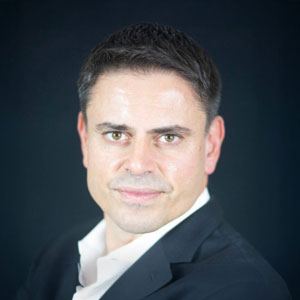
Alexander Landa is the Co-founder and CEO of Akiva, an AI-driven immersive learning platform that helps neurodivergent individuals build skills through engaging virtual reality lessons. Driven by his experience as a father navigating special education challenges, he founded Akiva to help families, clinicians, and educators foster meaningful progress. With over 25 years of leadership in software and tech startups, Alexander brings deep expertise in building and scaling innovative products. Under his leadership, Akiva continues expanding access to inclusive, science-backed learning experiences that empower users to thrive.





Here’s a glimpse of what you’ll learn:
- [1:20] Alexander Landa explains how Akiva uses VR and AI to support neurodivergent learners
- [4:05] The personal journey behind Akiva’s founding and his son’s autism diagnosis
- [7:49] Why Meta Quest is the platform Akiva chose for immersive learning experiences
- [12:40] How Akiva AI predicts progress and recommends personalized learning paths
- [15:49] Alexander discusses therapy models like ABA vs. the SPACE framework
- [18:15] Favorite tools, books, and resources that help build and grow Akiva
In this episode…
Immersive technology is changing the way people learn, connect, and grow — especially for those who experience the world differently. From virtual reality classrooms to AI-powered skill development, new tools are opening doors for more inclusive education. Could immersive learning be the key to helping neurodivergent learners thrive with greater confidence and independence?
Alexander Landa, a longtime enterprise software leader and immersive learning innovator, believes it can. He explains that combining virtual reality with artificial intelligence creates a more supportive and engaging environment for individuals with autism, ADHD, dyslexia, and other neurodivergent conditions. He highlights how Akiva’s platform personalizes learning through recommendation models and progress prediction, giving families and educators clearer insight into development. This approach helps learners build essential life and communication skills in a way that feels natural and empowering. He also shares why accessibility and dignity are central to the mission.
In this episode of the Inspired Insider Podcast, Dr. Jeremy Weisz speaks with Alexander Landa, Co-founder and CEO of Akiva, to discuss immersive learning for neurodivergent learners. They explore how VR and AI support autism education, why Meta Quest is a powerful delivery tool, and the SPACE framework behind Akiva’s approach. Alexander also shares his favorite resources and business-building lessons.
Resources mentioned in this episode:
- Alexander Landa on LinkedIn
- Akiva
- Meta Quest
- ABA Educational Resources
- ChagtGPT
- Canva
- Figma
- C# Dev Kit
- Microsoft Azure
- Telegram
- Slack
- Alex Hormozi Books
- Red Rising Saga by Pierce Brown
- The Chronicles of Amber by Roger Zelazny
- The Hard Thing About Hard Things: Building a Business When There Are No Easy Answers―Straight Talk on the Challenges of Entrepreneurship by Ben Horowitz
- Zero to One: Notes on Startups, or How to Build the Future by Peter Thiel and Blake Masters
Related episodes:
- “Parent Guide to Helping Your Anxious Child (Plus Magic Tip To Avoid Three Hours of Tuck-in Time)” on the Inspired Insider Podcast
- “The Future of Ethereum, Ukraine Efforts, NFTs, and More With Dmitry Buterin, Co-Founder of Blockgeeks” on the Inspired Insider Podcast
- “[Top Agency Series] NFTs, the Metaverse, and Advertising in the Digital World With Chris Madden” on the Inspired Insider Podcast
Quotable moments:
- “Our goal as we started is to help autistic individuals. And then we extended and expanded this goal.”
- “The challenge is that the way that neurodivergent individuals learn is very different from people who don’t.”
- “We use Meta Quest as a delivery mechanism for this immersive learning.”
- “We can predict when a father will come in, and we’ll ask, what’s the chances that my kid will speak?”
- “If you give 150% of yourself to solve a business and technology problem, then more likely than not, you’re going to win.”
Action steps:
- Explore immersive learning tools for neurodivergent learners: Using VR-based platforms can create engaging, supportive environments for skill-building and growth.
- Adopt technology that personalizes education paths: AI-driven recommendations help learners progress at their own pace and focus on meaningful milestones.
- Focus on dignity-centered frameworks like SPACE: Approaches built on sensory predictability, acceptance, communication, and empathy foster more effective learning outcomes.
- Leverage accessible platforms like Meta Quest for delivery: Affordable, widely available VR hardware makes immersive education more scalable for families and schools.
- Combine innovation with mission-driven impact: Building solutions rooted in real human needs ensures technology serves both learners and the broader community.
Sponsor for this episode
At Rise25 we help B2B businesses give to and connect to your ‘Dream 200’ relationships and partnerships.
We help you cultivate amazing relationships in 2 ways.
#1 Podcasting
#2 Strategic Gifting
#1 Our Predictable Podcast ROI Program
At Rise25, we’re committed to helping you connect with your Dream 200 referral partners, clients, and strategic partners through our done-for-you podcast solution.
We’re a professional podcast production agency that makes creating a podcast effortless. Since 2009, our proven system has helped thousands of B2B businesses build strong relationships with referral partners, clients, and audiences without doing the hard work.
What do you need to start a podcast?
When you use our proven system, all you need is an idea and a voice. We handle the strategy, production, and distribution – you just need to show up and talk.
The Rise25 podcasting solution is designed to help you build a profitable podcast. This requires a specific strategy, and we’ve got that down pat. We focus on making sure you have a direct path to ROI, which is the most important component. Plus, our podcast production company takes any heavy lifting of production and distribution off your plate.
We make distribution easy.
We’ll distribute each episode across more than 11 unique channels, including iTunes, Spotify, and Amazon Podcasts. We’ll also create copy for each episode and promote your show across social media.
Cofounders Dr. Jeremy Weisz and John Corcoran credit podcasting as being the best thing they have ever done for their businesses. Podcasting connected them with the founders/CEOs of P90x, Atari, Einstein Bagels, Mattel, Rx Bars, YPO, EO, Lending Tree, Freshdesk, and many more.
The relationships you form through podcasting run deep. Jeremy and John became business partners through podcasting. They have even gone on family vacations and attended weddings of guests who have been on the podcast.
Podcast production has a lot of moving parts and is a big commitment on our end; we only want to work with people who are committed to their business and to cultivating amazing relationships.
Are you considering launching a podcast to acquire partnerships, clients, and referrals? Would you like to work with a podcast agency that wants you to win?
Rise25 Cofounders, Dr. Jeremy Weisz and John Corcoran, have been podcasting and advising about podcasting since 2008.
#2 Our Comprehensive Corporate Gifting Program
Elevate business relationships with customers, partners, staff, and prospects through gifting.
At Rise25, thoughtful and consistent gifting is a key component of staying top of mind and helps build lasting business relationships. Our corporate gift program is designed to simplify your process by delivering a full-service corporate gifting program — from sourcing and hand selecting the best gifts to expert packaging, custom branding, reliable shipping, and personalized messaging on your branded stationary.
Our done-for-you corporate gifting service ensures that your referral partners, prospects, and clients receive personalized touchpoints that enhance your business gifting efforts and provide a refined executive gifting experience. Whether you’re looking to impress key stakeholders or boost client loyalty, our comprehensive approach makes it easy and affordable.
Discover how Rise25’s personalized corporate gifting program can help you create lasting impressions. Get started today and experience the difference a strategic gifting approach can make.
Email us through our contact form.
You can learn more and watch a video on how it works here: https://rise25.com/giftprogram/
Contact us now at [email protected] or message us here https://rise25.com/contact/
Insider Stories from Top Leaders & Entrepreneurs…
Episode Transcript
Intro: 00:15
You are listening to Inspired Insider with your host, Dr. Jeremy Weisz.
Dr. Jeremy Weisz: 00:22
All right, Jeremy Weisz here. And I’m excited. This is part of the top resource series where we geek out on. It could be apps, software, resources, books. And Alexander has some good ones for us.
Before we get to it, I want to introduce Alexander Landa. He’s the co-founder and CEO of Akiva Labs. And I’m going to pull up the the site in a second. But Akiva’s mission is to ensure that every neurodivergent and neurotypical person has affordable access to educational system. That really, I guess you would say, enables them to develop their unique abilities to learn, explore and thrive. He has over 25 years experience in enterprise software. He’s led global teams, managed panels of $70 million plus at startups in fortune 100 companies. Alexander, thanks for joining me.
Alexander Landa: 01:07
Jeremy. Thank you very much for having me today. It’s a pleasure and privilege to be here.
Dr. Jeremy Weisz: 01:12
I’m going to start off and just tell us about Akiva and what you do. I’m going to pull up the website as you’re talking.
Alexander Landa: 01:20
Thank you. So Akiva is the immersive learning platform. And by that I mean we combine technologies such as virtual reality and artificial intelligence. And our goal as we started is to help autistic individuals. And then we extended and expanded this goal to all neurodivergent individuals. And for those of you who don’t know and haven’t heard the term neurodivergent, it’s typically the individuals who have autism, OCD, ADHD, dyslexia, proxy, Alger Tourette syndrome, and a few other less well known situations. We don’t really call them diseases. And the reason is, is because everyone is unique and have unique abilities, and that’s how we’re looking at it.
The challenge is that the way that neurodivergent individuals learn is very different from, you know, people who don’t have these special abilities. And so therefore they need more kinder way to describe the same type of cognitive and learning skills that will enable them to not only live independently, but live with dignity, which they don’t right now, have a meaningful job and become contributors to our society.
And that’s really what our vision and mission is at Akiva, the way we started. We started, you know, about in the early 2020. And what we’ve been dreaming about building this company, my co-founder and I, for a while, just technology wasn’t there. And the catalyst for it was actually my son, my oldest son. His name is Akiva, and he’s a bit of a miracle. I’ll explain why.
So at the age of two and a half, Akiva was diagnosed with severe autism. The doctors at the time said, you know, the best professionals in the field said he will never speak. He’ll never be independent. He’ll never have friends. He’ll. There are a lot of those nevers. And so, you know, I just couldn’t believe that. That I should succumb to this kind of diagnosis. And so we went on a journey with Akiva, and we tried different things. And as sort of a miracle, you know, I’m going to skip all the things that we’ve tried.
Dr. Jeremy Weisz: 03:58
How old was he at the time? Two and a half. He was two and a half. And he was not talking. And you brought him to the doctor?
Alexander Landa: 04:05
No. He was staring at one place. Sometimes. He had, you know, saliva coming from his mouth and, you know, and so we were very concerned as parents, you know, my wife was pregnant with our second boy. And of course, she was terrified when she heard the diagnosis. But, you know, I’m going to skip to the rest of the story because it has a happy ending.
Well, it’s not an ending yet, but it’s a happy continuous, if you will. And happy continuous is that the Akiva is 15 right now he is in the mainstream high school in Santa Monica, California. He’s officially bilingual. And this is not something that I’m saying it’s the you know, it’s the school board that gave him a diploma that he, you know, speaks English and another second language. And so, you know, he has a best friend, which is amazing. I have to tell you really quickly, they became friends in elementary school and we had no idea during the graduation.
So, you know, the school forces kids to say a few words about like what they’re grateful for. And then there’s this kid that I’ve never seen in my life, and his name is Ethan, and he goes on stage and he goes, you know, I’m thankful and I’m grateful for my best friend. And his name is Akiva. You know, I tell you, I would like to think of myself as a pretty strong man who controls his emotions. But I just burst out in tears when that happened.
And so, you know, all these experiences, you know, led me to believe that there are millions or as we learned, it’s over a billion people who are like my son in the world. And there are subsequently as many parents who are dealing with the same problem. And so what I realized is that there has to be a way using my technological mind and ways to build mission critical systems for my clients in the past, which were Universal Pictures, General Electric’s Hewlett Packard, I used to work for Marc Andreessen, Ben Horowitz in their last startup before they became a very famous venture capitalist. Opsware.
So I had all this experience and I’m like this has to be it. This has to be my mission to build this ecosystem, technological ecosystem so we can give access. Right. So it doesn’t matter where you live in the world, you need to have access. You can’t drive hundreds of miles to see their point, to see your therapist for the appointment. So that’s how the idea was born. And we continue working every day meticulously, very focused on, you know, improving the product and making sure that people know about us.
We’re still a very tiny startup at this moment. But, you know, it was a huge impact. So when people learn about us, they’re like, well, how can I help? And this is great. This is amazing to be doing what I’m doing. And you know, like I said, my co-founder, you know, the reason why we got together is he has a similar situation. His name, his son’s name is Aiden and he’s also autistic. But unfortunately he didn’t have the same therapies. He didn’t have access to the same therapies my son had. And therefore, unfortunately, he never became verbal. Right. So this is the thing, you know, we want to help children like us. We want to help parents like us. And we have just a thing that will help.
Dr. Jeremy Weisz: 07:42
So someone has the, this is a function on the Oculus Quest. Is that how they use it?
Alexander Landa: 07:49
Correct. We use Meta Quest as a delivery mechanism for this immersive learning. We standardized on Meta Quest technology because Mr. Zuckerberg and Meta had invested billions of dollars into this technology and made it really amazing. Palmer Luckey, who, you know, originally created Oculus Quest, you know, kind of opened the floodgates, if you will, for people like me to think about other computing platforms and what they can do and the practical use cases that are helpful to individuals like myself, for example. So, you know, again, we’ve tried multiple different platforms, but we standardized on Meta Quest and Meta Quest three is the best virtual reality technology in the world.
And one of the, you know, two cool things that we found. One is, you know, when we develop our software, we did it in such a way that it’s a haptic interface. So once you immerse into that world, you know you don’t have to have any joysticks. You know, you just observe and you can interact with virtual objects inside with your hands and with your fingers. And this is huge for our audience because a lot of them have challenges with fine motor skills. So this is incredible. As you can see, you know, kids and adults love it because they can do things like tracing letters. They can play around with different objects. They can learn while they’re playing. And this is what’s terrific about it.
And the second thing that is really amazing is that Meta was very thoughtful about creating this technology and giving us tools to collect data on how users interact with the digital objects inside of the virtual reality so we can record voice. We can record the position of the body, how you move hands and fingers at certain point. And that gives us a really terrific opportunity to look at this very large data set and use the power of AI. But the way we use it in two different ways, right.
We’re first of all, we’re not you know, we’re not writing new LLMs. We’re not competing with GDP, we’re not doing any of this. But what we’re doing is, number one, we’re using it as a recommendation engine. And what recommendation engine is, is, for example, when you watch Netflix and you’re done with watching a show that you like, it typically recommends you a next show. So similarly, Akiva AI recommends a new course and next course for you to learn based on a specific baseline that the skills that you have and how you can acquire those skills faster. So it’s a recommendation.
And then the second way we use AI is when we, and this has been a dream of mine, I wanted to be able to predict certain events. And what I mean by this, back in the day when my son was going through these therapies, I would be in front of several therapists and I would go, listen, you are the best speech pathologist in the world. You working with my son? You’ve been working. When is he going to speak? Tell me. Like I literally was in their face every day. And like, Mr. Landa, you have to understand we’re doing the best we can. I’m like, yeah, but we’re in the 21st century. What do you mean you can’t predict? Okay.
And so the way we built Akiva AI, because of the technology that meta created in the kit, is that we can predict when a father will come in and we’ll ask, well, what’s the chances that my kid will speak and win? So our software will calculate that using AI models that were built and predict that, you know, your son will speak within two and a half years, and it’s a 65% chance that he will. And this is huge for every parent like me. Because, you know, you just have this terrible thing going on inside of your brain. Like how my kid is going to live in this world. And the biggest thing that most parents, you know, are afraid to talk about, what happens with my kid, when I’m going to die.
You know, most parents are afraid to even, you know, open up about it. You know, I’m not afraid because, like, you know, I’ve been through this journey. I’ve been through a lot and I wouldn’t change it for the world. Right. But I’m here to help, you know, not just children like my son, but also parents as well, because they need a lot of help. You know, it’s, you know, it’s emotionally challenging. It’s financially challenging. It’s like it has a big toll on your life, on your relationship with your spouse, with your family, with everyone. It’s a big social, you know, problem in society on, you know, national level.
You know, several months ago, President Trump spoke about it at length and he thankfully made it a priority and, you know, offered up hundreds of millions of dollars for research. So we’re very happy to hear that message. So finally, there is an attention to the fact that, you know, the number of children in the United States and in the world, for that matter, we’re in 1 in 31 right now, diagnosed as autistic.
That’s a 16% increase year over year. The projection is that every single 1 in 3 kids will be autistic by 2035. Think about those numbers, right. And how much resources do you think insurance companies are paying right now? It’s costing them $150,000 a year to care for, for, you know, an individual like that.
But the problem is that, you know, the providers and some of them are great providers and they don’t take insurance, right? But the providers that take insurance, they bill hourly and they never produce any results. So you can’t track results until Akiva came along. Akiva.ai. Because we can track results, we can connect with the payers and payers. You know, insurance companies can demonstrate that.
Look, you know, I’m going to pay you Mr. Provider or Miss Provider by results. I’m going to pay you double but show me the result.
[Continue to Page 2]