
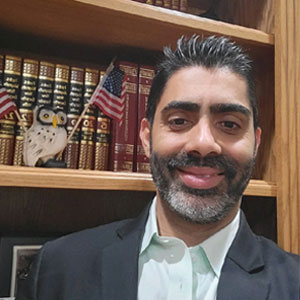
Vikram Seth is the Co-founder and Product Visionary at Ducknowl, a talent-screening and assessment platform that helps employers make faster, smarter, and more data-driven hiring decisions. He is also a Co-founder of Simpalm, a company that provides software and services focused on IT and staffing solutions. With more than a decade of management and IT staffing experience and a master’s degree from Georgetown University, he brings deep expertise to digital innovation in recruitment. Vikram also supports sustainable organic farming in the Chicagoland area.






Here’s a glimpse of what you’ll learn:
- [3:35] Vikram Seth explains how Simpalm grew into a people-focused technology staffing partner
- [6:49] How video screening and skills tests help companies see talent beyond the resume
- [9:50] What AI proctoring reveals about fairness and integrity in candidate assessments
- [13:08] Why chasing the perfect candidate causes leaders to miss strong talent
- [20:00] How remote Latin American talent streamlined operations for a multi-location pizza business
- [31:26] What immigrant coworkers taught Vikram about resilience
- [37:53] How walking into the Georgetown dean’s office changed Vikram’s path
- [48:13] Why mentors and EO relationships shaped Vikram’s entrepreneurial journey
In this episode…
Building better hiring systems isn’t just about speed — it’s about finding ways to truly understand talent, reduce bias, and streamline decision-making. Many leaders still struggle with outdated processes that overlook talented individuals and waste time and resources. So how can technology and smarter talent solutions transform the way companies hire?
Vikram Seth, a leader in technology-driven hiring innovation, believes companies improve dramatically when they look beyond resumes and adopt structured, consistent evaluation methods. He highlights how video screening, skill-based assessments, and integrity-focused tools help hiring teams gain clearer insight into candidates while reducing costly misjudgments. The result is a more efficient, equitable, and data-informed hiring workflow that helps businesses scale with confidence. Vikram also emphasizes the power of global talent and why embracing modern staffing models opens new doors for growth.
In this episode of the Inspired Insider Podcast, Dr. Jeremy Weisz speaks with Vikram Seth, Co-founder and Product Visionary at Ducknowl, to discuss building better hiring systems through technology and smarter talent solutions. They explore how structured assessments mitigate bias, how global talent enhances operations, and how real-world staffing challenges drive innovative solutions. Vikram also talks about the mindset that shaped his entrepreneurial journey.
Resources mentioned in this episode:
Special mention:
Related episodes:
- “[AI Series] AI Tools That Transform Your Business With Nicole Donnelly” on the Inspired Insider Podcast
- “EO Arizona | How To Transform Your Marketing Fortunes With David Anderson, CEO of Off Madison Ave” on the Inspired Insider Podcast
- “EO Atlanta | You Can Have It All With Ethan King, Co-Founder of Zeus’ Closet” on the Inspired Insider Podcast
Quotable moments:
- “That technology can actually help us to get into the front of those hiring manager.”
- “You know, like a Ducknowl will give you a fair chance to showcase your skill set in a video format.”
- “In my experience, that makes entire process, you know, the data-driven, you know, and the bias-free.”
- “If I want to live in United States, I need to go and educate myself, right?”
- “I personally believe where there is a will, there is a way.”
Action steps:
- Leverage structured screening tools in hiring: Using consistent interview questions and skill assessments creates fairer, more objective candidate evaluations.
- Incorporate video-based evaluations: Allowing candidates to express themselves on video reveals communication skills and personality beyond a resume.
- Utilize global talent for operational support: Accessing international team members frees leaders to focus on strategy, growth, and higher-value work.
- Adopt technology-driven integrity checks: Tools like AI proctoring help ensure honest assessments, protecting the quality of your hiring pipeline.
- Prioritize continuous process improvement: Regularly reviewing and refining hiring workflows leads to faster decisions, better outcomes, and stronger teams.
Sponsor for this episode
At Rise25 we help B2B businesses give to and connect to your ‘Dream 200’ relationships and partnerships.
We help you cultivate amazing relationships in 2 ways.
#1 Podcasting
#2 Strategic Gifting
#1 Our Predictable Podcast ROI Program
At Rise25, we’re committed to helping you connect with your Dream 200 referral partners, clients, and strategic partners through our done-for-you podcast solution.
We’re a professional podcast production agency that makes creating a podcast effortless. Since 2009, our proven system has helped thousands of B2B businesses build strong relationships with referral partners, clients, and audiences without doing the hard work.
What do you need to start a podcast?
When you use our proven system, all you need is an idea and a voice. We handle the strategy, production, and distribution – you just need to show up and talk.
The Rise25 podcasting solution is designed to help you build a profitable podcast. This requires a specific strategy, and we’ve got that down pat. We focus on making sure you have a direct path to ROI, which is the most important component. Plus, our podcast production company takes any heavy lifting of production and distribution off your plate.
We make distribution easy.
We’ll distribute each episode across more than 11 unique channels, including iTunes, Spotify, and Amazon Podcasts. We’ll also create copy for each episode and promote your show across social media.
Cofounders Dr. Jeremy Weisz and John Corcoran credit podcasting as being the best thing they have ever done for their businesses. Podcasting connected them with the founders/CEOs of P90x, Atari, Einstein Bagels, Mattel, Rx Bars, YPO, EO, Lending Tree, Freshdesk, and many more.
The relationships you form through podcasting run deep. Jeremy and John became business partners through podcasting. They have even gone on family vacations and attended weddings of guests who have been on the podcast.
Podcast production has a lot of moving parts and is a big commitment on our end; we only want to work with people who are committed to their business and to cultivating amazing relationships.
Are you considering launching a podcast to acquire partnerships, clients, and referrals? Would you like to work with a podcast agency that wants you to win?
Rise25 Cofounders, Dr. Jeremy Weisz and John Corcoran, have been podcasting and advising about podcasting since 2008.
#2 Our Comprehensive Corporate Gifting Program
Elevate business relationships with customers, partners, staff, and prospects through gifting.
At Rise25, thoughtful and consistent gifting is a key component of staying top of mind and helps build lasting business relationships. Our corporate gift program is designed to simplify your process by delivering a full-service corporate gifting program — from sourcing and hand selecting the best gifts to expert packaging, custom branding, reliable shipping, and personalized messaging on your branded stationary.
Our done-for-you corporate gifting service ensures that your referral partners, prospects, and clients receive personalized touchpoints that enhance your business gifting efforts and provide a refined executive gifting experience. Whether you’re looking to impress key stakeholders or boost client loyalty, our comprehensive approach makes it easy and affordable.
Discover how Rise25’s personalized corporate gifting program can help you create lasting impressions. Get started today and experience the difference a strategic gifting approach can make.
Email us through our contact form.
You can learn more and watch a video on how it works here: https://rise25.com/giftprogram/
Contact us now at [email protected] or message us here https://rise25.com/contact/
Insider Stories from Top Leaders & Entrepreneurs…
Episode Transcript
Intro: 00:15
You are listening to Inspired Insider with your host, Dr. Jeremy Weisz.
Dr. Jeremy Weisz: 00:22
Jeremy Weisz here, Founder of InspiredInsider.com where I talk with inspirational entrepreneurs and leaders. Today is no different. I have Vikram Seth. You can check them out at SimpalmStaffing.com and Ducknowl. It’s duck and the letter N and then owl.com and Vikram, before I formally introduce you, Vikram has a fascinating background, fascinating journey which we’re going to dig into.
Before I do, I always like to point out other episodes of the podcast people should check out. There was a really good one with Nicole Donnelly. She talked about different AI tools and Vikram and I know each other through EO. And so Nicole is a fellow EO member. Another one that was interesting was David Anderson, CEO of Off Madison Avenue, also in EO, and just talked about vision and the company and kind of how they grew their business and Ethan King EO Atlanta and he’s got a couple companies and so check that episode out as well.
And this episode is brought to you by Rise25. At Rise25, we help businesses connect to their dream relationships and partnerships. We do that in a few ways. Number one, we’re an easy button for a company to launch and run a podcast. We do the strategy, accountability, and the full execution and production.
Number two, we’re an easy button for companies’ gifting. So we make gifting and staying top of mind for your clients, partners, prospects, even your staff. Simple, easy and affordable. You just give, give us a list and we do everything else. It’s not less of like one off. We like to send a campaign of gifts. So think every four months for 4 to 5 years, right?
You know, for me, Vikram, I think much like yourself, you know, the number one thing in my life is relationships. I’m always looking at ways on how I can give to my best relationships. And I found no better way over the past 15 years than to profile the people and companies I admire on the podcast, and also send them sweet treats in the mail. So if you have questions, go to Rise25.com or email [email protected].
I am really excited to introduce Vikram Seth. He’s the founder of Simpalm and they create niche digital solutions for companies. They also have a staffing solution where they’re focused on Latin America, a virtual assistant staffing company, which we’ll get into.
He’s also if he wasn’t busy enough with that, he’s co-founder of Ducknowl, which is a talent screening and assessment platform. So basically the platform helps you to save time, reduce cost and screen the best talent and the two companies help us businesses scale through technology and top talent through Latin America. And his journey is very interesting. It’s really, you know, Vikram, I think you agree. The American dream of hard work, grit, washing dishes, to Georgetown, to building global teams.
And I’m excited to have you. So thanks for joining me.
Vikram Seth: 03:21
Well, thank you very much, Jeremy, for having me. And, you know, thank you very much for all the kind words.
Dr. Jeremy Weisz: 03:25
You know, start off, we’re going to get into your background journey and how you got here. But just give people a simple overview of Simpalm and then Ducknowl.
Vikram Seth: 03:35
Sure. I mean like Simpalm actually has been started almost like over a decade before me and my partner named Piyush Jain. I mean, when actually he started this company with a vision of, you know, like the technology on the palm, right? What does that mean is if you see the name of the Simpalm, he was having a vision sim card on your palm so that you know the custom solution, the mobile apps and everything that actually that’s the vision of the, you know, the company, the technology side.
When I join him actually as a partner then actually obviously, I mean, my whole background of my entire life story is all about the people connection, relationship. And I brought the, you know, like the people part into it, you know, where actually we got heavily involved in technology staffing, you know, where actually we work with a lot of enterprise clients here in the US, such as Blue Cross, Blue Shield, Best Buy, all those type of, you know, the enterprise client while working in the technology and staffing industry for almost like a seven, eight years, we realized that there are some issues in the process. You know, there are some issues in actually assessing the talent as well. So then actually we ended up creating another SaaS product called Ducknowl.
Dr. Jeremy Weisz: 04:45
As I guess this makes perfect sense. You’re like, we have a staffing. Yeah. Right. And we you know, you provide the, you know, some niche digital solutions for companies you’re providing staff and now you have to screen them. And that’s you’re spending a lot of time on that.
Vikram Seth: 05:02
No, 100%. And Jeremy, I mean there is a there is a funny story behind it. I mean, like, we didn’t have the intention to create Ducknowl as a SaaS product when actually me and Piyush, we developed this product we developed to use this product internally. I mean, you know, so that our process can get better. I mean, you know, like when actually we submit the candidate to our enterprise client because you know what?
Our competitor was bigger companies, you know, other staffing companies, there were a lot more bigger there were a lot more workforce. The only edge that we have was, you know, the technology background. So that’s exactly what we did. I mean, rather hiring a lot of like the army of the people, which anyways, we couldn’t afford it. We ended up, you know, creating that technology. That technology can actually help us to get into the front of those hiring managers.
So the entire Ducknowl idea was just to use the product internally. And I was lucky. I know. You know, when actually we created this product. I mean, you know, like a lot of our clients start asking, hey, by the way, what product that you guys are using. It’s a great product.
So this happened with us 4 or 5 times. And then I was lucky I was surrounded with like, you know, great minds like you, you know, and they told me like, hey, maybe this is the time for you guys to create another company and make this product a SaaS product. So no more secret sauce anymore. So then actually, you know, like me and Piyush, actually, we came with the decision that, okay, you know what? We should actually make Ducknowl as a SaaS product.
And then actually we should start, you know, letting other staffing companies or even the companies to know that, you know, this is the right way to do assess the talent. So that’s how the Ducknowl came into existence.
Dr. Jeremy Weisz: 06:39
What were the key features, Vikram, that you built into that for yourself, that you found maybe weren’t enough solutions or that was just important in this process?
Vikram Seth: 06:49
See, I mean, the Ducknowl is also, Ducknowl is very close to my heart also because it also tells a little bit of my story as well. What happened? I mean, not necessarily. I mean, I personally feel like because I have an experience with that, I mean, sometime resume doesn’t speak much about your skill set, right? You know, specifically, I mean, especially I mean, like, I’m talking about, like, you know, before AI before ChatGPT, you know, at that time when I was actually looking for, like, a job.
I mean, I was not very good in writing the resume, but that doesn’t mean I’m not good at it. You know what? Actually, I was good at it, but I never get a chance. What Ducknowl does is, I mean, obviously, I mean, like a Ducknowl will give you a fair chance to showcase your skill set in a video format.
So if you are not good in writing the resume, you will get another chance to present yourself in a video, right? And I’ll also give you a chance, you know, to showcase your skill set in a multiple choice question format where actually if you are a strong candidate, your skill set actually will be displayed in your test result, right? So with all the data that I have, I mean, whether actually, you know, analyzing your communication skill set via video or, you know, like a checking your skill set via multiple choice question test, I mean, that actually make you, you know, I think, competitive candidate in front of like a lot of other candidates. So basically, I mean, Ducknowl sees the candidate beyond the resume. You know, I hope I answered your question.
Dr. Jeremy Weisz: 08:19
Yeah. Talk about the name.
Vikram Seth: 08:21
Okay. The name. Well, I mean, the name is a funny story. I mean, obviously, I mean, when actually we were brainstorming the name, you know, we want to have some name that actually has some sort of the, you know, like the reasoning behind it. If you see the Ducknowl, if you have ever seen the duck, duck is trying to find the food from the mud.
So duck actually has to go through a lot, you know, to find the food from the mud. So exactly in the same analogy, I mean, like when the resume touches a Ducknowl, so Ducknowl if the 50 people apply for the same job Ducknowl can tell you who are the prioritized resume? Which resume that you should go first to the recruiter. So basically, you know what duck analogy come from there. You know what?
Try to find the best resume out of like, you know, hundreds of resumes. And the owl part comes from, like, owl is a symbol of wisdom in a lot of different cultures. You know, the owl part also come with over cameras. You know, you are on the video camera. You know, if you try to cheat.
We have a AI proctoring as well. We will we will actually we will let recruiter know that you are trying to cheat, you know, and our whole video aspect actually come from and also we have over 350 different tests that covers technology non technology psychometric test. You know so that’s where the owl part comes. And if you combine both. So we came up with the name Ducknowl.
Dr. Jeremy Weisz: 09:46
You mentioned it could help catch cheaters. How does that work?
Vikram Seth: 09:50
Well, I mean, you’re like for example. I mean, if we have seen that in the past when we were working in a technology side, if you send somebody a, you know, a test, you know, via a link, anybody can do that test. I mean, like if you are sending that test to me, I mean, my friend sitting in India, they can do that, you know. To stop that or to minimize that, actually, you know, what? What we did is we bring the concept of AI proctoring.
For example, I mean, if you, AI proctoring, if you try to if, for example, somebody else is taking your test or even you are taking your test, we take the random picture during the test. And also if you try to navigate away from the screen, we record your screen, right. And all that information is going to recruiter. And also I just want to mention one more thing. We are not doing anything without telling the candidate. Candidate is a fully aware of this functionality. Right. So this actually will minimize, you know, the situation or the scenario where actually, you know, like somebody else is pretending you.
Dr. Jeremy Weisz: 10:53
I noticed on your site there’s a couple features as far as you know, you’re screening candidates in a specific way. And I know companies have been sued for biases. Can you talk about how your software relates to that?
Vikram Seth: 11:10
Correct. I mean, you know, as I said earlier, I mean, like, you know, like in our case, I mean, if any candidate apply, everybody get like, you know, the video screening request and all the candidates will get the same set of the questions, right? You know, if all the candidates get the same set of the question, then actually the second round is we actually invite them for the technical screening where every candidate received the same set of the multiple choice question test. Definitely. I mean, our entire hiring is based on the merit.
You know, the first is, you know, like how you are actually articulating, you know, the how you are articulating yourself on the video. The second is, you know, your result in the test and all the data is actually all the data is documented. So if anybody want to see that, why actually you give it why you give a chance to Jeremy or Vikram. You know we have the proof for that.
Hey, you know what? Jeremy made a great score and Jeremy answered all the questions in a very structured format. That’s why Jeremy got the interview request or where actually, we invited Jeremy for the final round of interview with us. So in my experience, that makes entire process, you know, the data driven, you know, and the bias free. And in addition to that, I mean, like sometime we have noticed that in our field where actually, you know, Jeremy is a great candidate, but then there is a Vikram is the second best candidate, but we only have one job, right? But now we have this dynamic data.
If tomorrow, I mean, I have a same job pop up before even opening up the job and spending money on Indeed or LinkedIn. I will actually call Vikram first because I know that Vikram was my second best candidate when actually I was working for this job, you know, a month before. So basically, you know, Ducknowl helps you to create a dynamic library of the candidates.
Dr. Jeremy Weisz: 12:52
I’m curious, you know, you’ve helped companies hire tens of thousands of people over the years. What are the biggest mistakes you see people making with the hiring process?
Vikram Seth: 13:08
Yeah, I mean, the I.
Dr. Jeremy Weisz: 13:09
Mean, maybe ones you made early on before you had I mean.
Vikram Seth: 13:13
In my experience, I mean, you know, like I personally believe that. I mean, nothing is perfect, right? You know, I believe that, you know what? When you hire somebody, I mean, like, you gotta need to be patient enough. You know, the first month is going to be the storming phase, right?
It’s not like that the candidate is going to come and start delivering it. No, that’s not going to happen. You know, it’s a storming phase. And then actually it’s going to be the forming phase where actually the person is going to assimilate to your team.
Then there is going to be the norming phase when everything is going to be the normal, and then it’s going to be performing phase, right. And I feel like the biggest mistake that people do that I mean, sometime I mean, you know, like I’ve seen a lot of projects, you know, they ended up losing a great candidate in the hope of finding a great candidate. Right.
Why? I mean, because, you know, they want a perfect candidate. They want to have a perfect, perfect skill set. They want a perfect communication skill. They want a perfect psychology, you know, or psychometric test. So what does that mean? Is that mean is, you know, you are actually dependent dependent upon a lot of different variables.
Yes, you can do that. But then you forget to align your project timelines if you want to deliver your project in a certain time frame, but you are taking too much time to hiring the right skill set, right? And as I said earlier, I mean, but at the same time, we have a lot of clients who follow this model. I mean, you know, where they understand that, hey, you know what? We need a skill set, right?
Skill set and the right amount of the attitude, you know, they understand that there is going to be a certain part where they have to compromise and they do that, you know, in a hope that, hey, you know what? The first month is going to be a storming, you know, and the performing is going to come after a few weeks. You know.
Dr. Jeremy Weisz: 14:58
You think people have really like super high expectations and need to, you know, first, train some people first?
Vikram Seth: 15:07
I mean, Jeremy, I mean, you know, we deal with the technology resources as well as non-technology resources. But you’re absolutely right. I mean, you know when some people or some business owner I mean they believe that I mean if they hire somebody that somebody is going to come with a magic stick and they’re going to solve the problem. Right. But I personally feel like, you know what?
When you hire somebody, somebody is coming to your home, you know, for and it’s your responsibility to make that person feel comfortable in your onboarding process. Right? Once the person feels comfortable, I mean, you’re like, then definitely the person has a skill set. You had an interview with the candidate, then that person will deliver. But first of all, make the person feel comfortable in your organization.
Dr. Jeremy Weisz: 15:54
So onboarding once there’s like let’s say you get you know, there’s several people that come through this whole process. Maybe there’s like three people. Are there certain best practices or mistakes you see? Okay, now we’re actually going to conduct an interview. Right. Because it helps kind of sift through hundreds, maybe thousands of candidates at points to now you’re talking to a couple people. So what are some best practices when you’re actually interviewing them?
Vikram Seth: 16:22
See I mean the Ducknowl does one thing. I mean, for example, if you are my client, right. And I’m and my team is actually sharing the Ducknowl result, the one thing happened, you already know the candidate. So when actually as a client actually you go and actually start having an interview with the candidate, you think that you already know the candidate because you already have seen the video, right? You already actually know that actually, in terms of the communication, you know what how candidate was, you know, like performing.
So then actually obviously I mean then actually within the 30 minutes, I mean you will able to understand that whether you want to go with this candidate or not, you know, because what we have noticed that, I mean, if any of our candidate, sorry, if any of our client give an interview based upon Ducknowl video interview plus skill assessment 90%, there is a probability they will hire the person, right? Because as you said, I mean, anyways, I mean like our team, our team actually has vetted the candidate Ducknowl has vetted the candidate. So anyways, they’re only getting 2 or 3 candidate to pick, you know, and out of the 2 or 3 candidate, if they interview any one candidate or two candidate, 90%, they’re going to hire either one. So that shortens the cycle.
Dr. Jeremy Weisz: 17:37
There is an example. You mentioned the storming and then forming. There was an example where there was an unlikely recruitment process at a gas station.
Vikram Seth: 17:52
Yeah. I mean, like because we were with a lot of business owners as well. And I think that specific example comes from the retail. I mean, you know, like the particular business owner owned a couple of pizza stores or pizza franchisee, you know. Most of the business owners, actually, I think in my opinion, I mean, they made this mistake. I mean, try to try to become a chief of everything, right?
You know, and obviously, I mean, you know, when actually you are in such a retail, you know, like a business, obviously you have a lot of chaotic environments. You got to need to order a food. You’re going to need to have logistic control. You’re going to need to make sure the pizza looks good, the temperature is good, the employees are showing up. So actually this particular business owner actually, you know, tried to be everywhere, right.
But also at the same time, you know, he wants to grow 10x as well. I mean, I mean, I mean, as you know that. I mean, the both are actually the wrong assumption. So when actually we came into the play. We told him, you know, why don’t you actually hire somebody who can actually optimize your operation? And his explanation was, I mean, like, I cannot afford somebody I mean, like.
[Continue to Page 2]