
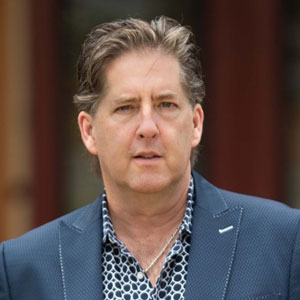
Patrick Ropella: 24:32
Yeah. So how did I get from executive search to company search, which is what we’re talking about. One of the books there. Oh, perfect. Perfect segue. Ted Clark. Ted Clark is a godfather of the coatings industry. For many years, Ted was building through what’s described a buy and build model, a company from the very bottom he started as a janitor in this company, rose to the CEO of this company, and then took over as the CEO and built it into one of the largest coatings companies, coatings and adhesives companies in the country through what’s called a buy and build model. And while he was doing that, many times I would work for some of the companies that he was acquiring, providing services, executive search to those companies and got to know Ted and his success in his background. And so I went and interviewed Ted in Memphis and said, Ted, I want to understand you just created this new private equity firm.
Why? What are you going to do with that? And how are you guys going to scale and grow that? And he said, we’re going to do the same thing I did. We’re going to look for companies that could be, you know, great companies with private equity support if they have the right leadership. We don’t want to acquire these companies and replace all their leaders, like most private equity firms do. We want to acquire the best companies with the best leadership and scale and grow them through a buy and build model where we keep those leaders in place and we reinforce their strengths, we delegate their weaknesses, and together we build another great company Honey a rinse and repeat of something they’ve done before. We’re going to do that again. Well, that’s a really cool model. While I was talking to Ted about that, I was also talking to a lot of private equity firms about how they were buying and building and how they were scaling companies.
And I found out there’s a special program called Executive Partners. That’s kind of the core. Some call it Backable executives, some call it active chairman’s roles inside of private equity firms. And the concept is that with a private equity firm, instead of going out and just looking for the acquisitions to make stop, first go find an acquisition hunter who is a godfather of that, that industry Lane who has a thesis that they want to rinse and repeat. In other words, they’ve already built a transportation logistics company very successfully once and then sold it, then did it again and sold it. And during that process worked with multiple private equity firms. So they understand private equity extremely well. They understand how to build and buy and grow companies through organic growth, but as well through inorganic acquisitions. And they’ve now gotten to a point in their life where they don’t want to be a CEO, the CEO anymore. They’re done with that.
But they would love to be a part of coaching a CEO, a leadership team, and working with that team to do a buy and build again. And then five years, ten years down the road, it becomes such a successful company, a valuable company, that it can be sold to the next private equity firm. And everybody walks away with a significant win. Okay, so the combination of working with Ted and working with some world class private equity guys that do executive partnering, the lights went off and I thought, wait a minute, there’s an opportunity for me. This is executive search. I do executive search for corporations that want key leaders. I do executive search for private equity firms that want key leaders inside their private equity holding. Why can’t I go do executive search to find them, those bankable executives. And I built a model, much like the smart search system, for executive search, to do the smart search system for executive partner search, which is just people talking to people super connecting. And when I built that model, I started to submit it as a thesis. It’s a business plan to these private equity firms.
And they’re like, yeah, if you could do that for us the way you do it on the other side of the fence where it’s hyper specialized, heavily relationship driven, and you’re able to get us the godfathers of these industry lanes to come talk to us. We’ll pay you well for that and we’ll be very happy. Client. And that’s how I evolved. And I threw, you know, a few years of doing that work, developed best practices for doing that work, Wrote the book primarily for the executives that are now retired that want to do this type of work, but don’t understand that there is a model for doing it. Like this. I wrote that book for them, and I use it as a tool. When I recruit these people from all these various industries to come join private equity as a way for them to understand, hey, what you did before was really cool, but what you can do now is off the charts in partnership with me and a private equity firm. There’s a whole lot more support we can provide you that you didn’t have when you were doing it inside of your corporation.
It’s a cool model. Pretty exciting stuff.
Dr. Jeremy Weisz: 29:36
I want to talk about water treatment, the sexy topic of water treatment when it relates to this. But I do want to point out not only your book. You have a couple other recommendations here, right? You have buy and build. We’re looking the buy and build CEO Ted Clark.
You also have The Private Equity Playbook Adam Coffeyy. You have Backable Sunil Gupta and Deconstructing Conflict. So I just wanted to point a couple of those of those. Are some of your recommendations on your Ropella360 bookstore?
Patrick Ropella: 30:05
Yeah, those are all related to if you’re going to be doing acquisitions and you want to do it with a buy and build model, these are books that are foundational for you to understand what you’re going to be dealing with. When you go through the process of convincing investors, convincing the founders and the CEOs that the companies that you’re targeting to acquire how you’re going to deal with the family dynamic that’s involved in a lot of these acquisitions. Each one of these books plays a part in you building the foundation of being a world class acquisition hunter. And they’ll all say, well, I already am. I’ve already done this incredibly well.
Yeah, but if had you had a chance to read these books before you did this last time, imagine how much more successful you would have been then. It’s not too late. If you’re interested, read them. They’re great books, and behind each one of these books is an advisor that I have a relationship with, that if at any time we want to bring into the process, we can do that too.
Dr. Jeremy Weisz: 30:58
So water treatment. The sexy topic in the niche of water treatment.
Patrick Ropella: 31:02
Water treatment. Most people think.
Dr. Jeremy Weisz: 31:04
It is sexy. Actually, I mean, if you think about it. Right? I was thinking about people.
Patrick Ropella: 31:09
Take it for granted.
Dr. Jeremy Weisz: 31:09
I was like, cleaning my water bottle this morning. And I’m like, a lot of people don’t have clean water, right. And that can get people very, very sick. So what how does this relate to the acquisition hunting.
Patrick Ropella: 31:22
Yeah. So it just so happens water treatment is incredibly important to the health of our society. And if you don’t know that just you’ll recognize this word Legionella. Legionella disease. Legionnaires’ Legionella disease. I think that’s what it’s called. Anyway, buildings in New York City have these huge air conditioning units on the top of their buildings, and they get bacteria in those AC units. And when the AC units aren’t properly maintained that bacteria can get in the air, especially up high. And then it falls down onto the people walking on the streets. Bacteria can get into water bottles, as simple as that, but it can get into hospital.
Injectables, needles. The plastic bags that are holding the drugs. It can get into all sorts of different places where it does not belong. And water treatment is the tool that’s used to control a lot of this bacteria. So it doesn’t sound too sexy, but it’s a major part of why, you know, we survive.
Packed into these huge cities with millions and millions of people right next to each other, control the bacteria through water treatment, and that can be the water that’s coming from waste streams like toilets. It could be water treatment that’s coming from processing food in plants. When you think about the amount of water that’s used to clean foods before it’s packaged, it’s unbelievable. All that that’s water treatment. Now, why are we talking about that? Well, one of the campaigns that I was retained by a world class private equity firm to run was a water treatment thesis to find an acquisition hunter, to focus on going out and finding a bunch of acquisition prospects in the water treatment lane. So we could do this by and build model. And what’s kind of a neat success story is that, yes, we went out and found a large group of people that would be interested in doing the acquisition, hunting, that had backgrounds in water treatment.
We narrowed it down to about five that were clearly scoring very high. On our scorecard we use, we have ten items that we score. And every every item on the list has ten points. If you score, you know, above 80% on that scorecard, you’re somebody that we would submit to our private equity client. If you score any below, you’re probably not going to get an interview. The finalists were all scoring close to 100%. They’re incredibly strong water treatment CEOs who have been in the business most of their career that had built and sold, built and sold multiple times, had done a lot of work with private equity. So they were all godfathers. We narrowed it down to the one they selected and the one they selected had never worked with somebody like me before doing acquisition hunting had never had the experience of having my support mechanism and team behind them.
And within six months, we had a large amount of prospects on the table for them to consider platforms and the smaller bolt ons with the idea that now they’ve got a whole bunch of puzzle pieces they’re working with to build their next company. And we made our first acquisition. We’re now closing our second. Have a few more that are going towards what they call letters of interest, and then they’ll go, if it looks logical to letters of intent, formal offers and the expectation being here within another six months to eight months, they’ll have a significant number of companies that they’re now integrating. And we’ll have had a huge success story to talk about in record time.
Dr. Jeremy Weisz: 35:02
You know, talk about a few things on that checklist.
Patrick Ropella: 35:06
Yeah.
Dr. Jeremy Weisz: 35:07
I don’t know. I want like there should be like a separate book Patrick on this like The Godfather scorecard or something. It’s just like, oh, is it in the book?
Patrick Ropella: 35:15
Oh, yeah.
Dr. Jeremy Weisz: 35:15
The whole thing is in the book.
Patrick Ropella: 35:16
I wrote this book so these guys would understand when I’m interviewing them, how I’m scoring them, and how my private equity clients.
Dr. Jeremy Weisz: 35:24
The pathways to private equity. Yeah. Partnerships okay.
Patrick Ropella: 35:27
Partnerships. Private equity. Inside there the scorecard talks about hey number one you have to be an industry rockstar. You have to be have spent the majority of your career in this industry lane. So that when I introduce you to founders, CEOs, other private equity firms, they’re going to look at you and say, yeah, that guy really knows that business inside and out.
Left to right. Sunday. You know to to to. Saturday. They’re living that business and have most of their care. So they have to score very high on the industry lane. They have to score very high on their passion towards doing another buy and build in that industry lane. They have to score very high on their communication skills, their ability to present themselves and to talk about their success without bragging about it for a half hour and getting caught up in all their trappings of success.
They just need to build credibility. Three minutes and then let go and talk to the founder about what he wants to talk about most. And a guess what that is himself and where he’s standing. They have to score very high on IQ and EQ, and then they also have to score very high on their availability. Are they conflict free? Do they have conflicts of interest Non-competes other investments that are going to get in the way? If they have all those issues? Their score is going to fall. and they also have to be available. Do they have the time, the bandwidth? These are mostly retired executives. We’re not taking 40 year old 50 year old guys and doing this. We’re taking 50 year old guys at the youngest 60 and 70 year old guys because they’re the godfathers. They’re the ones that people look at and say, oh my God, you can get me a conversation with that guy. I’m this lowly small business. And they’re, you know, they’re not, but they’re kind of thinking that why would they want to talk to me? They could help me solve all sorts of problems. They could help me think differently about all sorts of issues. They could help me explore all sorts of opportunities.
They’re willing to talk to me. Hell, I’d be stupid not to talk to them. And that’s our approach. We get these people that score very high on a lot of these traits, and we say, okay, you scored high. Now let’s take you through the process and make sure you’re comfortable with the private equity sponsor that I’m working to be working with you on this one with. And if you’re not, then it’s not a win. It’s got to be a win for you, for them and for me there’s a three way partnership. And so we did this with the water treatment. Lane proved to be very successful. We’re doing it in a bunch of other lanes. We’ve got about ten different executive partners that are all doing this work in partnership with me and a separate private equity firm.
Dr. Jeremy Weisz: 38:02
I love it. I want to get to leadership transformation and, you know, accountability, trust. Talk about that for a second. And I don’t know if we want to talk about the CIA.
Patrick Ropella: 38:16
We can, but I’ll have to kill you.
Dr. Jeremy Weisz: 38:19
Exactly, exactly.
Patrick Ropella: 38:22
Well, let’s jump into that and I’ll boil that ocean by saying, hey, I’ve had the unique luxury, the unique benefit of having worked for many fortune 500 CEOs, many middle market CEOs, some of the world’s leading venture capitalists and private equity guys. I’ve got a pretty unique first class seat. It’s not just working with them or interviewing them. I’m working with them on solving some serious issues related to talent. And when you’re talking to them about what they’re struggling with and why they’re looking to replace people, or why they’re looking to build a world class team, adding people, they’ve just lost somebody that’s been a dear friend who’s now retiring and they’re frustrated.
They’re losing all that intellectual capacity that’s super power. The brain is leaving and they’re like, oh God, I gotta start all over and replace them. Hiring can be a very stressful, very emotional, very frustrating experience. I was on the phone yesterday with a world class CEO who’s acquired 50 companies throughout his career, and 25 of them on his own as his own private equity firm. And he says, I don’t know how to hire. I suck at it. I keep making the same mistakes over and over. I don’t care how experienced you are, hiring a players is a special art. There is a science behind hiring called the you know, the smart search system is the science behind hiring. There’s also an art behind it, especially when you’re going after A-players. And so I’m dealing with these people, and they’re opening up to me in ways they’ve never opened up to anybody else.
They don’t tell their wife they suck at hiring. They don’t tell their friends that they’re really kind of emotionally frustrated that they lost this key person they thought was going to be with them through the next five years, is now left and gone to a competitor. So what’s the point? Hiring is super important and so is leadership. They go hand in hand. And when I work with executives that are telling me, hey, I’m a vice president and I’m looking for a director to report to me, my CEO may come into the interview. I’m like, I’m not sure we’re the right partner. What are you talking about? I thought you wanted to work for us. I said, no, no, no, I want to work with you. But if your CEO doesn’t take this level of a hire, you guys got a problem that I’m not sure I can help you fix.
So we need to talk about leadership. And leadership starts at the highest levels with accountability, communications and trust. And if you’re going to hire a players, you’ve got to understand how important that accountability, communication and trust is to the A players you’re hiring. And if they can’t have visibility to your CEO on the front end during the hiring process, they’re probably not going to be there at the offer stage. The best A players when they’re on the field have an offensive line or defensive line coach that helps them during the game, but before the game and after the game, they have access to the head coach. They have access to the general manager. They have access to the owner of the team.
If they don’t, they’re probably not going to last on your team very long because they’re gonna get frustrated and go look for that elsewhere. It’s the same in corporate America. So accountability, communication and trust. What’s that all about? Well, it’s what we call action leadership. When the Twin Towers went down During that process, you had all these world class leaders. You had the CIA, the FBI, the Secret Service. You had the mayor, Rudy Giuliani. You had the chief of police for the New York City Transit Authority. You had the coroner’s office, you had the ambulances and the police, and you had a ton of first responders that all showed up at that scene.
You remember all the lights flashing everywhere. There were hundreds of first responders there with their lights flashing at the bottom of those towers, all pissing on each other for control over the scene. This is a crisis. I am in charge of what every single leader that was there was saying, and they were all arguing over what should happen while they were forgetting that there’s issues that we need to be dealing with. Get these people out of the building. Get the people out of the neighborhood before the buildings collapse. Nobody thought about the fact the buildings would collapse. What do you do when you’ve got all this chaos going on and everybody’s fighting for control. Not much good.
So after the towers came down, the congressman Peter King got together with some other leaders and said, hey, we need to come up with a better way to manage a terrorist like attack like this. Should it happen again, which it likely will. We’ve got to have better command and control. We’ve got to break down these silos. We’ve got these first responders are all A players. They’re all Lions fighting for control. We’ve got to work with them ahead of time to help them understand that just because you’re the guy with the biggest badge or the biggest title, doesn’t mean you should be the one in charge of this situation. The best leader is often the one you least suspect should be the one that should rise to the key role of responsibility. And so we we were working with Congressman Peter King and the chief of police for the New York City Metropolitan Transit authority because I had a four star Air Force general on my board who was his brother in law.
So you’ve got, I can’t name names, but you’ve got this person and this person who are brother in laws, who are very high level guys in regards to crisis management, threat management, dealing with challenging environments. And I had another four star general on my board who was the one who led the first and second Iraqi wars. He was the guy on TV next to Colin Powell and General Schwarzkopf talking about, you see our bombs coming. This is our win. Okay, world class guy. Very well recognized as one of the best generals in modern history. He’s on my board. And then I got the Air Force general that runs Air Force One on my board. And I started saying, Congressman Peter King is telling the chief of police in New York City, we need to come up with a training program to help break down the silos and to get people communicating more effectively.
I’ve got a best selling author on my my board who’s also a leadership rockstar, who’s written ten books on leadership, and I’ve got a bunch of Fortune 500 CEOs that are really world class leaders who I could bring to an advisory board, and together we could build this program. So I went back to the the two brothers in law and said, hey, how about you get us an audience and let’s see if we can for the Department of Defense, because they were the ones paying the tab. Build a leadership program. And here’s what we’re going to call it action leadership. It’s all about accountability, communication and trust. And the guys that built the leadership group for West Point were some four star Army generals who were in Pensacola. While I’m talking about this, they rise up and say, hey, we’d be interested too.
And then a couple of Secret Service guys who one of which was the director of the Secret Service under Ronald Reagan when Reagan was shot. Hears about it and says, I’d be interested too. Just so happens in Pensacola, you can throw a rock in any direction, and you’re going to hit a first responder from the highest levels in the military or in the government, because they all come back to retire there. There’s a lot of a lot of that foundation in the Pensacola area because of all the military bases, and they’re all over the place. So I was able to very quickly pull together a world class team accountability, communications and trust. What makes relationships happen? What’s the spark that brings relationships together?
Usually it’s commonalities, like how you think about sports and you talk to each other about that. How you talk to each other about hobbies. You talk to each other about goals and problems and opportunities. You talk to each other about politics. Those are all commonalities that bring together relationships and make them spark and start growing. Those are the seeds that get the trees planted. What keeps them together and makes them last. Accountability, communication and trust. Over time, you learn to hold each other accountable and to let the issues that make personality sticky. You know, just set them aside. But let’s hold each other accountable. Let’s communicate effectively even if we’re frustrated with each other. Let’s have a communication model that says we can talk through anything, even if you’re a whiny pain in the ass and I’m a crotchety old fart.
If we learn to communicate effectively, we can work through anything. But ultimately, let’s trust each other that we’re authentic. Let’s trust each other, that we both have differences in opinion. We’re both wired differently, but that ultimately we’ve got each other’s backs. So we built all these modules around accountability, communication and trust, and we took them back to the Department of Defense Offense into what was called the Applied Science Foundation for Homeland Security, which was an organization that was created to do two things one, create better communication systems, better radios, better interconnectivity, better cameras, better security systems, you name it, to make sure that if there were going to be another terrorist attack, that all of that communications technology was the same for the FBI and the CIA and the Secret Service and the police departments and the fire departments, etc. they were all on completely different platforms, and they said, enough of this crap, let’s use our buying power to get the absolute best technology and to use the Internet of Things to connect it all together.
And they did. So if you ever watched the TV Show 24, they built the first 24 platform in the basement of one of the Department of Defense contractors buildings. By the way, I say basement. We’re talking about at the bottom of a fallout shelter. Where to get to it? We have to go through an elevator with with fully armed special forces operators at the door to get into that elevator. We get out about a minute later. So think about how deep we’re going. We get out a minute later, and at that door is another crew of special forces operators that pat you down before you get out of the elevator. And then we’re in the 24 control center, the command and control center. And that’s where we did our training. We brought together 100 special response leaders for seven different sessions, charged them two grand a person to come to the event, and had 100 people each time we were there. So you can run the math.
Very profitable, very serious leadership program, all based on accountability, communication and trust. So I’ve had the opportunity to, like I say, interact with all these CEOs. So I brought a lot of my ideas to the program. But I had this world class advisory team of rockstar leaders. And I kept saying, hey, listen you guys, we I bring them into my, my boardroom in my building in Pensacola, and I had this beautiful conference table in this huge room that could seat 20 people. And I say, remember, for before we get started, I am the ringleader. I’ve got a whip here on my desk. You guys are the lions, but we are going to get along. You all have great ideas, but we’re not going to talk on top of each other. We’re going to listen to each other, and we’re going to end up at the end of the day coalescing all these ideas, and they all just look at me. Who the hell do you think you are? I said, I’m the ringleader. I got a whip here. Don’t you forget that. We had a blast. It was a lot of fun.
Dr. Jeremy Weisz: 50:01
I see. You know, Patrick, the common theme with all of this, whether it’s, you know, the acquisition, hunting, the leadership transformation or hiring a players is just surrounding yourself with a players. Absolutely right. And on on the leadership transformation. Talk about common Commonwealth Fusion Systems.
Patrick Ropella: 50:25
Yeah. This is a an incredibly unique company. If you don’t know who Commonwealth Fusion Systems is, you need to. Everyone has heard of nuclear fission. That’s where we put the rods down in and the radioactive. And they create heat and energy. And we create these huge complexes with hundreds of millions, if not billions of dollars, you know, more like billions and billions of dollars to build these massive complexes that everybody is scared to death of. Nuclear is going through a renaissance. It’s much safer than anyone ever imagined it could be. It’s now being able to be built on much smaller scales.
It’s an incredible energy platform, but it’s nothing like what fusion is. Fusion takes the sun and the action in the sun and brings it down to the earth and controls that in a way that we don’t kill everybody on the planet. Everyone’s like, oh my God, how do you bring the heat and the pressure and the reaction and nuclear fusion that goes into a sun onto the earth and not kill everybody? It’s controllable. It’s like a light switch. You can turn it on and off. You can’t do that so much with nuclear fission. It’s also a whole lot less expensive. Once it’s commercialized, you can put it in the size of a Walmart. It doesn’t create any pollution.
It’s heat that’s controlled with magnets, controlled in a reactor that you can turn up and turn down as you need, as you need energy.
So it’s modular. You can break it down and move it around. You can put it on the back of trucks once they scale it down smaller and smaller, and drive it into environments where a hurricane is just knocked out all of the power in a statewide or a regional area. So Commonwealth fusion systems, well, Is this a commercial company? This isn’t a government entity. ITAA in Europe is the leader there. Argonne National Labs in Oak Ridge National Labs and the Energy Lab in the US is a consortium of companies that have worked on it here in the US. And then you got China working on it. So you’ve got three major government efforts that are working on it from a governmental perspective.
And then you’ve got about 20 small businesses that are working on parts of fusion commercially. But Commonwealth by far and away is the leader. They’ve got Bill gates, Warren Buffett, Marc Benioff, guys like that, you know, from Salesforce, these world class billionaires that are all investing in this, including now Google has just poured tons of money into it. They’ve raised I think they’re getting close to $4 billion to build a commercial version of a reactor and to have it up and running. And it’ll be the first time in history that we’ve had a commercial reactor up and running. They’re partnering with every company on the planet to share ideas.
Open source, much like Tesla did when they built their platform. So what’s this all about? Well, they came to us and said, hey, we need a chief technology officer, a chief engineering officer. We need somebody to be the guy that’s going to build this ship, so to speak.
Think of the Starship Enterprise from Star Trek. That’s what we’re talking about. The most complicated machine that’s ever been built. And we’ve got the funding. We’ve got some of the smartest people on the planet as part of our team, but we need a master engineer to pull all the various pieces together. Think about building a nuclear submarine or an aircraft carrier or a huge chemical plant. Incredibly complex engineering with a lot of moving parts. We need somebody to be the point of the spear in bringing this all together. And our goal right now is to build what we’re calling spark.
That is at the MIT campus right off, you know, right around the corner from it, in partnership with the smartest guys out of MIT and a bunch of really smart brainiacs. Think of the Big Bang Theory on steroids. These guys are like that. They’re all working together to build the first reactor. That’s what they’re calling spark. And we need somebody to to make sure that that goes off without a hitch from an engineering perspective. And then when that’s done, they bought a coal plant, a coal energy plant in Virginia. And that’s where we’re going to build the ark, the first commercially connected to the grid fusion plant. And the spark is our prototype to proof of concept and to refine and to improve what we’re doing. The Ark is where we go live commercial. And after we complete the Ark, we’re going to be working with all the other competitors on helping them get their technology off the ground, and we’re going to start commercializing these reactors.
We can start selling to Amazon. So next to their massive facilities or to Elon Musk’s Memphis facility right now, that’s an environmental polluter on steroids. All that, that gas that’s being used to provide the energy for his colossus, which is a massive complex, will go away with a fusion reactor that generates no carbon footprint. So we help them go find the right people for that search. This again, was like Nike. They had all the world’s leading search firms wanting that search. They heard about us. They reached out to us and said, we understand. You guys do some really unique searches. We said, oh yeah, we got your back.
We’ve done some of the most difficult searches on the planet. We put the executive director into Argonne National Lab, which is the super collider up in Chicago, the big three mile underground circle. We put the executive director into that. We put the chief technology officer into crane currency, which is the only currency company on the planet. All currency is produced by the US government for us, right. And for Russia and China and all these other governments. They print all their own money. Right? Nope. China, Russia, America.
They print some of their money. Crane currency produces all the rest. And then for every other country on the planet, its crane currency, some of the most secret, state of the art technology on the planet.
How do you keep counterfeiters from winning higher counterfeiters and people like that, that can create cutting edge technology to make cash impossible to counterfeit? Well, the counterfeiters keep catching up, so you have to keep ahead of them. So we put the head of that organization in, and we’ve done many. I spent a half hour talking about some of the coolest searches on the planet. We’ve done a company out of Israel that makes a 3D printer that can print a chip, that you can take off the printer and plug into a fighter jet, and it works.
Dr. Jeremy Weisz: 57:08
That’s your next book. The craziest searches. Yeah.
Patrick Ropella: 57:11
Oh, yeah. I could tell stories.
Dr. Jeremy Weisz: 57:13
Each page is like a different chapter of a different company. That’s fascinating.
Patrick Ropella: 57:18
So many technologies that people take for granted, like the glasses you have on, are yours. Photochromics. If you go outside, they turn into sunglasses.
Dr. Jeremy Weisz: 57:25
No.
Patrick Ropella: 57:26
Those haven’t.
Dr. Jeremy Weisz: 57:26
You? Oh, yeah.
Patrick Ropella: 57:28
Okay, well, I helped the company PPG build that company with world class scientists before that existed. And I spend an hour talking to you about some of the coolest technology platforms that didn’t exist until I helped these companies bring these teams together and made it exist. So Commonwealth fusion is one of the coolest searches we’ve ever done. It’s solved now. The guy’s now joined. And yeah, it’s a pretty exciting time. So our legacy will hopefully be here in about 3 to 5 more years. We can say that spark happened not only because they had a great team, but we helped them bring an A player in to take it to the next level.
Dr. Jeremy Weisz: 58:06
Patrick, the first of all, thank you for sharing that. It’s just fascinating. The last topic I want to cover is you kind of started on Unlikely Path. So talk about martial arts and how that relates to kind of the beginning of your journey in a sense.
Patrick Ropella: 58:25
Yeah. So when I was 15 years old, I moved out. One can do a lot of that, but I had an incredibly challenging father, to say the least. And he was driving me nuts. And we were about to kill each other because we couldn’t stand each other. He couldn’t stand my personality and I couldn’t stand his. So at 15 years old, I said I had enough. I moved out and I moved into a martial arts studio that was a live in dormitory, much like the TV show Kung Fu, and it was run by a 10th degree black belt who had come.
Dr. Jeremy Weisz: 58:56
First of all, how’d you even hear about this? Like you could have.
Patrick Ropella: 58:58
In Madison, Wisconsin, where I grew.
Dr. Jeremy Weisz: 59:00
Up with a friend, a family member, and a martial artist.
Patrick Ropella: 59:04
There was there was this ten degree black belt that came over from South Korea when the North Korean and South Korean War occurred. His father immigrated to the US and became a US citizen and brought him with as a young guy who went to college in Madison, Wisconsin, ended up becoming a top leader in the university, while he also started a karate studio. And it grew because he was a 10th degree and do another studio and another one. And then he bought this huge old brownstone, a big castle like building from the Madison, Wisconsin school district that they had abandoned and hadn’t used in years. It was an elementary, middle and high school all in one in this castle like brownstone, multi-story, huge building.
He bought it for pennies on the dollar and turned it into the first living dormitory in the country for martial artists. Only black belts could live there. And he had 40 rooms that he had turned into dormitories. He took these huge classrooms and turned them into dormitories, two level dormitories. And he had enough room for 40 kids to live in there. And they were all black belts who were primarily college kids who were going to the University of Wisconsin. And me, I didn’t have my black belt yet, but I was on the fast curve. I’d already been taking karate for a couple of years with them. He really liked me. When I told him that I was, I was running away.
Basically, he reached out to my mom and talked to her about, hey, would you mind if you just came here? I’ll become his legal guardian. I’ll take care of him. He’s best friends with my son, who is a little older, in his 20s, who’s a black belt. And would that be something you’d consider as a place to keep him safe? Because Pat’s got a lot of issues at this point. He’s very angry. He’s dangerously, incredibly tough, super fast. A little miniature version of Bruce Lee. He’s going to end up in prison if you don’t get him into a place where he can grow safely and get his anger under control. And he wasn’t wrong. I was having some serious rage issues because of what was going on in my home. And so he took me under his wing. His son lived there, so his son was there to kind of keep a close eye on me. But his son was pretty wild, too.
And imagine 40 black belts who are in their 20s to 30s and how wild that environment was. It was insane. I grew up pretty fast. Survived. Got my ass whooped a whole bunch by some pretty tough guys that thought I was a smart ass with a big mouth, and they weren’t wrong.
But I had a blast, and I ended up getting my black belt at about 18, and then going out with some of the guys that I met there and starting another school of our own in a community outside of Madison, and then another one, and then another one. And then we started saying, you know what? Karate, weightlifting, Jazzercise, tanning, we could do all sorts of stuff. Let’s make a world class health club and let’s call it national fitness centers. What are you talking about?
We just have three little schools in the middle of nowhere in Wisconsin. You want to call it national fitness centers? I said, yeah, think and grow rich. Let’s surround us, surround ourselves with some of the smartest people we can find. Let’s be a players that attract other a-players. Let’s build this into a national chain. And we started rocking and rolling and taking off. And the only problem we ran into is we’re all young. This is the 80s. The cocaine highway flowed from Miami into Chicago, into Madison, everywhere around us. And we were all partying way too much. And the the principal founder, who was probably 35 years old, was the head of the school, ended up with some bad habits and blew the whole thing up. And so I said, you know, there’s a lesson in that. It’s one thing to party. It’s another thing to party with somebody who’s insane, and I’m done.
I pulled the plug. I’d invested a bunch of my own money. I said, I gotta move on before I end up in some serious trouble with this guy and his whole business. The whole thing imploded. And then I went off and. Went to night school and got into copier sales and did really well in Madison and then Milwaukee and copier sales. And that’s when I said, like I said, at the very beginning of the story, that I went to a headhunter and said, I want to do something else. I’ve done a bunch of entrepreneurial stuff. I’ve been in sales. I’d like to do that again, but something different. And here we are now, 40 years later, head hunting company search private equity. And by the way, unbelievable. I never finished a degree.
Dr. Jeremy Weisz: 1:03:33
Is there any of those schools still around in Madison? Are they close to the campus? As you know, I went to University of Wisconsin, Madison, so obviously not a black belt or anything, so they wouldn’t let me live there. But that would have been fun to check it out.
Patrick Ropella: 1:03:48
When you were on the university, they had Paik’s Academy of Martial Arts scattered around the university. Different small schools. Do you ever run into one of those? So they were they were Paik’s doctor Sanki paik’s schools that his black belts would go start and he would, you know, kind of like church planting. He was school planting, all these little schools all over the Madison area.
Dr. Jeremy Weisz: 1:04:08
I love it. You know, first of all, so it comes full circle to how this all got started. Patrick, I just want to thank you. Thanks for sharing your journey, your stories, your wisdom. Everyone could check out Ropella360.com to learn more and we’ll see everyone next time. Patrick thanks so much.
Patrick Ropella: 1:04:26
Thank you Jeremy. Greatly appreciate it. It was fun.