
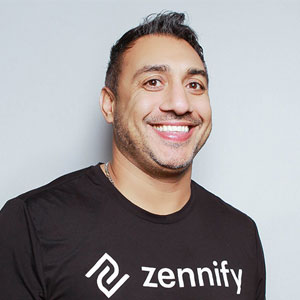
Dr. Jeremy Weisz: 14:47
What was like the first, because it’s a lot of time and energy for you to do a proof of concept. I mean, maybe the most time and energy, right? So they want to pay the least. They’re the most skeptical at this point. And this is the most amount of work for you.
How did you, like create this proof of concept? So it wouldn’t be like, okay, you know, you don’t like weeks and weeks and weeks to like do a full evaluation because then you have to charge for that. Like, I’m not even sure if it’s going to work. What was one of those first initial proofs of concept that you can do that didn’t like, you know, just suck all of your time and energy?
Manvir Sandhu: 15:24
Yeah. I mean, it takes like really good listening in the early stage to hone in on a use case that you feel would be valuable to the organization and something that is demonstrable, right, that you could show. And early on, what we realized with some of the wealth managers is that they were in different environments. You know, their email solution was over here and they were, you know, grabbing customer information from multiple places. And so we just did like a simple integration, you know, connecting a few of the systems together.
So all of a sudden they had like a 360 degree view of, of their customer all on one screen. And when you can show that, you know, and you didn’t use smoke and mirrors to do it, you actually were connecting real data within their environment. So it’s that combination of listening and finding that, you know, sort of low hanging fruit like that. We can configure in a, you know, short period of time that is going to have the biggest impact and outcome from the client’s perception. Right? Perspective.
Dr. Jeremy Weisz: 16:31
Yeah. They’re saying, you know, I’m taking this data over in my email and entering it over here like, oh, you’re just listening. Oh, we can connect those things. And that’s an immediate you get an hour back a day or whatever it is. If we do this, is it a requirement either like they have to have be using Salesforce for you to to work with them or not necessarily.
Manvir Sandhu: 16:52
I mean, it helps if they’re familiar with CRM as a concept and, you know, they’ve been, maybe they have a version or instance in Salesforce. It’s an older version, you know. And so yeah, it’s easier to work in those situations. But at the same time we definitely work with, you know, organizations that are doing it for the first time. It’s amazing.
You know, like it’s 2025 and there’s still institutions that are in spreadsheets and, you know, using email and, you know, and have never really had a legitimate CRM. And so there is still engagements we have where we’re like pure greenfield first time, you know, setting up an environment. And, you know, there’s more change management that comes with that. And so the projects can be more, you know, involved versus a more mature organization. Absolutely. You can deploy capabilities faster and generally move faster within organizations get a bit more maturity. But we see kind of both walks of life.
Dr. Jeremy Weisz: 17:54
Yeah. No, that was gonna be my question, which is what I hear is long complicated sales cycles. And with these. But it sounds like you’ve kind of gotten around that with just doing a small project as a proof of concept and then basically listening to their needs and doing it from there.
Manvir Sandhu: 18:16
I make one, one comment. You know, if I look at let’s look at the heyday, I look at the heyday, it’s like 2015 to 2000, like 22, maybe a year after Covid. You know, you really saw a boom and you know, in IT spending and organizations, you know, investing in transformation. But in the industry that we were focused in, in financial services in 2022 was a big moment. That’s when the interest rates went up, you know, really high, really fast.
And so I had three customers that went under, were part of the bankruptcies that happened during that time. We had Silicon Valley Bank and First Republic Bank and, you know, a couple others. And so that was a big impact to our business, is having, you know, every one of those institutions. We had major projects going at these institutions, and they literally went out of business overnight. And the impact that we saw, you know, even up until today, is that generally there was a pullback in spending, especially in banking, with the rates as high as they are, just, you know. A lower rate environment creates more lucrative opportunities for those institutions. So what’s happened is the decision making, to your point on, you know, getting a deal, even a POC, everything is way more scrutinized.
Like people want to see ROI. People want, you know, the CFOs involved in every sort of spending decision. So it’s absolutely been, you know, tougher sledding, you know, but at the same time, it makes you that much better as a firm at figuring out, you know, how to navigate in that environment. So we’ve kind of had to go through these cycles, which is, you know, which has been interesting for us in terms of growth.
Dr. Jeremy Weisz: 20:09
Yeah, I think it’s also human nature to not like change. Right. So what are some of the things you’ve learned as far as change management in working with these companies? And you know, because you’re like, we need to help make this change. And it also has to be kind of across you.
Maybe start with one person, I don’t know. These organizations are larger that you’re working with. So talk about some of the stuff you’ve learned on the change management front.
Manvir Sandhu: 20:38
Yeah, I think a big paradigm, especially with AI, by the way, and I know we’re going to talk more about AI, but it’s, it’s the overindexing towards security and, you know, risk. And it plays a big role in how fast you can innovate within an institution. So it’s not just the change management of the end user where you’re trying to get, you know, train them on this new capability solution. But it’s even the minds of people that are in roles of CIO or CTO that are responsible, you know, for the transformation and getting their buy-in in terms of being able to do agile innovation. You know, just the concept of agile for many of these leaders is kind of a foreign concept.
You know, like being able to do things in iterative four week, six week cycles. And with AI, by the way, there’s no other way to work, that is the way to work. Right. And so driving that you know, mindshare shift, you know, even from on prem to cloud the concepts and helping people wrap their minds around these things. And you know, it’s a lot of education. It’s a lot of, you know, time investment and and with those leaders now when you get through that and now you’re talking about deploying new capabilities for an organization.
What’s really key is finding the users in the organization that are kind of your early adopter types. They’re your champions and listening to them and, you know, having them be part of what we call the iterative demonstration reveal cycles so that you get like good early feedback on the first release of something that you sort of deploy. And when they’ve been engaged early on, you know, they feel very vested in the success of the project. And they also become your champion. Right.
So now that you’ve deployed, the thing about CRM is, what’s interesting about CRM in particular is it’s often it’s great for the company that, yes, all our information is in CRM. All the bankers have been entering that in and it’s there that’s helpful to us as the bank because we want that information. Well, is it fully helpful to the banker, you know, who has to like who’s out there, you know, pounding the pavement, you know, and and in an ideal scenario, it’s valuable for both.
Like yes, banker. You’re also going to get these productivity gains, things that you’re spending time on manually swivel chairing looking up information. So you have to sort of understand the personas types and the value that they’re getting and make sure that you’re articulating that value so that everybody’s winning and everybody’s sort of, you know, a champion for this, this, you know, new innovation or new deployment that you’re rolling out. So you just have to be mindful of that, right. As part of your strategy when you’re working with a customer. So those are things that we’ve been doing and that’s been very effective.
Dr. Jeremy Weisz: 23:48
What are you seeing in AI? And then also after that, what are you doing with companies with AI? Yeah.
Manvir Sandhu: 23:59
So it’s a very exciting space. And one of the things that’s been a little frustrating for me in my role, you know, is like as a consumer, you know, what I’m doing with AI, whether it’s me helping my kids, you know, plan their, their college activities or, you know, my kids, two of my kids are in college. So, like, you know, they’re using the latest, greatest tools. And we’re working together and the latest, greatest tools doing, like, really amazing things, you know, that, like, would, you know, we’re planning our vacations together. You know, we’re doing all these things as consumers and they’re using it as students.
And, you know, and then I think about the work, you know, my financial institution clients and they’re using tools early on that just they’re not very effective. And some of the use cases that they’re picking are sort of ho hum, you know, use cases like, oh, summarize this, you know, this object in Salesforce, you know, and like that’s the big use case that they decided to go after. And then they’re wondering why everybody’s not getting excited around the room. And I’m like, well you know you’re not you’re not going for it.
Like there’s some really compelling innovation that you can do and the technology’s really up to par. But, you know, you’re sort of behind the game here, right? Like, you’re probably a year and a half behind of where you could be. And so I’m seeing those institutions catch up now. Right. Like we’re starting to see the pendulum shift. I’m starting to see more adoption embracing the AI earlier, you know, when we talked, you mentioned like Microsoft Copilot and why, you know, why Microsoft Copilot had momentum in financial services early on? It’s because CIOs trust Microsoft. You know, like the Azure platform has like 60% market share in terms of cloud within financial services. And so they trust the AI that’s going to come from Microsoft.
Well early on, and actually even up until right now, you know, Microsoft’s AI just hasn’t been that compelling quite frankly. Right. And so, you know, some of the early results of those pilots that, you know, clients are doing just, again, weren’t that compelling. But now, with some of the other tools that we’re bringing to the table. Like Salesforce and Agent Force, which is their AI capabilities.
And then really powerful products like Databricks that are really critical on the, you know structured unstructured data side in terms of, you know, transforming that data and getting it into the. For AI orchestration, we’re actually starting to do some really interesting things with our customers where they’re seeing like real gains, real innovation, real productivity. And we’re doing as these pilots.
That’s probably the central theme of this podcast is doing things in these proof of concept. You know, there’s no other way to do AI. You’re not going to go from zero to like 100. With AI, you’re going to go through this very iterative cycle, like show it to me, prove it to me. And so yeah, we’re seeing a lot of great progress.
Great example is let’s take a commercial banking situation where, you know, part of a lending when you’re loaning to a customer as a bank, you have to collect a bunch of documents, you know, financial statements, corporate documents, tax returns. And these are like heavy duty, unstructured documents. And so there’s a lot of like collection and manual entry, you know, of getting that information into an application like, you know, Salesforce or Ncino, which are really important solutions for us in this world.
And so with the AI, we’ve been able to innovate, you know, let’s be able to extract information leveraging OCR and let’s utilize AI to, you know, bring all that information together and, you know, help that banker kind of work through a workflow that, you know, is a lot more efficient leveraging the AI. So that’s just one example.
There’s many examples like this that are really. One other one I’ll mention is as a seller, you know, one of the things that is really key for me is, you know, just I’m busy, there’s information everywhere and trying to keep track of things and which opportunities are like, should I really go after? And the relationships I have with people like, you know, I’m on Google, like researching different things about these people. So there’s a lot of different tools. I’m using a lot of information.
So one of the big innovations we’re doing is something called Next Best Action. And it’s really AI and data driven where, you know, we’ve basically brought in all the key data and we’re using machine learning. We’re using, you know, different advanced tools from like Databricks and Salesforce to basically like seller logs in. And now there’s a bunch of recommendations, hey, you need to go talk to this person and talk to them about X. Right.
And so, you know, it’s not that that person couldn’t deduce that on their own. It’s just the sheer volume of what they’re dealing with in terms of information. It’s difficult, you know, and you can start drowning in that. So to be able to come in and have a system intelligently organize that for you and leverage AI to make those recommendations very compelling. So, those are the kinds of use cases we’re working on that are very exciting.
Dr. Jeremy Weisz: 29:32
Yeah. And I want to talk about number two like I’m looking through. And people can check out Zennify.com/ai to see some of the use cases. I think this is instructive for any industry, because the stuff you’re saying, you know, in the financial services is the same in real estate, it’s the same in healthcare. I mean, people are getting data. They need to, you know, input it. They need to store it. They need to have, you know, intelligent insights from it. So it’s very similar I think, across industries.
This is interesting. You have a bunch listed here obviously of, you know, Agentforce Navigator, Data & AI advisory. But there’s a Launch-ready assistants, built for finance. Talk about some of these. How are people using it or how are you helping people use it?
Manvir Sandhu: 30:17
So a great example is, you know, in I noticed you have the retail banking agent. I mean, when you look at the call center data, you know, because these institutions have these call centers and, you know, they’re taking all these calls and and, you know, a lot of the cases are getting logged. And so then obviously, you know, at some point that gets super expensive. And, you know, there could be long wait times. And there’s so there’s got to be opportunities for like, well, how do we automate that? How do we innovate?
And so, you know, one of the things we’re able to do is like, let’s take all of your previous service case history and have the AI analyze like, well, what’s driving these calls at the end of the day, what are the root causes of these calls? And, you know, let’s have it derive sentiment. Let’s have it derive, you know, the nature root cause of the calls. And based on that, let’s make some changes.
And so in the case of retail banking, we learned that there’s a lot of questions coming in around, like which branch should I go into or what’s my balance? Or like, you know, really sort of basic things that a person could definitely utilize self-service right to, to attain. So in that case, it’s really interesting. Not only do we leverage the AI to sort of help identify what those actions should be, but then leveraging like Salesforce Agentforce to build an agent that can then interact with those customers sort of autonomously with the human in the loop, which is, you know, really key from a governance perspective to make sure that the agent doesn’t go bonkers and, you know, say something that gets the bank in trouble. But, you know, that’s what’s nice is within these environments, there’s a lot of governance tools that are built in to protect, you know, our clients from those types of things.
So in those cases, what ends up happening is now, you know, what ordinarily would have been a phone call is handled via self-service. And the person that needs the information is getting information very fast. So everybody’s winning. The bank’s not getting, you know, tied up in phone calls that really aren’t value added phone calls. You know, they’re not relationship calls. They’re more, you know, addressing things that can be handled. And so these are great examples of how AI is going to help these institutions.
Dr. Jeremy Weisz: 32:28
Yeah. No, it’s just interesting to see. And across any industry, how are people using it. Because it can be used, you know, use cases across many different industries itself.
Manvar, I’d love to hear the evolution of the team. Right. You started off obviously we talked about with the vaccines and I noticed obviously you’re one of the founders and you know, you have the position here, right? Which is Chief Innovation Officer. What did the early team look like? And I’d love to hear kind of how it is built from there?
Manvir Sandhu: 33:07
Yeah. Early team is very scrappy. You know, very innovative. You know. And I hadn’t started a, you know, company. You know all all the founders that you know, the three of us had the first time doing all of this stuff, right. And so a lot of trial and tribulation and there’s really key people early on in the journey that, you know, you bring on that, you know, are just instrumental in your growth.
Like a couple of people that come to mind is like Philip Paz our, you know, head of technology, just a brilliant technology mind that’s been so impactful to our business. We had leaders like Tami Miller and, you know, Colin Mayer and, you know, that have just been amazing at at just being leaders in an organization that can, you know, build structure, build processes, you know, deal with client engagements and, you know, read account situations that you you have early on.
So the startup team, you know, scales and you start to like grow and build out. And then, you know, now you got to sort of be like, okay, well, we might need someone in finance because, you know, this is getting out of hand. I have a financial background. So I was our CFO and our CEO for like several years. Right. So like wearing multiple hats.
And then as you get to a certain level of scale and complexity, especially as you start to win more like enterprise level clients, then you got to start to bring in folks that are maybe at a different level. I wouldn’t say that. Oh, they’re better than the folks you had before. It’s not the case. They’ve just got more experience working in the enterprise, you know, I’ll give you an example. And he hates when I bring his name up. But you know what? He’s done amazing work. And so I’m going to give him the kudos that we have one person that works for us. His name is Shawn Murray.
He’s a great example of like early stage hire that evolves. So he worked at the Pizza Kitchen across the street from our office in Boise, and one of our other co-founders, Nathan, used to go work at that Pizza kitchen, you know, get out of the office and go work and, you know, have lunch there or whatever. And, you know, one of the staff came up to Nathan and was like, hey, there’s this, this guy wants to work for you guys. You know, he, you know, he’s a really good guy. You like him.
And Nathan was like, okay, cool. You know, like introduce me. And then the guy comes out from the back of the kitchen. He’s got this, like, apron on and, you know, pizza sauce and all this stuff and says like, hey, I really like Salesforce. You know, Salesforce is awesome. You know, when you get some certs. And Nathan was like, well, okay, you know, get some certs, you know, and then we’ll talk. And you know, as a kid he was very young. He was like 23. He went and he got his certs.
And so we hired him you know and he started out just like configuring and developing Salesforce for us and with our customers. And he was a rockstar. And now he’s on like enterprise, like big enterprise clients like, you know, the Charles Schwab of the world as an enterprise architect. And this happened in like a five year period right of a person going from, you know, like not really in tech right at all to just thriving when given the right opportunity. So, we have folks like that that have really adapted to the enterprise clients.
Then we have other folks that, you know, they struggled a bit more with it. And they’re better suited to work maybe with the smaller credit unions. So as we’re working with the bigger logos, you know, that are used to working with the Accentures of the world and the Deloitte’s and the PwC’s that have the polish of the slide decks and all that stuff. So like, well, we don’t want to be them, but we want to have some of the frameworks and some of the, you know, like successful. These are big, smart organizations. There’s some really good things they’re doing.
So we want to have people that bring in, you know, kind of their level of capability and competency, but into a boutique like experience that we bring to the table. Right. And that’s what larger institutions are looking for. Because, you know, if they hire an Accenture and the project goes wrong, you know, they’re not going to get fired and they can go back to Accenture. And that’s got a lot of money and like say, hey, you guys need to fix this.
If it’s Zennify, and you know, and things go south and, you know, then the leaders of that organization look at the person say, well, why’d you hire a Zennify? What is Zennify? Like, you know, and so we understand the position they’re in, and it is a lot of risk for them. First of all, these projects are risky to begin with.
You know, there’s a high percentage of these kinds of transformational projects that don’t succeed. It’s like 68, 70%. That’s actually part of the brand name. So what went into the brand name of Zennify was the idea that you can actually go into these engagements and you can actually, you know, feel confident about success, enjoy the experience. It doesn’t have to be stressful. It doesn’t have to be this like pressure cooker situation, right?
Like, we can do this and we can do this with a lot of balance. Bring calm to the chaos. So that’s kind of what the brand name stood for. And with that comes, you know, giving the decision maker the confidence that they’re picking the right partner in Zennify. They’re picking the right technology, you know what I mean? And like giving them that confidence and security.
So, you know, when you think about the team’s evolution, a lot of the folks that we brought in recently, you know, this interesting combination of former bankers that, you know, former wealth management people that have been in those shoes that can speak the language that really resonate with those decision makers. But then also folks that have been at larger consulting companies, you know, and, and know how to work in that enterprise environment.
And so it’s difficult otherwise you, you kind of have to stay in the SMB space, which is fine too. There’s nothing wrong with small medium business, but if you’re trying to go to the bigger customers, you’ve got to bring some of that rigor and some of the leaders we’ve brought in. You know that at the C level, you know, have that experience.
Dr. Jeremy Weisz: 39:36
No, it is really amazing what you’ve done with the business and also with the team. Talk about the team. Looks like today. I mean, it started small and scrappy. I mean, to just illustrate what you were just talking about, just take for example, you know, Chris Conant, the CEO.
If you look at his background, it’s like incredible with almost 12 years at Salesforce and then even a background at Babson, which is very entrepreneurial. So it kind of takes this like an enterprise and entrepreneurial background into what you do. What does the team look like today?
Manvir Sandhu: 40:14
Yeah. So it’s an interesting combination of, you know, you’ve got folks from the Zennify beginnings like like myself, right, that, you know, are part of the core leadership team and driving AI and data, you know, at a time when that’s, you know, probably the hottest area to be in. And so, you know, one of the decisions we made is like, well, if we’re really going to pivot and not just focus on Salesforce, which was a big part of everything we’ve done from the beginning into these, these new arenas, and we need focus on that. And so, you know, I love the innovation. It’s always been something I’m passionate about.
And then you’ve got, you know, people like Chris Conant or Mike Rouleau that came from Salesforce that have been working in the enterprise with these, you know, big enterprise clients that we’ve talked about for many years. And they actually came from the Customer Success organization. So one of the things they brought into the way that we work is to focus on outcomes and success, you know, and KPIs.
Whereas in the past we might have been talking about, you know, oh, roll out this new piece of technology and, you know, get these capabilities and those are great. Those are important. But what’s the purpose of those capabilities? Like what is it going to drive in terms of, you know, the meaningful value or outcomes that the customer level? So you’re bringing in, you know, that combination of like that enterprise rigor with some of the startup grit.
And then what’s interesting about Chris is he is very passionate about AI. Like he, you know, even more than me in some regards. Right. And, you know, one of the things that, you know, he sees as a huge like part of his vision is like, can we get to a four day work week? You know, as a firm, you know, by leveraging AI to like, do things more efficiently, I mean, those are bold statements to make, you know, and bold visions to have. And so a lot of the work I’ve been doing isn’t just the external work with customers, but it’s actually how do we utilize AI to become more efficient. And Chris, you know, came to me and said, hey, let’s go get this, let’s get this done, let’s drive this.
So like, we’ve been deploying the latest, greatest technologies even beyond Salesforce and Databricks, you know, looking at OpenAI and Gemini and Claude and N810 and using all these great tools and, you know, pulling some of my best architects off of client engagements to go. Hey, look, help me architect this stuff so we can be more efficient, right? We could, you know, like, reduce certain processes like development or solution design, you know, by 25, 30%. And so we’ve been able to do that, which is awesome. Like, you know, we kicked a lot of that off last year.
So now if you look at how we do consulting from beginning to end is AI is infused into the whole process and we’re doing things a lot more efficiently. And what’s great is we can tell our customers about it. Like we can tell you about things you can do in banking. We can also tell you about what we’re doing. You know, that, like, you can leverage in it, you know, with your own it to make all of this more efficient.
So a lot of that is Chris’, you know, kind of entrepreneurial, innovative nature. And so that’s why this whole thing has worked quite frankly. Right. Is like when you bring in new leadership, and you’ve got the original founder. You know, you could see how that could go south, right? If you don’t have the right alignment of, you know, culture. And that’s the other thing that is really important. Like the firm has always had this awesome culture, you know, and, you know, you’ve got people like each other, people like the, you know, their colleagues. And we’re like a fun company. We’re very open, transparent, you know, and spent a lot of time I still do to this day, spend a lot of time with almost every employee. I love that.
And so when you bring in the new leaders, are they going to embrace the same values and culture? You know that you know that you built the company on? It’s a big risk when you bring in new leaders. And we merged with another company this year last year as well. So we brought two firms together. Same thing. You know, like yeah, sure. When you combine the two firms the financials look great, but is the leadership going to match? Do we care about the same things? You know.
And so what I’m really happy to say is like these are great people. They’re not just like talented leaders, great people that I like. People like. Right. And you know, because of that, we’ve been able to make this work and go through these changes. But we share a lot of common ground. And I think a lot of that’s because they come from Salesforce. Salesforce is a great company. We, you know, share a lot of value similar to what Salesforce does. And so all that stuff’s really important and can get overlooked. But you know, we put it at the forefront and it’s been really impactful for the business.
Dr. Jeremy Weisz: 45:25
And your team has grown a lot from the inception, right?
Manvir Sandhu: 45:29
Yeah, absolutely. Yeah. I think we’re up to, I don’t know, 150 people or so. And you know, we’ve got international expansion happening, you know, so we’ve got business in Europe now. We’ve got business in Canada. We actually just hired some folks out of Kenya, which is awesome.
We kind of went full circle because one of our first projects we ever did was in Kenya around infant HIV, and now we’ve got two AI engineers in Kenya that are doing great work. So yeah, it’s a you know, it’s really exciting, you know, with the expansion.
Dr. Jeremy Weisz: 46:07
It’s amazing. Manvar, I just want to thank you. Thanks for sharing the journey, the insights. I want to encourage people to check out Zennify.com to learn more. You can check out more episodes of the podcast and we’ll see you next time. Manvir, thanks so much. Appreciate it.
Manvir Sandhu: 46:23
Yeah, thanks for having me, Jeremy.