
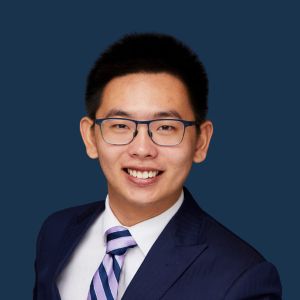
Joseph Wang: 07:23
That’s correct. Like we mostly work with financial advisors today. I would say over 95, even higher percentage of our use cases are for financial advisories for financial advisors and financial advisory firms. But yeah, we generally because this is still somewhat sophisticated, right? So we want to make sure the end clients are fully aware where they’re getting into fully aware of what they’re using it for so that they can benefit the most from us and make sure they understand the risks as well.
Right. So that’s why we primarily partner up with financial professionals.
Dr. Jeremy Weisz: 07:58
I want to talk through some of the stories. Right. Because I’m sure, you know, from a financial advisor perspective, they’re probably talking to their clients and they’re doing planning and they’re like, well, I want to buy this house or I want to buy this car. And they’re like, then if they know about you, they go, great. Why don’t we use this so that you don’t have to take your money out of liquidate any of your stocks and everything like that and borrow against it. Right. Is that accurate?
Joseph Wang: 08:27
That’s correct. That’s absolutely accurate. So if you think about us, it’s basically like a one more kind of like source of liquidity you can tap into without incurring selling or just like capital gains tax in general. So a lot of the use cases we see are in real estate, right? That’s kind of like for most Americans, that is the biggest boring transaction in their lives.
And we are around what, like a point a half, two points cheaper than your regular 30 year mortgage these days? So that has been a great incentive for people to use us.
Dr. Jeremy Weisz: 08:58
Well, they.
Joseph Wang: 08:59
Financed.
Dr. Jeremy Weisz: 08:59
A whole house like whole house on this type of thing or more of a down payment.
Joseph Wang: 09:05
It depends. So like we see both like for the ultra high net worth people, they actually finance their entire house on it. But what we more commonly see is actually like use it as a down payment, right? So they can use us in combination with a regular mortgage. There are some tax benefits in that as well.
We can go into, but usually like the headline reduction in interest rate has been grabbing a lot of attention these days.
Dr. Jeremy Weisz: 09:29
Well, people use it for business loans too, to buy out a partner or buy out by a business.
Joseph Wang: 09:34
Also, anything we actually work with.
Dr. Jeremy Weisz: 09:36
Interesting.
Joseph Wang: 09:37
I can’t tell you the exact like shop, but we work with a couple of law firms and consulting firms to buy into their partnership. That’s actually has been a surprisingly.
Dr. Jeremy Weisz: 09:47
That makes Sense.
Joseph Wang: 09:47
The business I did not know that was more how prevalent that was.
Dr. Jeremy Weisz: 09:51
You know, it’s kind of interesting. Joseph, as you talk about this, because I was talking to a friend a couple months ago and they bought a building and they also went to their financial person, I bet, I bet they’re using SyntheticFi in the back end because they were able to go to their financial advisor and be like, hey, like, I need to buy this building, but I don’t want to take the money out. You know, there’s a down payment and they borrowed against their what they have invested there.
And they didn’t have to put take any money out of their checking and, you know, liquid cash or their stock and borrowed against their actual portfolio, which, which I thought was like genius. It’s like really smart because they have it there and it’s secured like the, you know, you know, SyntheticFi, they have the money.
So if something happens, we can Yeah, pull that out so you’re protected.
Joseph Wang: 10:46
Absolutely. I think I do want to surface like there is a certain amount of risk in here. I don’t want to say, hey, this is like entirely risk free, right? Like you’re, if you’re using anything as collateral, that does mean that the value of the collateral cannot fall by too much. That’s true.
Usually that’s yeah, that’s actually what we are.
Dr. Jeremy Weisz: 11:03
Yeah. If it’s stocks, you’re like, oh yeah, my Google stock was this and now it’s this. So it it yeah, it will vary.
Joseph Wang: 11:11
Absolutely. That’s actually why we generally work with financial professionals because they assess the risk, assess what the client, ultimately the end client is willing to shoulder the risk for and guide them to a reasonable amount of borrowing, right? Like every borrowing involves risk, every financial transaction involves risk. Well, we’re really good at here is to make sure these risks are managed, expected and highly monitored. Right?
So usually what we say is for around 2,030% of your portfolio, most people should be comfortable about it. That should withhold like that should protect you. Well, that should be okay. Even though if the stock market crashes by like 60, 70%. Right.
We just have never seen that even after the great, like even GFC is only around 5055. So like for that level of borrowing, we think it’s generally safe higher than that. That’s when we really think, hey, you should probably talk to someone that you trust, someone that you think is good at understanding your particular risk appetite.
Dr. Jeremy Weisz: 12:07
Yeah, no, I love talking about use cases. So it’s like people could buy houses, they could buy buildings. You’ve seen in real estate cars. Are you were you were mentioning before we hit record auction, you said someone used it for an auction.
Joseph Wang: 12:25
Someone used it to buy a record. I can’t remember if it was for the Beatles or someone else, but it was around $3 million. They used it in the auction and we were like, I want first steps onto into that auction Auction house. I want to see what is happening.
Dr. Jeremy Weisz: 12:43
So they were able.
Joseph Wang: 12:44
To.
Dr. Jeremy Weisz: 12:44
Basically borrow against what they they have pay 3 million and then they just pay payments through SyntheticFi for over whatever I’d be paying it for, like, you know.
Joseph Wang: 12:56
Yeah.
Dr. Jeremy Weisz: 12:57
You know, 100 years for that.
Joseph Wang: 12:58
But that’s the, that’s the cool thing about it actually, Jeremy, is that you can actually decide how much or how little you want to pay for the lifetime of the loan, depending on how you really want to structure it, right? Like, for example, we have people that want to pay it back quickly, let’s say a bridge loan. They just want to buy a business, buy a partnership. They want to pay it back quickly. That’s good.
We can actually pay it back anytime. But we also have more real estate transactions. They want amortization for like ten years, 30 years, whatever they choose. They can also do that. We also have clients who want to do this kind of buy, borrow die thing.
So, so the concept is that you borrow against your portfolio. And when you pass on your asset to the next generation, they get a step up in basis. So they never have to pay capital gains tax. Right. We also have clients who literally just never pay anything back.
Right. There’s a big spectrum in how flexible you want this goal to be. And obviously we don’t generally advise on one way or the other. We consider ourselves more of a toolkit.
Dr. Jeremy Weisz: 14:02
Do people ever refinance through like, let’s say they already own real estate, right? And they’re getting 5% or something and they have maybe enough backing to actually have it backed? And can they refinance or SyntheticFi, like, okay, we’re gonna forget this 5%. I’m going to, I want the 4.2%. And I mean, yeah, people do that or no.
Joseph Wang: 14:29
Absolutely. I think we actually see a huge wave right now. So Jeremy, if you remember 2020, 2021 zero interest rate, there’s a lot of ARM mortgages, so adjustable rate mortgages being done at the time because people think, oh, I want like, say seven year arm for around at the time is like 1.52%. Right? And they’re facing a huge step up on their monthly payment because, you know, interest rate has risen quite a bit.
Currently, it’s like 7.5 now. So those people will see their monthly payment double or like 50% more, double or triple. And a lot of those are looking to us to say, hey, I don’t have a lot of better ways to reduce my monthly payment. Can I use SyntheticFi? And the answer is absolutely yes.
You can reduce your monthly payment, decide how you want to pay monthly, and restructure your loans using us. That’s actually going on quite a bit in Silicon Valley these days. We got a lot of clients in the San Francisco area.
Dr. Jeremy Weisz: 15:24
I’m going to pull up the site again here for a second. Joseph. So you can see here right now, this time, this point in time, obviously things change. So whenever you’re listening to this, it could change. Obviously we’re looking at this this individual point in time, but how do you decide on, okay, the floating rate line of credit versus the the fixed rate term loan.
Joseph Wang: 15:45
Really depends on just the use cases, right? So for fixed long term loan, it’s usually longer term investment, real estate buying a business, those that you just want a fixed rate and set it and forget it. Those are the more fixed rate use cases. But if you want to say, hey, I don’t know what I’m going to pay back, I may pay back in three years. I may pay back in three months.
Right? I’m just let’s say, hey, I don’t really like carrying debt and that’s totally fine. I would recommend you to go into floating rate so you don’t have to kind of be locked into a particular term. And we actually have anything in between, right? Like amortization schedules, renew loans. We can do a lot of fun stuff. And that’s actually what I would consider. What we’re really good at is to customize the structure to any particular use case.
Dr. Jeremy Weisz: 16:30
When you started this company, okay, were you thinking? Who was the ideal use case at that point? Like, were you like, okay. Were you thinking, oh, you. So were you thinking like, yeah, financial advisors on the platform because they.
Joseph Wang: 16:45
I need to, I need to get, I want to buy a house. I want to know. It’s funny you mentioned that, Jeremy, because like, my co-founder is actually the first user of our product because he actually bought his house using a bot spread. Well, our particular product. Yeah.
And he was.
Dr. Jeremy Weisz: 17:02
A little box spread is just so like, you know, for people like me who didn’t go to Penn Wharton and major in computer science and statistics.
Joseph Wang: 17:10
So I don’t think computer science has anything to do with it. For any aspiring college goers like these are no, nothing to do with finance. But so, so box spread is what our product is based on. It’s a fundamental financial security that SyntheticFi is powered by. You can consider a box spread as a market that is institutionalized to transact bond like securities.
Think about Treasury bonds but constructed using options, right? I know people hear oh, options. Scary. The best thing about it is it is locked in a defined payment term at a defined time, in that defined time. That is why it transacts just like a zero coupon bond or just like a treasury.
And that’s why sophisticated traders on Wall Street has been using it for really decades. The first paper about it is in like 1980s, right? What we have done is to make sure this security, who usually trades at 10 billion, sorry, $10 million a clip, right? People borrowed $10 million, 50 million, 100 million. We make sure you can borrow for as little as 10,000.
That’s really what we have done to build the technology, to build the user experience, to build what whatever the operation stack on the back end to make that possible. So that is really kind of like where the box spread is coming from. Going back to the story, my co-founder, he used a box where he actually lives in San Francisco in Millbrae. So right outside of SFO airport at the time, he was deciding between, let’s say, I’m not sure if I can mention names, but Merrill Merrill Mortgage versus just using box spread to finance his house purchase. And what he was doing the comparison, the box is just a much better option.
It’s cheaper, it has better tax deductibility. It doesn’t have to sell to do anything. It’s just in general just a better option. And he’s living in his very highly appreciated house ever since. And I’m very jealous of it.
Dr. Jeremy Weisz: 19:17
San Francisco’s expensive man.
Joseph Wang: 19:19
Yeah it is. It is not cheap.
Dr. Jeremy Weisz: 19:21
So then talk about the inception. So from there, how did the company come about? How did you meet your co-founder?
Joseph Wang: 19:28
So it’s funny. So I was actually in the venture world even before. So, I my first job outside out of college was for a quant hedge fund called D.E. Shaw. It is based in New York City.
They’re doing a lot of like, if you have heard of Citadel, you can think about. They are like a smaller version of it that does more specific things. And that was just not super fun for me. Right? Like it’s because like, I saw my MD, so I saw my boss’s boss, like sitting like three chairs away from me.
And I was like, okay, this guy did super well 20 years, moved three chairs. Don’t love that. And, and so that’s when I was like, hey, what interests me? What do I find fun? Right.
So that’s when I joined a startup in Dallas, Texas called Virgil. Virgil. They are a OCR company at the time before LLM, so they are optical character recognition. So think about AI. But before AI is actually essays right. Like as it is today.
Dr. Jeremy Weisz: 20:26
Yeah. Very early on.
Joseph Wang: 20:28
Very early on 2021 ish. And we were building that from the ground up to around 100 million series A, trying to do all the right stuff, but kind of stalled, especially when LLM comes on, it becomes somewhat a outdated technology. And that’s also when I decided, hey, Joseph, it’s great that you help someone else’s vision to come to fruition. What’s your vision? What do you want to do?
And that’s when my mutual friend father, like, that’s one of my friends introduced me to Tony. The friend is my college roommate and Tony’s my co-founders, high school best friend. So when he mentioned, when she mentioned, hey, both of you want to do something in the venture space, I flew same day from Miami to San Francisco, stayed in my co-founders house, the house he bought by using box spread for two for two whole months to make sure we don’t hate each other. So this is the co-founder dating.
Dr. Jeremy Weisz: 21:23
Lock each other in a studio apartment and see what happens, right?
Joseph Wang: 21:28
That is correct. Like, have we not killed each other after two.
Dr. Jeremy Weisz: 21:30
When I married my wife. Our first place was a, a studio that we we were looking to rent, and we ended up staying in that studio for like over a year. And that’s a good test of the kitchen’s right there. Everything’s like in one room.
Joseph Wang: 21:45
So yeah, I like to tell this story. It’s like before we know each other, we just moved in and. And that has to be a super fun two, two month in my life. And we were in YC. So Y Combinator is a startup accelerator program here in San Francisco.
We went through that, went through some pivots, deciding on what we actually want to do and really learned it on the box spread idea, I would say sometime in 2024-25. So we joined the program 23, spent a year deciding on what to do and building up the product and push it out around 24-25.
Dr. Jeremy Weisz: 22:23
And both of you are very technical. I mean, I saw, you know, your co-founder Tony was at Stripe. And were you guys heads down building or did you you hire a small team at that point?
Joseph Wang: 22:38
So one thing I, I know there is a lot of, I don’t know if I can even say that, but a lot of crap at all. I see these days is like very kind of like acceleration list. But I do think YC has provided a fundamental concept is really valuable is to build something people want, right? You can build all the things that interest you as a hobby, but if you want to build a successful business and grow, you need to build something that has demand. That is the fundamental tenet of YC.
And that is what really guided Tony and I when we were developing the product. We actually caught up all my previous contacts in the financial world say, hey, is this something you would use? Is this something you find helpful? Is this something your client would actually want or have you seen mortgages? Like is do they ask you about mortgage rates and interest rates?
All that good questions. And actually, when we first did the first round of phone calls, everyone was like, oh, it’s interesting, right? Like, I’m not sure if it’s actually going to be helpful, but you know what? Keep me updated. We call ten people.
Six months later, eight of them call me back, say, hey, Joseph, have you built. Have you bought what you said you were going to build? Because like, I have a live client for you right now, and if you have it, I’ll send the client to you. Right. That’s when we’re like, okay, you can’t really get a more more obvious demand pull than that.
Then literally client begging you to use your product. So that’s when we really kind of cemented our conviction and kind of building up the product from there. So we’re very kind of iterative in how we started building. And it started from a team of the two of us to we currently have a seven person to ten people engineering team and 30 person team.
Dr. Jeremy Weisz: 24:18
In general were was the initial thought the people you’re talking to, were they like financial advisors or or were they in different industries? Because right now I know that it’s like, you know, wealth management firms, financial advisors are great clients for you.
Joseph Wang: 24:37
We talk to a hybrid of financial advisers, mortgage brokers, because real estate is a pretty big use case of ours and also generally just finance people because ultimately box spread before it was popular. We need to workshop kind of like how to present it, right. And it’s really difficult for say, hey, I completely don’t understand options and then decided to use this quite sophisticated product at the start. Right now we are making sure it’s easy to accessible, kind of like everything is kind of documented in the right place. Every backend operations is correct.
But at the very, very early, we do want someone with financial knowledge to access it so that we’re kind of protected and they are protected as well.
Dr. Jeremy Weisz: 25:20
So at what point from launch until your first customer. I mean, people were calling back, hey, let’s do this. But you probably had to be like, yeah, we have to build this thing and really test it. What was the your first maybe exciting client customer you had?
Joseph Wang: 25:38
Great question. I would, I would give you two names. I would shout out to Able Wealth in New Jersey and Revolve Wealth in New York City. Those are our I would say first two actual customers who believed in what we build and started using for their clients. Both are very sophisticated.
Both are on our website as well. I think the first one right here. First one, the one in the middle. Shout out to both of them. And.
I think the use case at the very start is kind of like piloting, right. They don’t know what we they don’t they understand the product. They know our background. They want to start testing by making sure the client understand it as well and knowing our trading capability. Fortunately, Tony at Stripe was building mass kind of financial infrastructure and I was at the shore.
I had some training experience. We were able to get across the get over to get over the finish line. But even at the time, it was very kind of Gen one proof of concept product, right? Execution, some kind of janky weird. Sometimes we have to be on the phone.
Sometimes we have to make sure all the operation documents are getting correctly. Everything took around, I would say like 3 to 4 weeks to even accomplish to make sure everything is okay from start to finish. Currently, we can do like a day, right? That’s how much our product has improved over the time. But I really do, again, appreciate those two very early customers who believe in the concept because they think they could be vastly beneficial to their to their clients financials. And that’s how we got started.
Dr. Jeremy Weisz: 27:17
I was at Future Proof. I know you were at Future Proof. And these are a lot of the names when I. When you look around the future proof area that you see at Future Proof, is there anything you could talk about maybe that you learn from the show or one of the talks, or maybe conversations from the future proof event? I mean, it’s pretty, pretty remarkable event.
Joseph Wang: 27:46
So shout out to Michael Batnick actually. So Michael Batnick is one of the top people there at results. He is also actually is an actual sorry, let me reverse that. They are also participating investor through one of their funds into our product. They also considered like a very early user, I would say future proof really.
Like I wouldn’t say the most impressive part is the talks. Granted, there was a lot of fun talks, but I have been the most impressed and kind of feel like I learned the most from there. Kind of a speed dating event right there at Future Proof. There is this program that I think is called Breakthrough Meetings that you have, I think 10 minutes to 5 minutes, ten minutes to quickly go through, talk about your product and see if the other side is interested or not. And then kind of shuffle. Huge hall and you go through like five, ten people at a different time, like at the same time.
And you try to make sure they understand what you do in an extremely short period of time. That has been the most exhilarating thing I’ve ever done in my life.
Dr. Jeremy Weisz: 28:53
Yeah, I think I did 21 meetings while I was there. Yeah. And I was exhausted. And that was only in two days. And that wasn’t even the whole time.
Yeah. So I thought the most impressive part I thought you were going to say was the food trucks, because there was like ten food trucks everywhere.
Joseph Wang: 29:14
That is also true. That is also, for what is worth, my previous startup, Virgil. Actually, they are still as future proof this year. They actually brought a chick fil A truck. Yeah, and chick fil A truck.
Dr. Jeremy Weisz: 29:25
They were there. Were they there this year?
Joseph Wang: 29:27
They were there this year. I think they were a little bit buried, but they were absolutely there. Yeah.
Dr. Jeremy Weisz: 29:32
Okay. I did not see the chick fil A. I would have been all over that for sure. So fast forward as far as early on when you started, this was were you bootstrapped at first before you got investment? How did what was the trajectory like as far as, you know, funding this?
Joseph Wang: 29:52
So we were fortunate that we were able to get funding from Y Combinator YC. They gave us 500K allowed us to build several iterations of the product before we actually generate meaningful revenue. We currently are on the venture track, meaning that we have outside investors, social leverage brand Advisory and Next Gen VP and Brittles are our main investors for the past period. But I would also give a very large shout out to some early RIAs that believe in us. We actually rely a lot on their both their expertise and product and are willing to use for their client.
But actually quite a few of them put capital in our early journey because they believe in what we do. So shout out here to revolve to Woolley Financial and a couple others.
Dr. Jeremy Weisz: 30:42
What’s next? Joseph. Like right now, you know, built a solid platform. You have great relationships with different people and they’re kind of built in referral partners because they, they get clients and their clients have needs. And so it’s kind of a cool, really cool thing you have going on. What’s next that you’re looking either on the product front or yeah, the partnership front.
Joseph Wang: 31:06
So for us, what is really important is verticalization. What that means is to serve a very specific need for a particular group of people, like box spread. How we started spark spread has been around. The reason people are not using it because it’s not easy to use and no one really knows what a zero coupon bond is. They want to know they have a line of credit.
They want to know they have a mortgage. They want to know they have a term loan, right? They want to know and feel familiar about the product. And that’s what we really, really democratizing. So going with that vein, we want to be able to verticalize it even further use cases that can be useful to find scenarios.
So one of the more successful recent product we have is called SyntheticFi variable prepaid forward. It sounds super complicated, but just think about if you have a highly concentrated portfolio, let’s say you only have Google stocks, you only have Nvidia, you only have Anthropic in a couple in a couple days. Like how are you going to borrow against that? Because it’s going to be super volatile. And what we are able to do is to restrict the volatility and borrow, let’s say, 80, 90% against a very large portfolio without much of a downside risk, right.
So those are very helpful for a segment of people. We’re also developing something called a hybrid mortgage. Right. So instead of filing like both a box spread and or like a SyntheticFi loan and a regular mortgage, you can do two at once and service two at once. So that becomes super easy for you, right?
These are type of things we are thinking about and developing to meet the clients where they are at.
Dr. Jeremy Weisz: 32:41
What are the biggest questions you get? Joseph. I’m sure that you and the team are on calls with financial advisory firm, you know, teams and companies that are like, we’re interested in this. Like, tell me more. What are some of the questions they ask or objections you get from them when they’re thinking of using this for their clients?
Joseph Wang: 33:02
Honestly, the biggest question I have to answer, like five times a day is it’s too good to be true. What are the downsides? What are the risks? Right. And I got to explain is like, hey, like they are a significant, like there is a margin call risk, which is the main risk here, which is any security backed or any collateralized loan would have the similar type of risk.
Dr. Jeremy Weisz: 33:22
But then it goes down. Basically they can’t get the loan anymore or something. Is that right?
Joseph Wang: 33:30
So if they have a loan and if their stock portfolio drops significantly, I’m talking about 50% drop, 60% drop 70% drop. Right. They might be margin call, meaning that they might have to sell some of their stock to cover to make sure they can still stay in the good graces of their custodian and financial regulators. Right. Ultimately, that is a decision you want to make.
The best way to protect against it is to not overborrow. Right. If you have $1 million of stock, if you borrow 500K, the stock needs to fall 30% for anything to happen. But if you only borrow 30%, Let’s say only borrow 300K, then stock has to fall by 60 or 65% to even trigger anything significant, right? So that’s where the conversation really needs to happen for financial advisors and really to assess individually say, hey, am I comfortable with that cushion?
Right? That’s very much up to each individual client and what their outlook is for their portfolio. That is the most significant risk. And that is the same risk compared to, let’s say, a margin loan or secured bank loan to all the other similar financial products. That’s the most significant risk.
But we are able to obtain the low rate, which is why a lot of people ask about it, is because this is an institutional market backed by the Options Clearing Corporation, the OCC, which is a US effectively a too big to fail us clearinghouse for every option, like every index option, every market like electronic trading option in the country. Right. And they have excellent track record. They in oh eight GFC stock market shut down. Bond market was not transacting.
OTC kept clearing. There was no clearing delay because it is an institutional market and because of the sophistication of the market. Right. That’s why we are pretty confident they’re able to weather significant events. And that’s why, because there’s such a strong guarantee there’s such a low rate on these loans, right?
Like in finance, you think you think about why are things expensive? Because they have higher risk. These loans are backed by as as good as if not slightly less than the US market and the US government. That means they have very, very low risk. Hence the low interest rate.
Dr. Jeremy Weisz: 35:52
From a you know, thanks for going over that from a marketing and business development standpoint. Right. What do you do to get in front of more Advisors because obviously it’s a solution people are wanting. Obviously going to things like future proof. What else do you do to get in front of the the companies that you know about you?
Joseph Wang: 36:13
Jeremy, you know, the financial advisor market, there’s no secret sauce here. You just go kind of like slow and steady from smaller ones to medium sized ones to larger ones, to knocking on the door of captrust and high towers of the world is a really kind of like you need to have a proof of credibility and trust building throughout the process, right? Like a year ago, I would say like we were talking with advisors around 200, $200 million. Now, most of our clients are kind of like the actual targets are 10 billion to 50 billion plus. So that’s really kind of the progression that we’re seeing.
And ultimately, there’s no secret sauce here. You just have to build your reputation. You have to earn the trust. You have to make sure people know about what you do and, and excited about what you do.
Dr. Jeremy Weisz: 36:57
What is your day to day look like? Like what are you focused on?
Joseph Wang: 37:03
Such a loaded question, Jeremy. AM I being exposed here? I’m not.
Dr. Jeremy Weisz: 37:10
I’m sending this directly to Tony. Like, what is actually Joseph doing? No, no, because I know there’s a lot of stuff you have to do. And yeah, you know, with a with a company in general, but also just a fast growing company. I’m wondering where you spend most of your time. That’s most valuable.
Joseph Wang: 37:31
Great question. I would say the core of our business are two parts, right? One is product. We have to make sure we have the best experience. We have to make sure we have the best operations.
We have to make sure people like what we what we have fundamentally. And the second part is partnership. And I use partnership in a very general sense. It’s not just that we partner with, let’s say, hey, other fintechs. It is with our custodians.
It is the partnership with other financial advisors, with other asset managers, with everyone in the ecosystem, because ultimately we consider ourselves we want to stay in the industry for like five years, ten years, 20 years to come. And it’s incredibly important that you provide a service and build a relationship with everyone in the ecosystem. They know how to use you, they know who you are and a first name basis. And they are excited about telling you about two other people. That’s really how you build a durable business is to build this type of relationship with.
Maybe you don’t see revenue income today, right? Like I call Schwab, I have a good relationship with Schwab. I’m not going to see revenue from Schwab, but they’re able to provide us better service. They’re able to kind of think about us when we kind of call them. They’re able to provide our client a better experience, right?
All of these things are important to for our longevity of the business and for the competitive advantage of what we do.
Dr. Jeremy Weisz: 38:51
Is there I’m wondering what you do for like a big firm that’s got a lot of advisors, right? How do you recommend? I don’t know who your initial contact is there. How do you recommend them getting the word out to all the advisors? They can utilize this tool.
Joseph Wang: 39:09
Great question. So generally there are two types of large financial advisory firms, right? They are the ones who are more top down, meaning that they have a very strong central office, has a very strong kind of centralized investment team. They provide service to advisory field offices across the country. But those type of financial advisory firms, we generally start by talking to the central investment team.
And we usually have a large kind of lunch and learn webinar to show what we can do and be beneficial to the client. They’re also more like aggregator type advisory firms, large advisory firms where they’re mostly growing by acquisition. They have very field offices that operate almost independently. And, and for those firms, we generally consider them to be kind of like point by point per se, right? Like we almost approach it.
Yes, we do generally have contact with the top level with the Home Office, but we consider each of their offices an independent entity and we generally go to them directly. So these, I would say are two somewhat different go to market options in general. Education is incredibly important and we have found the most successful, successful approach to be just webinars, right? It might sound boring. Webinars and podcasts.
Shout out to Jeremy, shout out to you webinars and podcasts. Because people during those kind of like longer term, more immersive conversations, people learn more and see how they are, like how it’s useful to their clients. And people like to have deeper engagement with these formats.
Dr. Jeremy Weisz: 40:50
So if someone’s listening to this and maybe, you know, they’re a part of a firm, whatever level it may make sense to contact your company and maybe deliver a webinar to their their team. Yeah, possibly. What’s the what what do you title the webinar? What is it called when you deliver it?
Joseph Wang: 41:09
Great question. I think I think I’m very, very unimaginative with names in general. As you can see, our company name is literally synthetic finance synthetic. Right. But I think we call it literally demystifying boxers and SyntheticFi, how your clients can use it for financing or something like that. Got it. Okay.
Dr. Jeremy Weisz: 41:25
Yeah. So if someone’s listening, they’re interested, they can go to SyntheticFi, you know, and, and contact you go to the about us or contact page and just message you if they’re interested in something like that.
Joseph Wang: 41:37
Yeah, I’m available, as I said, like I take these kind of calls like ten times a day. Super excited.
Dr. Jeremy Weisz: 41:43
You know, one question I had is just mentors and some of the people you learn from, I don’t know, it could be distant mentors, like just books or people that you don’t know. Or it could be some of the advice and people you met through the Y Combinator experience. Who are some of the mentors that have been influential in the in the business journey for you?
Joseph Wang: 42:04
Absolutely. I think I am inspired actually not exactly mentor, but by a lot of our batchmates. So we were the summer 23 batch of Y Combinator and a lot of them. After the program ended, we all ended in the same circle, right? Like in the same kind of like a office space to work with each other, kind of inspire each other.
I think this type of community is super important, especially for entrepreneurs at early stage when it is very, very tough. I think I have a whole new respect now for anyone who build a business from ground up, because you cannot imagine the trials and tribulations, excitement and disappointments that lots of peaks and valleys, of all the emotions you can go through and having someone in the same space, having someone that experienced the same thing as you just to cheer you up, or even just like we call it, founder therapy, just to listen to what you’re going through has been super inspiring, have been super helpful for us throughout the journey, right? Like there are going to be good days, they’re going to be bad days. But if you have someone who is here to support you and listen to you, I have found that to be more useful than any kind of business book I’ve ever read.
Dr. Jeremy Weisz: 43:19
Joseph, who are some of the companies that we give a. Just give a shout out to some of the. Who are some of the Y Combinator companies in in your class?
Joseph Wang: 43:29
Not sure how many of them are around to be honest. Unfortunately. Unfortunately. Yeah. Unfortunately, I’m not sure how much of them are still around or have been acquired, but one of our very early friends, they’re actually not YC, but in the similar area was Saurabh.
So Rohit, they are currently being acquired. They have already been acquired by Flourish And they all come like that optimization. They are prohibited. And Siddhartha has been one of our strongest supporters from the very start, and they have been extremely helpful in kind of cheering us up because they have been in the space, they have been kind of building things for themselves when we were ups and downs. They are not only helpful in kind of the business perspective, but also just like, hey Joseph, Tony, do you want to come out and get some food?
Right? Like talk about it and then see like, how can I cheer you up? Right? Like, so shout out to Flourish aka previously, Sora.
Dr. Jeremy Weisz: 44:24
What have you learned from Tony? As a co-founder of SyntheticFi?
Joseph Wang: 44:31
I would say great question. I would say, I would say study like the kind of like a steady headedness. I don’t know how to describe it. So Tony is very, very good at pinpointing a particular problem and looking for and coming up with a solution even when emotional emotions are running high. Right?
So I have a technical background. I have a finance background, but you can probably see from my demeanor I’m a more expressive person. That does mean a lot of times when I get super excited, super sad, I kind of have emotions sometimes kind of overwhelm me. And I think the best thing I’ve learned from Tony is during those times, it is perfectly fine to express your emotions, however, you need to pull back and think about, hey, what is the fundamental underlying problem here? And do you want to go into the solution mode basically to solve the issue?
Or do you want to go into the kind of reconciliation mode basically to make you feel better? Those are fundamentally different conversations, different approaches. And Tony is very, very good at delineating either and proceeding to make sure that the goals are accomplished. I think that’s the one of the most important tools I’ve learned from him.
Dr. Jeremy Weisz: 45:47
Joseph. First of all, I want to be the first one to thank you. Thanks for telling your stories, your journey. It’s it’s really fascinating what you guys do and how it came about. I want to encourage people to check out SyntheticFi.com to learn more.
And when I think of it, it’s when I read, I like the tagline where I read somewhere where it says, SyntheticFi is the cheapest way to borrow money. We we partner with RIA firms across the country. Obviously, other people can use it as well, but people can check it out, you know, and Joseph, you know, just thanks for sharing everything.
Joseph Wang: 46:19
Appreciate it. You to have me on the pod, Jeremy. And I’m looking forward to the brownies.
Dr. Jeremy Weisz: 46:26
Thanks, everyone.