
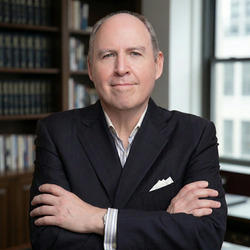
Dr. Jeremy Weisz: 14:04
I mean, just that simple advice is very instructive for me. It’s like just, you know, that that alone could increase people’s productivity.
John Bowen: 14:12
I’ll give one more. I love Perplexity Computer. They have an enterprise version that, you know, most of the companies, you have to have 150 employees. And it is just to really negotiate a good enterprise. Well, you can do it with one with Perplexity. You know, it’s a little expensive, but at the same time, the multiple agents, they were one of the earliest to put the harness together to do it, to create. I mean, some of the projects we’re doing now, I’m just amazed. I, you know, in an hour what I can create compared to what would you know we’re we’ve updated some of our content where it would be a six month cycle and it’s now, you know, a week to two weeks type thing with probably a third of the people involved.
Dr. Jeremy Weisz: 15:08
Wow. I’m going to formally introduce John now that we just jumped right into it, which is great. I do want to say there’s two things I do. This is brought to you by if you could see, you know, I’ve been doing podcasts for over 17 years at this point. For me, I always think of how do I build amazing relationships. I’ve done that through podcasting. I like to, you know, so, you know, launching and running podcasts for businesses. I found no better way to profile the people in the companies I admire and having him on the podcast. And number two, really direct mail gifting. So like staying top of mind for clients through, You know, for me, I’ve seen, you know, I used to, even when I had my chiropractic practice before I sold it, I was sending tens of thousands a month or a, a year to, you know, send content, but also sweet treats in the mail. So if you have questions, you can email [email protected] to learn more. It’s to me, it’s not sending a one off gift. It’s more like, what do I send two, three, four, five times a year for six years to my best relationships?
But John Bowen, we jumped right into it. But I just do want to formally introduce the Founder and CEO of CEG Elevate Group and CEG insights. We mentioned the co-author with Strategic Coach Founder Dan Sullivan of the Greater Game, along with 25 other books and counting. But the greater game is really your 100 times blueprint for exponential growth, freedom, and legacy. He built and sold an advisory firm managing approximately $2 billion, and has spent more than 25 years helping entrepreneurs and business leaders build enterprises that can really grow beyond them. And we’ll get into that because you talked about the operator to the architect, and he applies the actual as he was writing the book, he’ll talk about applying the things as he’s writing the book to do it himself. Right? He’s a true practitioner. So John, why don’t we start there and talk about you as you’re writing the book, you are actually walking through and doing the things and what happened?
John Bowen: 17:18
Yeah. The, you know, it’s, it’s so interesting. Dan and I, you know, did this large research project, you know, thousands of entrepreneurs and we, we went ahead and said, you know, how could we find those that are uniquely having success and ended up for the book in that study, 5.4% were doing it. And we went and go, okay, you know, what are they doing? And if I were to simplify it, they were moving from being operators that are doing and doing and doing in their business to architects. And, you know, this is easier said than done. And, you know, they stop trying to optimize the game. And, and this is where in Ben and Dan, Ben Hardy and Dan Sullivan wrote in the 10X Is Easier Than 2X. And the idea was to stop thinking about just doing incremental growth. And many of us as entrepreneurs do that.
And we said, okay, let’s with AI now, let’s think, what could we do to go 100 X? And Dan and I identified those businesses that have done that. And that was a 5.4. And there were ten multipliers. And I’m writing the book. Dan did the primary research I was doing, you know, the. The framing and my research team and what came out of it was pretty amazing. Yeah. Was these ten. And we can go over them, Jeremy. Because I think they’re powerful for everyone. But I started just going, you know what? I gotta walk the talk. This is one of the bad things about, you know, you’re an inspired insider, curious mind mine as well that we had to do it. And so it took two years to write the book. Well, it was great because we grew 50% in the first year, 58%, second year, about 50. And we’re on track with contracts and so on to expect about 50% growth next year. And, you know, you think of that and, you know, we’re a pretty successful firm already. The profitability is increasing even at a higher rate. And it’s like I’m 70 years old. You know, the classic thing was to retire and I’ve been fortunate.
I’m. I was financially independent when I sold my advisory firm at 42, and it’s been now, you know, just I did take. I tried taking a year off. I only made it six months. My wife and I traveled all over the world. We both found out we’re really not that big a. It’s something about cave diving in the Seychelles islands, running into sharks at 100ft. You know, my wife wanted to come home. I don’t know what it was, but we got, you know, and then I got a great offer to start a company and do some consulting work in Japan on the financial services. And from Tim McCarthy, he was President prior to that of the Schwab Broker dealer and started a company called Advisor Tech. And just it was a great experience, made a big impact. It was the largest private equity funded startup ever in 2000 during the internet bubble type thing.
And a lot of lessons learned and I thought I saw the ability to provide. I got brought in to provide education in the Japanese market. And, you know, the opportunities here in the States. And, you know, we’re just blessed to be at the right place, right time with the right tools now. And, and, you know, Dan and I, Dan’s worked with, you know, thousands and thousands of entrepreneurs and huge. We put in 27, I think, success stories in the book. And I know most of the guys and my team interviewed them, and Gino Wickman is in there. And Gino, I actually did the interview with. And it, you know, it’s just that what’s possible in today’s world for all of us is so much, you know.
And the big thing Dan and I, and we’ve trademarked this, you know, the concept we teach financial advisors how to build an amazing life of significance for their clients. You know, and I define that as, you know, taking care of the people you love causes you care about, make a difference in the world. Well, as entrepreneurs, Jeremy, we, we all have that ability and now the ability to amplify it with AI and the tools that are available now, you know, I mean, some of the guys in tech that I’m talking with, you know, they’re they’re betting who’s going to be build the first trillion dollar business with one employee or two, you know, so the world has changed.
Dr. Jeremy Weisz: 22:22
With the 10 multipliers. And I, I do want to encourage people to get the book the greater game. I’ve listened. I was telling you, John, I listened to it twice in two times.
John Bowen: 22:30
And you told me if I hold it up, the statistics are people will buy it. But quite honestly, you know, it’s not going to change any of our financial Dan or mine if you buy it.
Dr. Jeremy Weisz: 22:40
I’m sure not.
John Bowen: 22:41
But I tell you, this is probably. You know, I’ve written an awful lot of books. This is the most well researched book, but it’s also because I, you know, did partnered with Dan Sullivan. I mean, the stories in it. And so it brings the research to life. And there’s no way an entrepreneur reading this, it’s and it’s written more for somebody that’s already successful about $5 million of revenue. If you’re less than that, I would read it anyway because you know, you want to get there, but it’s on how to get from 5 million to 100 million, but do it in a way that you’re going to have a great quality of life and make that impact. And it’s like, I’m not sure who wouldn’t want that. Jeremy.
Dr. Jeremy Weisz: 23:25
You know, obviously there’s ten multipliers. Maybe we could talk about 1 or 2 and then people can, you know, read the book, what are, what are 1 or 2 that stick out to you? Well, let me.
John Bowen: 23:34
I’ll go high level, if you don’t mind. I’m going to put a slide up that I shot to you. You know, this whole concept of what we saw. There were four stages. The first one is getting foundation, you know, freedom. And if you’re going to be an entrepreneur, you have to go ahead and have ambition. You got to get off the couch. And what we really talk about is how to get that vision from a book. I do like Cameron Harold’s vivid vision, I think, is a great way of putting it together. But it’s you’ve got to get clear. It’s got to be something exciting. And Dan has always talked about the 25 year horizon. And you know, Dan’s 82. I’m 70. You know having a 25 year horizon changes everything.
Second, I’m a financial guy. You have to have security. I mean, I know the differences where I have capital and I can self-fund. Anything I want to do is a whole different thing than starting out. So how quickly can you get that multiplier security? And this is the foundation for entrepreneurs. Then really where the expansion happens. The first is you get motivated. You know, you’re inspiring yourself that you are going to, you know, get up every morning. You want to serve a group, you’re going to make a difference in their life. And, but I want the biggest accelerator is property, IP. I gotta tell you, this is where I was just on with somebody who’s launching a new company and it will be huge. And, you know, they had, I think five patents.
We’re using the same security attorney, 100 trademarks. And they haven’t even started. They don’t have a dime of revenue yet. And this is how the world is changing. With AI, your ability to create this stuff and document it and get it registered, whether it’s copyright, trademark or patent, has totally changed. It’s very important to do it. And we’re all looking at how we can differentiate ourselves. And in many cases, entrepreneurs have done that. But you have to document what your secret sauce is so that you can expand. And then where it takes off is collaboration and multiplication. Now, one of the things everybody thinks, well, we got to build a big team.
No, you got to get the community first. And you know, in today’s world, the noise is so high that it is really important that you have, you know, distribution, strategic partners and so on. Teamwork, a small number of people A-players are making a big difference. And then autonomy. You have to design it so that you do have autonomy from the beginning. You know, this is everything that should be intentional and being successful on purpose. And this is a pivot that most entrepreneurs never get to right here. We can get to this part. We do a bad job on IP, but we get to this part, but we stop and then where it really takes off is the exponential part is where you take agency, the greater multiplier agency, which is really creating markets.
Now you’re defining markets. You’ve got the commitment to really serve this market and the courage and, and, you know, the financial wherewithal to do it. And, these were the ten Jeremy that we saw when Dan and I were doing. And each of them is a chapter in the book. And then in the dashboard, you can take a look at where you are now, and do an assessment against all the people we’ve surveyed. You know where you are, how you’re doing, and then it automatically puts a plan together for you of what we would do if we were in your shoes based on this empirical research. I wish I had it when I was getting started.
Dr. Jeremy Weisz: 27:23
You know, John, I’ll tell you some of my favorite parts of the book and most inspiring parts were not the multipliers, it was not the stories. It was actually hearing your and Dan’s humble beginnings, right? Because you didn’t start where you’re at now, right. And so can you talk a little bit about what it was like in the first part of the book? One of my favorite parts. Talk a little bit about that in the humble beginnings.
John Bowen: 27:52
And yeah, no, Dan, I grew up in Ohio, you know, a rural community. I forgot how many kids, but a lot of kids and in the middle, you know, middle child. So not the, the, you know, the beginning or the end that would have a big story about it and really struggled in the beginning and was one on one doing coaching. And, and I remember because it’s our wedding anniversary, it’s August 15th. Dan both got a divorce and filed for bankruptcy. And it’s very public. You know, he’s always shared that. And, you know, it was a dark moment and a lot of us out of dark moments have huge success. And he met his wife, who is his business partner, Bob Smith, CEO, shortly thereafter. And she’s an operational genius. Dan is one of the best thinking tool guys in the world, certainly for business.
And it’s taken off. And, you know, it is probably the most successful entrepreneurial coaching organization. You know, it’s a very solid eight figure number. And it probably will be a nine figure number type thing. And they’re making a big difference. I had, I actually started out as a rich kid and a poor community. My father and uncle owned a cast iron foundry, and I can still remember I was being groomed to be president of it and, you know, got the summer jobs, spring jobs in college and so on. And I can remember I was just my father was one of those who believed he should get the worst jobs ever. And in a cast iron foundry, there’s some pretty bad jobs, I think very dangerous and all that.
And I questioned during most of that whether my father really loved me or not. But that’s a whole different story. We got to my junior year, I got a call, you know, I’m waiting for the call from my dad. I’m thinking I might get an air conditioned office job finally, and told me the foundry’s going under. He and my mom are getting a divorce, and I gotta figure out how I’m going to pay for college. And all I can think about. Are you going to be all right, dad? And my dad was one of the most confident guys, and he says, I don’t know. And that was one of the motivations that got me in financial services, because we had plenty of money type things floating around.
We were affluent. It was free flowing and you know, they had to start all over again. And I, I, I don’t know if my parents would have stayed together, but certainly it would have been different. And the foundry may have succeeded. But in any event, you know, those were pretty humble beginnings that both of us had. And, and that’s where we’re, you know, we’re this is really thoughtful. We love making the impact. You know, Dan’s been blessed. I’ve been blessed along the way. I mean, I sold my advisory firm for 16 times earnings in the late 90s. And that was a great liquidity event. And I’ve had a number of transactions since then type thing.
Dr. Jeremy Weisz: 31:15
John, what did you learn from the sale of the advisory firm?
John Bowen: 31:21
You know, it’s one of the things I, I still remember when we were doing the deal, I ended up being CEO of the US financial side. It was a Canadian firm and it was always called the merger, but I wasn’t really clear on governance and, and, or I mean, it became very clear it was an acquisition and there’s nothing wrong with that. But one of the big parts, I think most of us as entrepreneurs in the book, The Greater Game we talk about, I wrote one that’s coming out later this year, right? Probably in January with the For the Advisor group. And, you know, I think we, we start as builders and we’re building businesses and we’re really proud of that. But it’s, you know, and I could have used the term hustler because you’re just doing everything you can to get it to survive.
Then something starts working, you become a grower and you, you know, you’re grinding it out. And then all of a sudden you recognize systems and you become this operator and you start being very profitable. You know, everybody’s at different scales and so on. And most people sell their business at the operator founder dependency. And if you can create that architect where the enterprise can run without you, the multiplication, you know, the EBITDA multipliers just go off. And that’s why I sold it 16 times. We had we were, you know, I sold it for 25 million. A number of years later it was sold for 250 million about 20 years later. Actually, the young guy I hired as an intern who became CEO, I just put on our advisory board and just Alex Potts super talented individual.
But this is, you know, this shift and you know, you’re putting it up on the screen. Jeremy, the operators, you know, we answer the hard questions we’re there for. We can take care of anything. The expertise, you know, I talked about the problem with IP. The expertise is all in my head. And, you know, growth increases my workload. And most of us, you know, we’re on the treadmill and we’re making good money. The last thing we want to do is run harder. And to make more money on the architect, the team decides with clear standards. So I am going to have six companies now. They’re fully operational, profitable, all that stuff.
And the idea here is that what we do, I’m going to have leads running each of those by the end of next year, but I’ll be the executive chairman and my whole job will be architect to set the standards. I’m really enjoying that. The expertise becomes, you know, I’ve got a lot of domain knowledge of research companies, all that. And you do too. Every one of us. And you can now teach that and scale that. I mean, I’m running a whole bunch of workshops today. Okay. I don’t know how they’re going. I’m assuming my team’s doing a phenomenal job. And, you know, and we get paid an awful lot of money to do this because we get great outcomes.
Okay. That becomes really powerful. And the growth relies less on my time. I, I, you know, global headquarters, I have a business, you know, we’re doing eight figures. We’re, we’re, I’m in my pool house, which is global headquarters right now. It’s a nice, nice full house, 1600ft². I’m in Silicon Valley but you know, I don’t need to be their type. And this is where you get to design whatever life you want. And that’s where, you know, normally somebody like me would have retired and I’m. Members. I overlook one of the top golf courses in the country court of all. The Chairman of SAP owns it. I’m a member. You know, quite honestly, I can’t think of anything more boring than playing golf four times a week.
Dr. Jeremy Weisz: 35:27
I have a question, John. I and I, by the way, agree with that statement. Disseminating the information. Right. The team decides within clear standards. So obviously as a leader you’re disseminating that information so people can make decisions. You don’t, they don’t come to you for the hard questions. Is there a cadence of meetings or think of ways you communicate so that everyone’s kind of rowing the same direction and they know the vision and, and then they decide what the clear standards are, what, what are the ways that you disseminate the info?
John Bowen: 36:00
So about two years ago, I wrote what ended up becoming a small e-book for internal use. You know, we’ve shared it, but it was my vision of what we want to accomplish over the next five years. And really it represented a growth of. Let’s see a lot about a 15 fold increase. And when Dan and I talk about the 100, it’s 25 years. So this was a little less than five years doing that. And we’re right on track to do it. And one of the things I invited, you know, I wrote it, created the vision, and this was my succession plan versus going ahead and doing it in a way that really didn’t make, you know.
I could just sell to private equity group, you know, acquire or one of the financial service consulting firms and have had many offers, but I actually love doing it type thing. But I also designed it so that I could work 30 hours a week doing it and to change my role. And, and, you know, the team I’ve, I’ve got a great senior team and they, you know, they see the opportunity, they’re going to end up owning a good percentage of the business. They get paid very well as we’re growing.
And, you know, this is a vision they bought into and they’re now doing it. And and what a difference that is than me flying around, you know, giving presentations, you know, doing the classic things that consultants and coaches do where no, you know, and they, we’ve built some major companies with strategic, you know, financial institutions, enterprises where we’re building their, you know, a large part of their training coaching programs. And we’re continuing to scale it up from there.
Dr. Jeremy Weisz: 38:07
I want to kind of just go through the timeline a little bit. Like we go from humble beginnings. You, you know, you have the firm, you sell the firm. And then I don’t know if you want to talk about your first coaching program because at that point, you’re, you’re saying, I want to help the advisors. I want to help them grow like I grew. Right. And so what happened with your first coaching program? How’d that come about?
John Bowen: 38:29
Well, so one of the things that happened, you know, I was fairly I was one of the first guys to sell a multibillion dollar practice, and I probably never would have done it. I had two partners. They owned less than I did, but I didn’t own 50%. I found out that’s important, I think. And I got to decide who we sold to. And they were great partners and I’m glad that we did it because I, you know, I had a great journey from there. But, you know, when you’re trying to figure out and, you know, one of the things I always jokingly say is I’m still trying to figure out what I want to do when I grow up.
But what I’ve found is, you know, how can I make my whole life by building an amazing life of significance. How can I take care of the people I love, the causes I care about? I set up a private foundation. We’re funding that at a pretty good rate and then make an impact. And the impact is the ripple effect of, you know, helping advisors to work with very successful high net worth, ultra high net worth individuals and help them be even more successful and build their amazing life in that community.
And, you know, I believe we can touch a million likes this way. Well, it started from fairly humble. I was doing the research. I thought that would be very interesting. I had the good fortune to work with investment firm Dimensional Fund Advisors, and they were in Santa Monica now. Austin, they were 5 billion. They’re now over $1 trillion. Great. They were basically a think tank from the University of Chicago. Five of the board members have won Nobel Prizes in economics. So a great group. David Booth just came out with a new book and I’m.
Dr. Jeremy Weisz: 40:17
Oh, really? Wow. Okay. The Booth school at Chicago.
John Bowen: 40:20
Yeah, yeah. David gave during the 2008 2009 downturn. He gave many millions of dollars, hundreds of millions of dollars. I don’t remember exactly the gift. And let me want to.
Get his book because it’s. If you’re unsure of investments, I would highly recommend it. Stay Calm: Learn to Embrace Uncertainty in Investing and Life. Dave is one of the smartest guys I’ve ever worked with, and I saw the power of empirical research on investment very early on because of these guys. And I said, you know, I’m going to start a research company on what the affluent clients want and what are the best practice advisors, and just share that. And what became very, very clear.
And that’s David, and this is a book, and I would encourage David is probably the smartest guy in the investment world that individuals, successful individuals even, you know, getting started can relate to. It’s very simple and it’s the way I invest too. I mean, type thing, you know, David taught me an awful lot. Rex Sinquefield was if you’re in financial service, you would. Rex was the other guy that started it. Gene Fama. You know, he won the Nobel Prize a few years ago. Mert Miller wrote a foreword for one of my books and is just a phenomenal guy. You know, the capital market. Myron Scholes, black option or Black Scholes. The option strategy and on and on and on. And so I saw the power of empirical research and not getting caught up in the emotion which David’s book, Stay Calm.
And I said, I’m going to do the same thing for financial services. And what happened was the challenge that people would read the research and not, you know, I’m all about outcomes. And so, you know, boom, Hey, you know, why don’t we show a proof statement? Because people weren’t getting the outcomes. Because they’d read the research and not put it into action. So I started a coaching program, not with the idea of being a coach, but I just wanted to get the statistics to show that we could do it. And, the advisors grew by 58%. And it was just like my, you know, this, that was huge. I mean, it was worth to almost every advisor, at least $1 million, if not over that. And, you know, so that led to me getting asked to do a lot of coaching and training. And it is just the ability to make a difference that way.
And, you know, one of the things we’ve now done, because I have so many friends, I’m in Silicon Valley, entrepreneurs who have made an awful lot of money and they’ve asked me, would you introduce me to somebody that’s really good. And so we now even have a matching service, Vfo Connect. Virtual family office so you can take what we have. Our research company is a full wealth management company. What we think you should get and what we train on. Only 6% of affluent people are getting. Which is kind of crazy. Even though everybody markets that they’re doing wealth management.
And so it’s, it’s like we really need it. And it goes back to the who, not how and all that. Jeremy too. So, you know, this is stuff that I’m passionate about and, you know, you and if we go back, I’m gonna just show one more time to me as entrepreneurs, one of the things I see over and over again, the security part we don’t take care of. And that makes it hard if we don’t make smart decisions about our money and build wealth outside of our business that allow us to make great decisions going forward, we’re setting ourselves up for failure.
Dr. Jeremy Weisz: 44:20
It’s interesting. I’m going to pull this up for a second. It’s interesting how I think when I see some of the commonalities. When I did research for this interview, it all came back to me for research. Even the book. Tons of research. You started coaching. I mean, obviously with your practice, you did a lot of research. But you know, the coaching program, you actually later on, I mean, I, I think, you know, key insights came after CEG Worldwide, but it almost technically came before because that’s what you meant to do when you launched the coaching program.
John Bowen: 44:57
They came. So I just used to do research under the brand CEG Worldwide for only for ourselves.
Dr. Jeremy Weisz: 45:03
Right.
John Bowen: 45:04
And then I go, you know, this is crazy. Why don’t I just buy a research firm? So I bought a company called Spectrum Group out of Chicago that did. They were the number one player in wealth management primary research and George Whopper and Kathy. Kathy Mcbreen are the two principals and, you know, they’re the principals in CG Insights have been great partners. And, you know, as a matter of fact, one of the books that I’m updating right now is a second edition of the Elite Wealth Manager, our signature coaching program. And, you know, we’re doing, you know, I just sent over, you know, what research I need and you know that we’ll have it. We’ll survey a thousand advisors and, you know, and then take the coaching stories as well.
And then the next book is a virtual family office book. We wrote one probably in 2015. And, you know, it would be heavily researched, the empirical side, but then the stories and, you know, what are the outcomes that come out of this? And I just, I, you know, where I get so frustrated, Jeremy, is that excuse me, there’s, there’s so much opportunity, so much knowledge out there and, you know, just taking our smartphones, I mean, you know, our smartphones now have, you know, all the wisdom in the world because of AI, but it’s finding the right people to work with judgment, the curation, the coordination is critical. You know, whatever area that we’re working on.
Dr. Jeremy Weisz: 46:38
John, first of all, I have one last question before I ask it. I do want to encourage people to check out The Greater Game. You’re a 100 times blueprint for exponential growth, freedom and legacy. Also, you can check out we talked about the dashboard, heGreaterGameDashboard.com and then CEG Worldwide and CEG Insights. But just, you know, we talked about a lot of information, great stories, and lessons. What’s one thing or one decision? You know, a listener could kind of transfer to someone else or do themselves after, you know, all the research you’ve done.
John Bowen: 47:14
Yeah. I think the thing is that, you know, one of the problems with entrepreneurs, particularly if we’re successful, we think we’re smart. I, I was a lot smarter when I was 20 than I am at 70. Type thing. I have more wisdom now, but I definitely thought I was a lot smarter. And the idea that I would do the one thing I would do is actually the dashboard. You know, go to TheGreaterGameDashboard.com and have compared yourself. I mean, one of the things we all want to do is compare ourselves to others. And there’s a, you know, start the assessment, click on that.
There’s ten multipliers. It’s going to ask you 69 questions. You have about 15 minutes, and you’re going to get more data on yourself and how you compare and what the most successful people are doing at your level. Now to go forward, this is something that to me, you know, I mean, I love you to buy the book Hay House. The publisher would love it even more. But, you know, the dashboard is where you’re going to get actionable information immediately.
Dr. Jeremy Weisz: 48:24
Yeah. I mean, listen, I, I’m trying to look at my audible how much it is. I mean, listen, if you have an audible account. What is it like? It’s like $15, right?
John Bowen: 48:33
For someone under $20.
Dr. Jeremy Weisz: 48:34
Someone’s life lessons. I mean, for me, all.
John Bowen: 48:37
You’re getting two plus 27 guys who have turned the world on fire in their disciplines as entrepreneurs. So. And yeah, the book for me has already made me millions and millions of dollars. Why did I followed the advice? And yeah.
Dr. Jeremy Weisz: 48:55
Typically the books are the best money I ever spent. I mean, you spend decades of your life to buy the best.
John Bowen: 49:03
That’s where I mean, really, to get people’s best ideas for 20 bucks is about as good as it gets. And, and really, one of the interesting things, Jeremy, there is for the audible. We’ve got a phenomenal PDF that you can download to have everything. And, but I think over half the sales of the book, I think we’re at 30,000 or something like that, maybe a little more than that are audible. You know, entrepreneurs were all busy. It’s a great read. Dan’s head of communication, Gord Vikman, read it and he’s got a great voice, but also he knows the stuff really well too. So he emphasized the right thing. It’s a great audible.
Dr. Jeremy Weisz: 49:47
I love it. Everyone check out the book, check out more episodes of the podcast. We’ll see everyone next time. And John, thanks so much.
John Bowen: 49:55
Well, Jeremy, a pleasure. Thank you.