
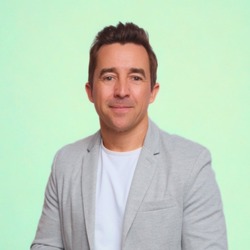
David Walton: 06:14
Yes. Well, look, I think I think sleep can, for a lot of people can be that super power. You know, if you get a good night’s sleep and really good recovery, then it sets you up not only physically but mentally for the next day. But I think to your point, I think a lot of people do that certainly in entrepreneurs where it’s just like, I’ll sleep later, I’m just going to work through it. But it’s really what happens to your body during that sleep.
So certainly with sleep apnea, sleep apnea is essentially when you stop breathing. Now you can stop breathing for a few seconds. It could be 10s, it could be 20s or even more. But what really happens to the body then is the use. You’re generally asleep throughout this process, but you stop breathing so your heart rate goes up, your blood pressure goes up. And then because there’s no oxygen getting through and your stress hormones increase, the oxygen is getting into the brain. So the brain is working signals to release adrenaline. Your body then kind of moves very slightly. Again, these are sometimes called microarousals. You don’t always wake up but in this time, as the adrenaline’s being released, your glucose levels are up, your insulin levels are playing. So your kidneys are working overtime. And, and then you eventually kind of drift, drift back to sleep, but then it can happen again.
Now when I say it can happen again, this can happen multiple times an hour. It can happen dozens of times an hour. My dad did a sleep study and this happened 35 times every hour to him that he would stop breathing. No oxygen gets through. So although you may be asleep, your body is not asleep. So then what does that mean? Like ultimately in the long term, that can have all kinds of issues with your heart disease is a big comorbidity with sleep apnea, high blood pressure, and diabetes. And so you can talk about all of the social aspects of being tired and not feeling your best. But then there’s all of the comorbidities that go along with that. And they really have a detrimental effect on someone’s life.
Now, is that going to happen after one night? No. I mean, you might be tired the next day or you might not have had the best night’s sleep, but over the course of months, if not years, this really has a detrimental effect on your life. So you can white knuckle it for a little while, but ultimately it catches up to you.
Dr. Jeremy Weisz: 08:28
Yeah. A book that I got after I started taking it seriously is the Matthew Walker book Why We Sleep. I don’t know if you know. And it’s funny, I don’t know if you’ve seen the bit, David with Jo Koy, the comedian. Have you seen it? If you haven’t, this should like be on your home page. I swear it’s the funniest thing. And I don’t even have sleep apnea, but I just pulled it up here. If people want to check it out, I’ll link it in the comments. But I found out it’s so funny. And this bit has like 3 million views on it. Okay. So it is you would appreciate the whole it’s, it’s hilarious how he describes it, right. And so yeah, I’ll send it to you afterwards, but people can check this out if they’re having any sleep disturbances. This is just, he puts it in such a funny way.
So I’ll get into and thanks for entertaining some of those questions. You know, I’m going to formally introduce also, this episode is brought to you by Rise25. At Rise25, we help businesses connect to their dream relationships and partnerships. We do that in a few ways. One, we’re an easy button for a company to launch and run a podcast. We do the strategy, accountability, and the full execution production. So it’s not just great for partnerships, but it’s also great for content. Number two, easy button for companies gifting. So we make gifting staying top of mind, may it be clients, partners, prospects, even staff from a culture perspective. You just give us a list of people and we send everything out. And it’s not like we send one thing. It’s, think every four months for five years. And David, I like getting food. So we send food and so people look forward to it.
And so the number one thing in my life is relationships. I always look at ways to give to my relationships. And I found no better way over the past decade to profile the people I admire on the podcast and send them sweet treats in the mail. So check out Rise25.com, or email [email protected].
As I mentioned, we’ve been talking to David Walton, CEO of Vayu Sleep, and their mask, you know, really talked about changing everything because there isn’t a mask, at least that I know of on the market that is custom. So it’s a custom fit CPAP mask, which really helps revolutionize sleep apnea treatment through AI technology. And it’s delivered to your door. And he’s a second time founder, which we’ll talk about really going out to disrupt a $2.3 billion market while trying to help people, millions of people with healthier sleep. So, David, why don’t you just start off with Vayu Sleep and what you do and we’ll get into some of your background too.
David Walton: 11:15
Yeah. For sure. So, you know, globally, there are a billion people with sleep apnea in the US. It’s anywhere between 30 and 50 million patients have sleep apnea. And the gold standard for that therapy is the CPAP mask. It’s what the vast majority of patients are given. But the elephant in the room is that patients don’t want to wear the mask because it doesn’t fit. It’s uncomfortable, it leaks. So we’re solving that problem by making the first custom made CPAP mask. So the way that that works is you scan your face using your phone and with our software, then maps the face and then builds a product to fit your unique facial profile. And it fits just around your nose here. And then we take that, we 3D print that, and then we ship it directly to the patient.
So the idea is to make it more comfortable, reduce the leakage and make sure it’s not too tight. And by reducing the leakage then you for you can reduce the pressure on the mask and ultimately make the therapy a little bit more comfortable so more people stick with it instead of quitting the therapy like the majority of people do.
Dr. Jeremy Weisz: 12:20
Do you find that the health care practitioners like, let’s talk about awareness for a second or will it be spread? I mean, obviously people, I guess I compare it to like, you know, I see these drugs on television. I’m not comparing yours to a drug, but like, it’s like, hey, go tell your doctor about this. But you can also go straight to the doctors themselves. What channels do you think will be most successful with the awareness?
David Walton: 12:47
Yeah. So there’s really three main channels for us: our direct consumer approach is just educating patients ourselves. The second one is working with some legacy DME providers who are, you know, very well established in providing CPAP therapy to their patients. And the third is working with doctors and trying to get the word out and educate patients through, through the doctor network. So those are our three main channels.
The DME side is certainly one of the more established right now, but the direct consumer channel really helps us, you know, educate our patients and help the most amount of patients so we can help them get, if they need to get tested for sleep apnea, we can help with that. If their sleep study is expired, we can help with that. And then ultimately get them on a therapy that works and that stays, that stays with them throughout their journey of sleep apnea. Because you may be aware of this, Jeremy, but patients don’t just buy a mask and then, you know, they’re off. They generally get a new mask every few months. And there’s different components, there’s different schedule for it.
So we want to make sure that every time they get a new mask, that it fits them uniquely at that point. So if somebody loses a lot of weight, gains a lot of weight, the shape of your face changes. So the mask that you get, you know, day one might not be the same shape of mask you get after a year. So we want to make sure that patients continuously have a mask that fits them at that given point in their treatment.
Dr. Jeremy Weisz: 14:16
Speak to the technology and meeting Rasmus. I know this technology has been tested on, who knows, hundreds of thousands, millions of times. I mean, it’s tested on me because the technology is, you know, has been used in the swim goggles. So how did you meet Rasmus and you guys formed a relationship for the business?
David Walton: 14:35
Yeah. So after I sold my previous company, you know, I was considering one of the challenges there was in the industry, what else to solve. And Rasmus and I met at a dinner that we were introduced by a mutual friend, and he was telling me about their technology and how their swim goggles work and said, look, I’ve worked in the sleep space for many years and understand that the failure rates around CPAP because of the leakage and the lack of comfort there. So we talked about how can we use the technology and transition it for a different use case from a custom goggle to a custom mask?
And they were aware of CPAP, but just didn’t know a lot about the industry. So it was the right timing for me, having sold my previous company and wanting to move away from that side of the industry. And yeah, so then we’ve been developing the technology and the software, the automation around not just scanning your face, but then building the product in a very automated way.
Dr. Jeremy Weisz: 15:34
At what point was THEMAGIC5 in their journey? Had they already been on Shark Tank at that point when you met?
David Walton: 15:40
They had. Yes. So that’s the benefit to Vayu here is that the technology is being refined quite a lot over the last few years and improved and building in that AI component. So it can continuously get a better fit is really important. So yes, there was after they were on Shark Tank. So yeah, they’ve kind of refined that over the years. So it’s helpful for us coming in that is already well established and, and well tested as well.
Dr. Jeremy Weisz: 16:09
I’m curious, you know, when business relationships can be tricky. It’s kind of like a marriage. How did you, I don’t know, step into that with each other?
David Walton: 16:20
Yeah. So we wanted to have Vayu be a completely separate company, a very standalone company. And that they help with and they partner with. But yes, to have a separate, I think was, was important. And we all know that we’re both making custom products. We are in very different industries. You know, the sleep, sleep versus swimming, although our demographic isn’t probably too dissimilar, but still it’s very different industries. So we wanted to keep everything separate.
Dr. Jeremy Weisz: 16:49
And then I know you had a previous exit with Vayu Sleep. Did you decide, okay, I’m going to bootstrap this or I’m going to raise money for this because it’s a big undertaking.
David Walton: 17:03
It is. So my previous company, we were in the oral device space, so we made a mouthpiece for snoring and sleep apnea. And that was originally bootstrapped. And I ran that for 14 years. So, so moving into this, you know, we’re moving into a much larger section of the sleep market. And so, yes, we’ve been raising our capital for the company, which has helped, we have some great investors on board. And that’s really helped propel us to where we are right now, which is getting ready to submit our FDA approval.
Dr. Jeremy Weisz: 17:39
Talk about what you learned from Respire Medical.
David Walton: 17:44
Well, I think on a business level a lot. I mean, when you, I was only, I think I was 26, 27 when I started that company. And you learn a lot on the business side of things. You know, we grew that and we were one of the largest providers of these mouthpieces in the US. We were distributing to several countries around the world. So you learn a lot on the business side. Good and bad. You know, you kind of learn by fire sometimes.
But on the sleep side, you know, I worked with some phenomenal doctors and learned a lot on the sleep side and on sleep medicine and working with a lot of patients with these devices, you learn a lot about their experiences and how really sleep affects their life and what their lifestyle is like when they have sleep apnea versus when they actually get treated in therapy, how it really improves their lives. So yeah, there was a lot to learn in those 14 years I saw on the business side, but also on the sleep side as well. And sleep, as I said before, is really a superpower. And if you can really get a healthy night’s sleep, it can really change your life.
Dr. Jeremy Weisz: 18:50
Yeah. I want to hear about the idea behind Respire Medical. But to your point there, David, I remember because I had been not sleeping for so long. So when I actually got to go like, oh wow, this is how I should feel most of the time. Like not being tired all the time. This is weird. And it does make a huge difference. What was the idea for Respire Medical? Where’d that come from?
David Walton: 19:12
So for the mouthpiece business. So at the time, so this was around 2009, 2010. You know, there were some mouthpieces on the market and there wasn’t a huge amount of options. It was still quite a niche offering. So there was an opportunity there to create a really unique product, a really good price point, and really be a part of a growing market and a growing therapy and mouthpieces are a great option if you find the right dentist who can fit you for it and do that, it’s a great option in terms of the size of the market. It’s still, you know, it’s still somewhat of a smaller part of the offering of the market. CPAP is still the dominant therapy. So yeah. And then so the mouthpiece industry, we had several different designs, different mouthpieces.
Dr. Jeremy Weisz: 20:00
Why even a mouthpiece though? Like, I mean, growing up, like, were you like, I mean, maybe you want to be a professional soccer player. Like, what did you want to do when you grew up? Like what was what you strive to be?
David Walton: 20:11
Something very different.
Dr. Jeremy Weisz: 20:12
I don’t know, growing up, like I want to form a mouthpiece that helps with snoring, you know? But actually it was my dad and brother are dentists, right? So I’ll have to tell them about this. They probably use Respire Medical at some point. And my dad actually from a young age, he said he claims this when he was like in fifth grade, he wanted to be a dentist, but that’s not normal. What did that look like for you?
David Walton: 20:34
So I always wanted to run my own business. My dad had his own business in the dental industry.
Dr. Jeremy Weisz: 20:39
Oh, really?
David Walton: 20:39
And then when I moved here to the US, I started working with a dentist who was treating patients for sleep apnea. And again, I didn’t really know much about sleep apnea at the time and learned a huge amount from him, and learned quite quickly about the industry and thought, you know, there’s I think there’s an opportunity. So myself and some other co-founders founded Respire and, and started that up as kind of an alternative to the CPAP. But still an interesting option. So yeah.
Dr. Jeremy Weisz: 21:09
I thought maybe you would say from a young age, because I was looking at your bio, it said the Royal College of Surgeons of England in Clinical Dental Technology. I’m like, wow, this from a young age, he wanted to do something in dental technology. So maybe influenced by your dad?
David Walton: 21:23
Yeah, exactly. Exactly. Yeah. So in the UK, I was treating patients for dentures, older patients. So I was working on the clinical side, but also on the technical side, making, making the product as well. And I really enjoyed the clinical side, but I think on the business side is really what, what I found the most interesting. So when we had the opportunity to form Respire, it was kind of a perfect thing really working with some patients, but also really focused on the business side.
Dr. Jeremy Weisz: 21:54
What were some of the, you’ll probably bring this to Vayu Sleep, some of the challenging things you found with Respire Medical and running that type of business?
David Walton: 22:04
Yeah, I think there’s a few. I think, first of all, having a good quality system in place from, from an FDA standpoint, you know, getting 510 K through the FDA is one challenge, but then also managing that on an ongoing basis. So you get an approval, a certificate, and then you’re off to the races. And that is somewhat, but it’s a continuous improvement system. So having that good system is really critical for the business to run well.
But aside from that, I think the, you know, acquiring customers and customer acquisition costs with any business is something to be aware of, certainly on a direct to consumer business. So that’s something that we’re very much aware of and people spend a lot on marketing. So I think there’s, there’s ways around, you know, just constantly buying ads and spending money on ads and, you know, pay to click kind of acquisition. And so that’s a really big part of our marketing strategy is how do we get away from just paying for the ads?
Dr. Jeremy Weisz: 23:05
I know, you know, with Vayu Sleep, a big initiative is just getting that FDA approval and clearance. And so like, you’ve been down that road before, will that make it easier for you for this time?
David Walton: 23:17
I hope so. I hope so. Yeah, I think we went through it maybe 5 or 6 times in the past. And so very familiar. Obviously, the FDA has changed over the last few years, but the fundamentals remain the same. And how you manage that quality system remains the same. So yeah, we’re working on that right now actually. And then hopefully the launch will be towards the end of this year once we get through all of that.
Dr. Jeremy Weisz: 23:41
I feel like that’s a great ultimate social proof of credibility to like from a, if I’m a patient or I’m buying something and it says FDA approved, it makes me sleep better at night, I guess.
David Walton: 23:53
Yeah yeah yeah yeah. I mean, with the FDA, you know, that you’re getting a product that hasn’t just been launched in the market, has gone through rigorous testing and continuous improvement as well. And a lot of monitoring of that. It’s really important. So yeah, it’s certainly a sign of quality. It’s not just somebody just paid to get a nice certificate. It’s a lot more than that.
Dr. Jeremy Weisz: 24:14
Talk a little bit about what you learned with, you ended up selling Respire Medical and eventually buying it back. But what did you learn from, from actually buying it back and then selling it again? But what did you learn the first time around?
David Walton: 24:29
Yeah. So the first time when we sold the company, you know, an acquisition is a very complicated and kind of somewhat stressful process to go through. It takes quite a lot of time. And sometimes the acquisition can take your focus away from, from the business side. But after that, we had some great partners who came in and, and helped run the business and had some real great insights. They were much larger Japanese company. Really fantastic partners of ours. And then they had a change in direction from their senior team. And it gave me the opportunity to, to buy the company back from them a few years later as they changed direction. And yes, we’re acquiring it back and then and then selling it again a few years later. So yeah, the acquisition process been through twice with one company.
Dr. Jeremy Weisz: 25:23
What was the transition like after selling? Did you stay on, did you step away?
David Walton: 25:29
So the second time when we sold. No, I supported the transaction, the transition of the customers and the staff. And then that lasted for a few months. And now it’s run by a great team. Dynaflex is the company that now owns it. And they’re a fantastic group of guys and they’re doing really well with it. And it’s exciting to see. And again, I’m not in that, you know, the oral appliance space as much anymore, but they’re doing a great job.
Dr. Jeremy Weisz: 25:56
I mean, the first time around with the Japanese company, did you stay on or what did that look like?
David Walton: 26:01
I did, I stayed on as CEO. Yep, yep. So I was running the day to day. So yeah, that was a, that was a change from, you know, when you’ve bootstrapped something then to having, you know, owners of the company, it’s a, it’s a transition. I think there’s pros and cons. It’s not one or the other. But as I say, I had some, there were fantastic partners, the Japanese team and yeah, they’re a great bunch of guys.
So it was helpful to have a good group of team behind us as well. That, that that really helps. I imagine if you had somebody coming in who was really disruptive or was not good for the business, then that would be a big challenge. But thankfully we didn’t. We didn’t have that.
Dr. Jeremy Weisz: 26:44
David, who are some of your, you know, mentors? They could be colleagues too. That’s helped you in your business journey along the way?
David Walton: 26:54
Yeah. You know, when I started the first company, you know, you kind of don’t have as much of a network of people. You kind of trying to figure it out on your own, in a sense. And again, I was quite young. So there’s different people, not only in the sleep industry. Some of the doctors that I met really kind of like learned a lot from, as I said. And, but certainly now with Vayu, I’m connected with a few different entrepreneurial groups and have made some amazing connections through those. Yeah. So really.
Dr. Jeremy Weisz: 27:27
Are they formal groups? Like what type of groups? Yeah.
David Walton: 27:31
Yeah, yeah, yeah, yeah. Formal groups. The one is called Maverick, and Maverick get together several times a year and it’s a bunch of.
Dr. Jeremy Weisz: 27:39
Is that with Yanick Silver?
David Walton: 27:41
It is. Yes.
Dr. Jeremy Weisz: 27:42
Yanik’s been on the podcast. Yeah.
David Walton: 27:43
Oh yeah. Yeah yeah yeah. He’s fantastic.
Dr. Jeremy Weisz: 27:45
I’ve been, I went to his underground events. David, we used to have the underground events in 2008, nine or somewhere around there, and he puts on just the tracks. Really great people who don’t take themselves too seriously and are doing cool things in the universe, so.
David Walton: 28:05
I couldn’t have put it any better. Yeah. So I got connected with Yanik. He’s about two years ago now. Maybe he’s a bit over that now. And the events that they put on are fantastic. And like you said, it’s a bunch of cool people doing some really cool, cool stuff in many different industries. But then we learn from each other. We’ve kind of, a lot of us have all been through the trenches in some respects in different fields. But I think that that community aspect and that network is so important. Certainly what we’re trying to do is enter, you know, multibillion dollar market. And there’s a lot of challenges with doing that. So having a network of entrepreneurs and experts to lean on is really, really critical.
Dr. Jeremy Weisz: 28:48
Any other groups you’re in now or have been in that have been valuable for you? I know for me, I’ve been in Entrepreneur Organization EO for many years in Chicago. Obviously, it’s a global organization and there’s chapters everywhere. But any other groups for you that’s been helpful?
David Walton: 29:04
Yeah, I’ve recently joined Virgin Strive, which is run through the Virgin Group, which was founded by Richard Branson, his son, and his nephew. And they do somewhat similar events, a little bit more activity based. And so I recently joined them. We have an event coming up in June that we’re going to in Switzerland. So yeah, I think having that network is so critical for anybody starting a business.
Dr. Jeremy Weisz: 29:32
What made you move to the US?
David Walton: 29:36
My now wife then was my girlfriend. So yeah, we met. We did long distance for a year. And then I said, look, I’ll move there for six months. And, and here we are like 18 years later.
Dr. Jeremy Weisz: 29:46
So no, I love it. David, I, I have one last question. Before I ask it, I do want to point people to check out Vayu Sleep. It’s VayuSleep.com. If you’ve been, you know, looking, watching the video, you’ve been seeing it and check it out. And if you know someone who has sleep apnea or a dentist, a doctor, do you find that dentists get into this realm too or not as much?
David Walton: 30:13
Not so much. No, no, it’s more sleep positions. The dentists aren’t really involved. Different side of the industry. But yeah, any patients who have sleep apnea, who are looking for a better solution, please connect with us through the website or through social media. We’re putting together now a group of customers. So we really want to have some people who have experience with sleep apnea that can be part of a kind of a closed group for us that we can get some feedback from.
Dr. Jeremy Weisz: 30:39
My last question, you know, David, is just some of the entrepreneurs founders that you admire that maybe you’ve learned that from a distance. You don’t have to know them necessarily. It could be Maybe you like their book, or maybe you just follow them online. Who are some of the entrepreneurs you admire?
David Walton: 30:55
So Richard Branson for me has always been kind of my idol growing up in the UK and everything that he did with Virgin, and I was lucky enough to go and spend some time on his island last year and a phenomenal guy. Still to this day, I’m so inspired by everything that he’s done on the book side. I know you mentioned Why We Sleep. I think a great book is the book. It’s Breath, yellow cover. A fantastic book around not only about sleep, but just around how we breathe and why it’s so important. And some techniques around there which I found interesting, anything from working out and breath techniques when you’re working out to full breathwork as well. So Breath is a great book.
Dr. Jeremy Weisz: 31:39
Yeah, I’m going to pull it up real quick so we can take a look. Here it is. This is the one. The New Science of a Lost Art. Actually, I don’t know, I had Wim Hoff on the podcast. Dave, I don’t know if you Wim Hoff stuff.
David Walton: 31:54
Yeah, yeah.
Dr. Jeremy Weisz: 31:54
Yeah, that reminds me of him because it was a great, I think it was like maybe one of my longest ones was like an hour and 45 minutes. But he talks a lot about Breath in his work.
David Walton: 32:07
And it sounds like why would I read a book about breathing? That doesn’t sound so inspiring. But anybody who’s into fitness and health and wellness and all about better sleep, it’s a great book to read.
Dr. Jeremy Weisz: 32:18
First of all, David, thank you, I appreciate it. Everyone. Check out VayuSleep.com to learn more, and we’ll check out more episodes of the podcast. We’ll see everyone next time. And David, thanks so much.
David Walton: 32:29
Thanks so much.