
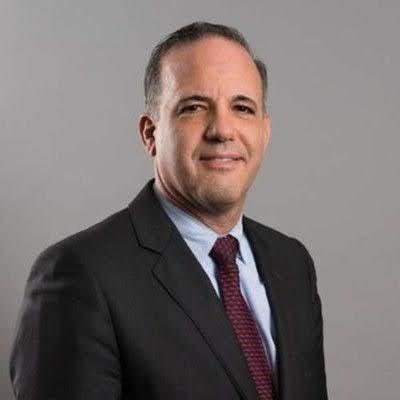
Gil Makleff: 17:49
I mean, we use tools for managing the business, for example, Deel and Stripe, and use tools for, you know, there are just so many tools today that make managing a company much easier than it was in the past. We use Ramp for expenses. So you can create a credit card for one day or one week and give it to someone, or you can. There’s so much flexibility today that different environments provide that, you know, different capabilities.
Dr. Jeremy Weisz: 18:22
You know, obviously, we’re talking a lot of different apps and software, maybe get into a little bit of what else is going on, or what you see going on in the marketplace.
Gil Makleff: 18:34
I see just this. You know, we just have this basic disintermediation, which we spoke about before, which is causing me to think a lot about how users are expected to understand how to use technology. Because things are changing. So the speed of change, I’ve never seen anything like it. And every month, something comes out. And so I think that this I keep, you know, thinking about the Sherpa interface and the idea of the Sherpa interface, which is taking information from users in a way that’s meaningful but allowing agents to do their thing. I mean, agents are going to interact with the tools, right? We know that. So. And there will be documentation built for agents versus for humans, and there will be this layer of interaction with agents.
I think what’s important today is to build that layer of interaction with agents in a way that makes humans relevant. That’s kind of a very short description, but that’s where our focus needs to be, because agents are going to learn how to interact with tools, and they will be the direct connection to those tools in the future. I mean, I installed Office this week as well on a new computer. And guess what showed up on the left panel before anything was downloaded. The word agent, the office, the PowerPoint agent, and all the agents were there before the apps were there. So I think it’s already here. We’re not, it’s not happening in the future. It’s already here, and I see fewer and less human interactions with features in the apps and much more interaction in this gray area between humans and agents.
Dr. Jeremy Weisz: 20:43
Gil, you know, if we look back to 1984, where your computer science, right?
Gil Makleff: 20:51
Yeah.
Dr. Jeremy Weisz: 20:52
What are you thinking you’re going to do at that point?
Gil Makleff: 20:56
I was using cards in the mud center to run programs that I was learning how to program.
Dr. Jeremy Weisz: 21:08
So what were you like? Okay, I want to do. I mean, what were you thinking you wanted to do as a profession? Like after that, I wanted.
Gil Makleff: 21:13
So I started as an economics major, and then I shifted. I didn’t know what that meant afterwards. I thought it was a good idea initially, but I. I shifted to computer science, and I wasn’t sure. I didn’t want to be a developer necessarily, but I applied it in business right after graduation. So I went to work for Chase Manhattan, and I remember leaving the Twin Towers because that was the subway station near Chase Manhattan Plaza, and I was with a tie or a red tie and a white shirt and a suit, and I was sure that was it. There was no more. I didn’t have to do anything else. That was, you know, life was done. Everything was good. And everybody looked like me leaving the station. There were thousands of people leaving the subway, and it felt good to be there.
Dr. Jeremy Weisz: 22:10
So at what point do you say, I’m going to do my own thing, right, because you’ve had two successful exits? When are you? I’m doing this entrepreneur thing.
Gil Makleff: 22:24
You know, I. I left for a bad reason. I left Chase for a bad reason. There was an opportunity that somebody close to me said was a real opportunity, and I convinced somebody who worked with me at the time at Chase to leave Chase to start this business. And all the assumptions I made 100% were bad assumption were wrong, 100%.
Dr. Jeremy Weisz: 22:58
What was one of the assumptions?
Gil Makleff: 23:01
There was a business that I was sure was going to be a stream of business because I was a little bit like an industrial engineer at the time, even though I had a computer science background, we were doing work for Chase. That was more efficient work, short interval scheduling, operational improvements, things like that. And it is related to technology, of course. But yeah, so, so I had this idea to manage a global group of projects, and we would get paid in a certain way, etc., all erroneous from the beginning.
Dr. Jeremy Weisz: 23:42
How old were you at that point?
Gil Makleff: 23:44
I was 26. Our first project was actually after we left Chase with Chase Manhattan on a big project that was in Tampa, Florida. That was the first project we. That was our big breakthrough, which we. Enable us to survive long enough to start reading up on materials from MIT and Peter Senge, Michael Forrester, Michael Hammer, all these thought leaders in the space, and to build our own methodologies for optimizations of portfolios and operations project portfolios that led to the Microsoft acquisition of the technology. So to building technology and to the. We initially built it in Romania. So that was the that was the the first, first part of our success, basically. But it was, you know, the reason to leave Chase at the time, who was paying for my MBA at NYU, was a really bad reason. And never, you know, it was wrong, wrong, all was wrong. And somehow we survived that part.
Dr. Jeremy Weisz: 25:00
It turned out okay, though.
Gil Makleff: 25:02
Yeah, it turned out okay.
Dr. Jeremy Weisz: 25:04
From the exits of Microsoft and EY, what were some of the learnings there as you went through that, those process of selling?
Gil Makleff: 25:15
You know, it’s interesting. I don’t know if, you know, there are three steps in the exits that I’ve had. There’s LOI. There’s a sign, and there are clothes. And each one of those was such a roller coaster for me that it was very impactful. I guess I’ll tell you, I don’t share this a lot, so maybe I’ll share it with you because I don’t do it. But the last sale to Ernst and Young was a very emotional sale. It was a company with about 200 people, and we had two offers on the table. One was a private equity, and one was Ernst and Young, and it was my I was the CEO of the entity that was being sold. And I had two founding partners, and the board was about five people. And the deal from the private equity was better than the deal from EY. And yeah, we had a little bit of an argument, including one of the calls that was about a ten-hour call straight.
Dr. Jeremy Weisz: 26:29
Wow.
Gil Makleff: 26:30
Without interruption. And yeah, it was.
Dr. Jeremy Weisz: 26:35
It was a ten hour call with, with the?
Gil Makleff: 26:38
The board, the board.
Dr. Jeremy Weisz: 26:39
The board.
Gil Makleff: 26:40
Yeah. My, my founding partners and etcetera. And there was an argument because on the one side, I was interested in the employees of the company having the upside opportunities presented by Ernst and Young. And the other side was the money with the private equity that was offering a little bit more, and also another step, etc. And it was a very hard decision.
It wasn’t an easy decision. It wasn’t like Gil was against the whole board, etc., although it might have seemed that way at the, you know, during the process. It was. It was the fact that I really thought, at the end of the day, that the right sale was to EY and I’m, I’m 100% validated by that. And I’m glad we did that. We, we, there were 11 partners in EY and all of them were really successful.
And a lot of team members came to me later and said, thank you for the opportunity. Some of them went to management, to strategic consulting, and some of them went to other areas of the company. So it was, as expected, a good thing for the employees. And I think that money is not the only driver for those types of decisions. And I’m really, really happy the way I made that call. And it wasn’t. And yeah, I think listen, my other two founding partners, I was very close to them until the deal. Unfortunately, one of them was a childhood friend, and I haven’t spoken to them, to them since. So that’s how traumatic that was. But it was I think it was the right decision at the time. And we all, you know, came away with the same. It wasn’t like I was making more because I was I became an EY partner afterwards, etc. So anyhow, that.
Dr. Jeremy Weisz: 28:38
Was super interesting. Gil, I mean, at that time, was there anyone who agreed with you on that? No, there wasn’t.
Gil Makleff: 28:49
No, we were using four-letter words a lot.
Dr. Jeremy Weisz: 28:52
So how did you then get to that outcome? Because you were outnumbered, obviously. I mean, that’s a that’s an uphill. I mean, selling a company is difficult in itself. There are a lot of things that have to happen.
Gil Makleff: 29:06
And then there were some concessions made.
Dr. Jeremy Weisz: 29:10
Okay.
Gil Makleff: 29:11
During the conversation, which I agreed to. And that was.
Dr. Jeremy Weisz: 29:17
Gotcha.
Gil Makleff: 29:18
Yeah. So there it is, it was something that I don’t forget, that nobody met the buyers except for me. That was the that was a point that, you know, had to go through me because I was the one who met the bankers and the buyers. I had one founding partner in Seattle who was managing a different line of business of ours, and then another one in London who was the chief financial officer of the company. So I was the principal who was talking to the leaders at the time from EY, and I was managing the process itself.
Dr. Jeremy Weisz: 30:06
So why were people so emotionally charged over that? Especially because like, you’re getting the same as everyone’s getting the same thing. It’s not like I come out way ahead or whatever it is. What was so emotional for them that they wanted the p e?
Gil Makleff: 30:22
I think it was really simple. It was their perception that it was more money. That was it.
Dr. Jeremy Weisz: 30:27
It was more cut and dry.
Gil Makleff: 30:29
It was cutting. Right. It was money. And then EY was, you know, less. Even though EY in the last 24 hours, the reason we were able to do the deal, EY went to the global committee and it was approved, and the deal was approved, and we got the deal done with the parameters that were close to the other deal. It wasn’t really, you know, a huge difference.
Dr. Jeremy Weisz: 30:53
But no. Thanks for sharing that. I mean, someone is listening, maybe going through that right now, or they will go through that at some point in the future.
Gil Makleff: 31:02
Listen, if you’re it’s a good point. If you’re sure that the reasons you’re doing what you’re doing are clear to you, and the rationale is clear. You have to fight for what you believe in, and that’s for you.
Dr. Jeremy Weisz: 31:19
At the time, were they hard concessions to make or not?
Gil Makleff: 31:24
I did what I needed to do to get the deal done, and so I didn’t see it as hard or easy. It was just I just did it.
Dr. Jeremy Weisz: 31:32
And what needs to happen to get the deal done, and what type of thing?
Gil Makleff: 31:36
Exactly, exactly. Yeah. But but listen, the deals themselves were very difficult because there was, just as an example, on the day of close, I’ll, I’ll walk you through this nail biter on the day of close. Okay. We get something. I get a FedEx in my office downtown. I’m in Battery Park. FedEx comes in, comes in, and one of our clients, one, you know, not a big one, just a client from the state of Ohio. There was a potential legal issue with our being totally erroneous. But.
But it landed on my desk. There was a newspaper article about it, and the reason that it happened was that an admin wrote the name of our partner in the wrong field of a forum or something like that.
And supposedly, that was an inappropriate thing to do. It didn’t matter. It was. It was not. But on the day at 10:00, I get it. What do I have to call everybody to tell them what’s going on? So I call the EY guy. I call the lawyers. We were using a large law firm in New York, and I’m running with the president, and we physically go to the subway, to the law offices to get briefed. Sorry to get briefed. By the lawyers and then going to get debriefed by the EY Legal team, the Gco EY. This is happening at 3:00 close. If it doesn’t happen, there’s no closure because banks, you know, close, etc.
So we’re running to do the debrief on all these things. We’re getting to a room. We don’t know if the deal is going to close or not. It’s 3:20. It’s past the deadline. There are 40 people waiting on the line for the conference call. We’re walking. We’re not sitting anymore. We’re just three people in a room with a conference, us in the law firm where we worked. And we look at each other. It’s kind of close now. We didn’t know. And 3:30, of course, the EY legal team gets on the call. Two words. Right. We’re closed. Thank you. That’s it. And then the deal closed. So those are kind of nail-biters that you see in these deals. And you have to be ready for them. So that’s.
Dr. Jeremy Weisz: 34:07
It. No, I think there’s a book in you, Gil, or something like the ten hour. It’s called, like the ten, the ten hour call. Like, just the whole book is just about ten hours. And then. Exactly. And then to the close. That’s crazy. Right? And not all the others. There’s so much more around that. But that’s just, I don’t know if I’ve ever been on a ten-hour call or a five-hour call, for that matter. But I have one last question. Yeah. First of all, thank you.
Thanks for sharing the journey. People can check out Sembly.ai to learn more. My last question is more about leadership. You know, obviously, you’ve led larger teams, you know, 200 people, and obviously Sembly AI. So I’m just wondering, some of it took a certain type of leadership to go through that, that exit, obviously. So I don’t know if you want to talk about just Sembly AI and how you and Artem think about leadership as you have grown Sembly AI over the years?
Gil Makleff: 35:13
I think, yeah, great question. I, I really believe in empowering team members. The environment that we’ve had consistently. I mean, I get feedback on this from employees. Was a very powerful and people feel like they belong to the company if it’s Sembly AI or before that, with UMT, we tried to find the strength in each person and to accentuate and use that strength. We didn’t look for a dogmatic capability. And by doing that, once we embrace someone and we believe in them, they usually deliver amazingly and consistently. And that’s something that repeated many times and caused people to be very loyal, hard workers.
I mean, we had such an amazing team. The last team we had was so amazing. The current team, as well, I don’t have enough words to compliment them. But the last team the last year before. Just to give you an example of the quality of the team, the last team, in 2015, when we sold to EY, quite a while ago. Four people were recruited into McKinsey, four people were recruited into EY, and four people were recruited into Amazon. So we were identified as a source for high-quality people. And you know what the. We had a very international team, very international. The partners that became partners over time. None of them were hired as partners were all from, you know, different languages, different. We actually had a competition internally. And we had a big space in Battery Park, and we identified pictures from each country where people came from.
And we had a voting process on which picture to get into the space. And once we identified, I think it was 30 pictures, we created a large. Images and put a small explanation at the bottom of what the image was based on, the person who suggested it. And we had, you know, the whole office was full of images from around the world. It was really beautiful. And actually, I have one of those pictures of Central Park in my office at home today. So it was really. So I think enabling people to thrive in an environment makes them contribute more than you would anticipate. And not only that, it’ll make them feel like they’re part of the group and the team for the success of the company. And we’ve done that consistently up to now.
Dr. Jeremy Weisz: 38:24
I know you went to NYU, you know, the School of Business. Are there any like trainings or books on leadership that are memorable to you over the years?
Gil Makleff: 38:34
I mean, Edwards Deming was a teacher at the time, even though he was like 90-something. A very smart guy. But, you know, I think that there are many thought leaders, and I think that my peers at NYU were people I love to be with and enjoy and have great conversations with, and it was a good environment at the time.
Dr. Jeremy Weisz: 39:00
He’s got a lot of books out there, I believe. Right? Yeah, there are tons.
Gil Makleff: 39:04
But a lot of them are, you know, a lot of them are technical, and some of them are. They’re very valuable books. Six Sigma is, is an area that he’s leading in.
Dr. Jeremy Weisz: 39:16
I’m looking at this right here. It’s like there’s, like, they keep going here. This is great. No, you know, I just want to thank you. Thanks for sharing your knowledge, your journey. It’s been, you know, hearing your lessons is really valuable. So people can check out Sembly.ai to learn more. And we’ll see everyone next time. Gil, thanks so much.
Gil Makleff: 39:38
Sounds great. Thank you. Jeremy.