
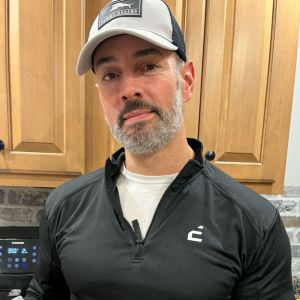
Eric Martindale: 06:10
Just remember somebody did that for the first time at one point. So.
Dr. Jeremy Weisz: 06:14
Exactly, exactly. But before I formally introduce you and you’re really, really interesting and impressive background, just a quick word about what we do. You know, the number one thing, and this is kind of your philosophy too, Eric, as I’ve heard you talk, which is in my life and business has always been relationships. And over the past couple decades, I’ve really been obsessed with finding better ways to build relationships, give value, stay top of mind with the people who matter most. And so first through Rise25 and The Podcast Consultant.
We help businesses launch and run podcasts. And so we’re an easy button. We do all the strategy, accountability and production to help someone build amazing relationships. And then we do everything else. Okay.
Then second, through Inspired Insider. I help come, you know, companies, you know, systematically get in front and stay in touch with their most valuable relationships. People give me a list of give me ten, 20, 50, 100 of their best clients, referral partners or prospects and that have the biggest impact on their business. And we help you nurture those relationships. We do that by sending us content with a sweet treat.
Okay, so think of a great package with content, but also some chocolate chip cookies, some brownies. It’s really a series of thoughtful touch points to send in this physical world. So give us the list. We handle everything else. I found no better combination than featuring the people I care about on the podcast, and I want to learn from, and also setting them sweet treats in the mail.
so email [email protected]. I am super excited to introduce Eric Martindale. He’s the Founder and CEO of Elite Commerce Group. His path is anything but typical. Okay, so a couple decades former marine officer, adventure athlete.
He turned that discipline into a career helping brands win in digital commerce. He’s had his own e-commerce brands. And he he’s one of the really when you look at I mean, I know you across different platforms, Eric, but really one of the amazing voices on LinkedIn on where retail is headed from AI automation, digital shelf, what’s reshaping how people discover and buy, you know, items, right? And so we’re going to get into it and, you know, talk about Elite Commerce Group and what you do. But I have to ask, we’ll get into the military background too, but band from Chuck E cheese.
Eric Martindale: 08:43
Oh yeah. It’s true.
Dr. Jeremy Weisz: 08:44
I had the founder of Chuck E cheese. He was also the founder of Atari. On the podcast, Nolan Bushnell. So I gotta hear why you’re banned. Banned from Chuck E cheese.
Eric Martindale: 08:56
I don’t think he would have. I don’t think he would have banned me if he was still there. But yeah, it’s a true story. There’s no there was no violence, no children were harmed.
Dr. Jeremy Weisz: 09:05
So just the mascot. The rat. Right? No.
Eric Martindale: 09:09
Yeah. Just. Just the rat. Very interesting. I’ll come back and answer your question, but some somebody in one of those rat costumes was arrested like a week later, and it was all over the news.
He was arrested in his in his costume. So it was I, I went crazy with content for like two weeks related to Chuck E cheese. But long story short, they came in. I was engaged at the time, and I was at a birthday party with my fiance. Now my wife and she had they built, they overbilled her.
It was egregious. And then they said, well, once the billing is done, we can’t change it. So we can give you a bunch of free Chuck E cheese shirts instead, which were like $30 a shirt, and they were going to give her like 12 of them. And she’s, she’s like, no, I’m a single mom. I can’t do this.
So I, you know, being the, the courageous man, I decided to argue for my woman and ended up kicked out. So it was it, it did start to escalate, but honestly, it wasn’t. I never raised my voice. It was the manager. And I think she just didn’t like that. She was losing the the argument. So she I got ejected from from that stadium.
Dr. Jeremy Weisz: 10:26
Never to go back. So just start off talk about Elite Commerce Group and what you do, Eric. And I’m going to pull up the site as you’re as you’re talking to.
Eric Martindale: 10:36
Yeah. You got it. So like you said, I’m the Founder of Elite Commerce Group. We are a full spectrum marketplace and retail media agencies. So if I took marketplace and retail media basically two very closely related activities, but slightly different marketplace is your e-commerce channels like Amazon, walmart.com, tick tock shop and then retail media, you, they’re essentially electronic tools that help brands, physical product brands grow physical retail channels.
So your marketplace is a channel, your retail media is a tool that supports a channel.
Dr. Jeremy Weisz: 11:21
Maybe we’ll talk about, you know, some examples because it’s really interesting what you do. And we, I don’t hear many people talking about retail media. And so we can get into a little bit about that. But I don’t know if the pet food example or the pasta sauce example would be better for this one.
Eric Martindale: 11:39
Yeah. I could give you. I could I could go with either we work with a a pet food brand or it’s a pet supplement brand. More specifically, if I told you the brand, you’d understand why it kind of lives in the middle in between there. But the founder, honestly, one of the most impressive people I’ve ever worked with in for came to me.
They were they were selling on Amazon. They were in some retail. And they had they were advertising on Instacart at the time. It was a little bit early in Instacart advertising. And she came in and said, I can’t find anybody that does this.
Do you do it? I said, yeah, we we do it. So we took her ads over, but at that point, we kind of canvassed her to see where, where are you in retail and what do you need help with? And, and she basically went through, you know, she was regionally and, and some chains and, you know, some national chains, but she was only regional. And we essentially launched her on multiple different retail media platforms and she ended up doubling her.
I’m not going to say that we doubled her retail footprint. That would be ridiculous. But riding alongside of her and working with her, she ended up doubling her retail footprint in about a little less than two years, maybe a year and a half. So that’s generally what we do. I we’re kind of the cavalry.
The brand is out there. They’re trying to grow. We come in and and snap in alongside of them and figure out how, how we can deploy some tools to help them grow.
Dr. Jeremy Weisz: 13:18
Talk about retail media, for example, because, I mean, I think the big players in soccer. What are some other ones that when you come in, you’re like, you know, you haven’t considered X, Y, Z either, which is, you know, people can get sales from it.
Eric Martindale: 13:32
You have, you have a couple of general platforms that’ll touch almost all of your retailers. That’s going to be Instacart. It’s going to be DoorDash, grocery. A lot of people here, DoorDash, and they think, I’m not a C store brand. It’s not for me.
But DoorDash. Grocery is the same as Instacart. It’s just a little bit smaller. And then you have your retailer specific platforms. So and this is where we if we work with a brand, we’d say, okay, what retailers are you in?
They’d give us a list and I’d say, here, here are the tools that are out there versus what you should use here. Here are the tools that are out there. An example would be Whole Foods ads or Kroger 8451 or round target has round L Albertsons has Albertsons Private Market. Almost every national retailer has a platform. And then you have the, the, the bonus here is you have some what I call fractional platforms like Criteo and citrus ads.
And what they do is they provide ad solutions to retailers that don’t have their own.
Dr. Jeremy Weisz: 14:40
You know, it’s really interesting because I remember I had Eric, the one of the founders of yes, carrots. And I don’t know if that brand is still around, but he was talking about that, you know, they were really trying to get across all the Walgreens stores. And so they really needed to drive the sales in one of the, you know, the test store or whatever it is. And they did some guerilla marketing to try and like just drive sales at that one store. And this is basically what you do on a digital realm.
I mean, can you talk about the, ultimately the result of what some of the stuff that you’re doing does for, for the brand, right? Because it’s not just about sales, but it’s also about like increasing distribution and everything like that.
Eric Martindale: 15:31
Well, it’s strategic 100%. So you have multiple regions within like Kroger. If we take that as a problem for a brand, a brand is in Kroger and they come in and they say, we need to grow our Kroger footprint so that we can or we need to grow our sales through this region so we can convince convince Kroger, Kroger to launch us in other regions or other banners. Kroger has multiple banners. And so I would say, well, Instacart is very hard to isolate.
There are a few cases where we can isolate Kroger. We’ll see if that’s possible. DoorDash, grocery. We definitely can isolate Kroger and drive, you know, put we know that whatever dollars we put in will support only Kroger in DoorDash grocery. And then we have Kroger 8451.
So one step one is you come up with the tool set. And then step two, we design a budget. We figure out and a lot of the brands that we work with, even challenger brands that are doing 10 or $20 million a year don’t know how to budget trade promotion. So, you know, having done this for 15 years and, and being able to work with some big brands, I know how they do it. And I can bring that to the smaller brands and say, okay, this, this is exactly how a big brand would do it.
Here’s how you can do it if you choose. And then when you have your trade promotion budget, here’s how we would divide it up to between demos and digital tools and in-store promotions.
Dr. Jeremy Weisz: 17:05
I could see, you know, we’ll talk from a agency perspective, obviously. Okay, you, you work with bigger brands, you know, they’re across all the stores, but there’s a huge need for these. I don’t know if you call them startups or challenger brands because they’re wanting to spend to get the distribution they need and want to grow. Who’s a good fit client for you. What stage do they have to be at to be like, yeah, let’s, let’s work with this company.
Like we can help them because some, I’m sure like you, you know, you’re getting a bigger brand. There’s some cut off point where you’re like, yeah, they have to be at this point for us to maybe, you know, take them on really because you have, you know, everyone has limited time and resources.
Eric Martindale: 17:54
Yeah. You’re right. And, and I, I would say that answer might be different between marketplace and retail media. So marketplace, I always say you need there, you know, there are brands that are doing $1 million in sales, but they have lots of investment or lots of capital. And then there are brands that are six, $7 million a year and they’re totally strapped.
So what I say usually is you need to be able to spend 50% more than my agency cost. And that usually that usually will put a brand in somewhere around 5 million plus, although we have brands doing a lot and that’s total total sales for the brand. But we have brands doing about 100 million or more retail media. I don’t generally go by sales. I go by retail footprint.
So if a brand comes in and they have they’re in 150 total doors, there’s not much I can do for them. And it just doesn’t make sense to pay somebody to, to manage something for you. But I’ll usually say, if you’re in a thousand doors or more, there’s something we can do for you.
Dr. Jeremy Weisz: 19:08
Because I imagine the people who are at 200 doors want to work with you badly. He’s like, hey, we. That allows us to get into a thousand thousand different stores or so. Typically when there’s someone’s regional, like they’re in Kroger or whatever it is, will they be at that point? That many stores or, or maybe they start smaller.
Eric Martindale: 19:29
It really depends. We I’ve seen brands where their very first retail launch, they’re nowhere else. And they launch nationally at sprouts. Really possible. And then I’ve seen brands that are in 2000 Indies before they ever launch even a region at at a national. So it really it it just depends on their go to market plan really.
Dr. Jeremy Weisz: 19:51
You know, and from people go both, right. They’ll go retail to e-commerce, e-commerce to retail. I think the pasta sauce example is interesting. Can you talk about that?
Eric Martindale: 20:04
Yeah, I, I would love to just shout this brand out, but I as an agency, I never, I really try, I always say that’s their prerogative. They, they get to say they get to shout me out if they want. And if not, I don’t, I don’t pass any personal information, but I’ve been working with one brand. The founder is a dear friend of mine. He started the brand very, very young and had, I mean, almost no sales when we started.
And he, he asked me, we’re, we, we’re somewhat of a presence on Amazon and in grocery at the time when grocery was very small. So he asked me, can you manage my brand? I said, no, no, no. And he asked me 4 or 5 times. Eventually I was like, you know what, let’s let’s do this.
So we took them at the time to the number one pasta sauce on Amazon, which he, being a brilliant human being, used that to segue into Whole Foods and a number of other retailers. So and I don’t say that to take credit because there’s so much in terms of capital management and design and branding that I can never do for a brand owner. And, and could honestly could never do, even do a good job if he wasn’t nailing those things.
Dr. Jeremy Weisz: 21:25
But some of the things that allowed them to get that that volume to go into retail. What maybe talk about some of the things that you were able to do.
Eric Martindale: 21:36
You know, we we did at the time. Now they’re, they’re really a content machine. They have their, you know, their own office that does all their content. But we did that for them on Amazon, manage their ads. And, but I, I think the, the real magic here is probably, unfortunately, the boring part.
And it’s, it’s helping a brand figure out how to increase their investment without going broke even to this day, you know, ten years later, I still find that to be the biggest unlock for a brand is saying, how do I, how do I increase my investment? Or how do I roll my, my proceeds back into investment in a way that doesn’t cash strapped the the brand for the company. And, and, you know, that guy did some amazing things to fund his Amazon ads. So like rotating credit cards. And, you know, now he, he deserves everything he has today because he’s a, he’s a force, but capital e-commerce.
Dr. Jeremy Weisz: 22:41
I mean, it’s, it’s no joke with inventory management. I mean, it’s capital because the more you sell, you have to invest in more production. So, you know, it’s, it’s not like you are pocketing that. Right. And that’s kind of how we met way back in the day.
We ran a event for e-commerce sellers. And that’s one thing I learned. We had some, you know, like you, some of the top e-commerce sellers out there, people are doing huge volume and just learning. It is a cash strapped business, right? Yeah.
Eric Martindale: 23:16
Yeah. I mean, I don’t think that ever goes away if and I’ve you’ve seen this probably more than I have, but I’ve I’ve seen brands get VC investment. And my first thought is it’s going to disappear. And any chance I, I, I get, I say that, you know, it’s hang on to it because it, this, this industry has a way of sucking it away from you. Sure.
Dr. Jeremy Weisz: 23:40
I want to talk about that evolution, Eric of the agency. Right now, obviously, you know, the retail media marketplace services and marketplace could be Amazon. Walmart. What are some of the other major marketplaces that you help people manage?
Eric Martindale: 23:57
Honestly, right now, I think the it if so, we focus on CPG, on food, grocery, grocery adjacent. And for those brands, I think once you get outside of Amazon, Walmart.com and TikTok shop, most other platforms are a distraction. Now, if you have maybe your household or something like that, there are there are really great platforms like Home Depot, Wayfair, even Oriental Trading Company. You know, nobody hears a lot about it. But there it depends. It really depends.
Dr. Jeremy Weisz: 24:37
I bought stuff off that for sure.
Eric Martindale: 24:39
Yeah, yeah yeah. I it’s a great, great place to buy the right item. But it, it depends like food and grocery is going to be more limited honestly. And then, you know, other you, I would say you build to the, to the category outside of that.
Dr. Jeremy Weisz: 24:55
Talk about TikTok shop for a second and what mistakes people are making, what’s working now? I mean, obviously there’s, it’s a changing environment there.
Eric Martindale: 25:06
Yeah, I, I would say that has been one of the most dynamic environments, marketplaces of the last 2 or 3 years. And when I say dynamic, I mean how it’s changed. I would I want to say the first mistake is FOMO. You’re going to hear things like, if you’re not on TikTok shop, you’re you’re blowing a huge opportunity. I, I think it depends.
It really depends on a number of things. Number one, if you’re a content machine, by all means, start producing content on TikTok and, and driving to TikTok shop. If you have good shipping economics, TikTok shop. But a lot of things, a lot of what people miss is you go back to that pasta sauce. If I expect somebody to pay $19.99 so that I can ship pasta sauce from New York to California.
I’m probably crazy. TikTok shop without Amazon FBA. TikTok shop is a is a tough, a tough game at that point. And then the third thing I would say about is there’s so much more saturated than it was even two years ago. Every every CPG brand almost is doing something on on TikTok or TikTok shop.
Dr. Jeremy Weisz: 26:21
I’ve heard you say, Eric, that you can’t just take your content from Instagram and put it on Tik Tok. Like it’s, there’s a, a subtlety there. Maybe expand on that a little bit. Like what’s the things that work better on TikTok? And you can’t just it doesn’t translate necessarily.
Eric Martindale: 26:40
I think there are quite a few, but I TikTok is very, very hyper curated. Everybody, everybody and everything is absolutely perfect. And that doesn’t work well on TikTok, on TikTok. People want people that are like them, that look like them, that talk like them, that have the same flaws as, as the rest of us. It is also a very, very short attention span, very short.
So you where on Instagram you somebody could stare at a picture for however long. It is still a scrolling platform on TikTok. You lose them in like seven seconds. So you you have to convert very, very quickly. So you’ll see people talk fast and move fast, and the offers come up very quickly.
Dr. Jeremy Weisz: 27:27
I want to know where when we look at Elite Commerce Group, right. And what you don’t, you know, obviously your services and company has evolved, but when you first started what you’re doing. And I just want to point out, I, I did an interview with Chad Collins. He the first interview I did, he started open world events in Brick Fest Live. And he would have like 20,000 people come to his shows.
He sold that company and he started basically is doing this for collectors. And so he talked about, he started, like you said, the business of live selling. So he kind of broke down what was working with live streams and things. And he’s using it on TikTok. So until he talked about it, Eric, I had no idea Like how popular.
There’s a lot so much commerce like done on on TikTok. I was shocked, actually. So where did it start?
Eric Martindale: 28:26
The whole agency.
Dr. Jeremy Weisz: 28:27
Yeah. The agency.
Eric Martindale: 28:28
Yeah. Well, I, I was in, I, I spent my, the first 20 years of my adult life in the Marine Corps. So during that time, I, I knew I wanted to be in business at some point like that. That was a dream. I wanted to be in the Marines.
And that was a dream. But as, as I started to get older and more and promoted and further and further away from the ground, so to speak, I just felt the call of entrepreneurism. I even loved the word and what I, I became fixated on importing just because of some things I had seen around the world. And I thought, oh my gosh, this it’s amazing. I’m, I’m, I’m buying a Persian rug for $100.
Like I would just see some of the arbitrage opportunities. And that’s, that’s what I wanted to do. A lot of those have dried up, as you know, over the last 20 years. But that’s what I wanted to do. And I started doing that.
So my last tour of duty was I actually got moved out of the operating forces into the University of Pennsylvania and, and Villanova. I taught military science there and started an import business knowing nothing about it. And I, you know, I started getting some volume. I figured out what I was doing, but I got myself in a tough spot where I needed to move some volume and I turned to Amazon. And that was the first year that Amazon launched ads.
I think that was 2010. And I just fell. I fell in love with the, the, the technology, the, the detail, the, the ability to do something that nobody was doing at the time. Very few people. And then, you know, there was an evolution.
I promise you, I’ll shut up after this next couple of sentences. But there was an evolution where I started to have brands come in and you must have had the same thing. You’re very much an early adopter with Amazon, and people will come in and say, how are you doing what you’re what you’re doing? And I resisted it for a while and then ultimately just said, okay, I’ll help you, then I’ll help you. And then just over the years really ended up leaning in.
Dr. Jeremy Weisz: 30:45
I can relate to that. Eric from an accidental agency owner, Jason Swank, talks about this a lot from the on the podcast front, right? Because when I was podcasting back in, whenever 2007, people started asking like, hey, can you help me? And I’m like, no, I have a chiropractic business. Like, I can’t really.
And then I started saying, yes, but, you know, I did have, you know, the, the supplement brand I had early on because my background’s in biochemistry. I was selling B2B like, so I was like selling two chiropractic and acupuncture massage offices, right? Because I was using it with my patients and it was working well. And then when Amazon came on the scene, someone was like, you should put it on Amazon or whatever. And my agency trajectory could have been like yours, possibly because I was at the in the heyday.
I remember what the Amazon ads, I was spending like $0.03 and I was making $300. And again, this was not profit, okay. It was gross sales, $300. And I’m like, is this right? Like $0.07, right.
And so I was telling people this, like who I knew had e-commerce brands. I wasn’t, I was just trying to be helpful. And they’re like, no, that’s not true. I’m like, I’m looking at my account like, this is what’s going on, right? And, and you start doing that and people because you had your own brands and people started to ask you, so do you remember some of the first companies you ended up taking on and is different when you’re now you have like a full team, you’re managing a lot of clients, but taking on those first like 5 or 10 clients is a little bit of growing pains, like different from running your own company to helping other people.
What was that transition like in that, that initial client batch?
Eric Martindale: 32:38
Well, one of the first of, of them I’m still with.
Dr. Jeremy Weisz: 32:42
That’s amazing.
Eric Martindale: 32:44
Yeah. Brand out in New Zealand. So and that’s been I gosh I don’t however many years I, I don’t know but. A decade plus 2 or 3 years I, I guess there were others though that did not go as well. And, and the reason is none of us knew how to model that back then.
We, I, I did things where I would buy and resell for brands. I had brands where I didn’t, I didn’t even know or grossly under Undercharged. And you know, what ended up happening with a couple of them is they saw that success and they’re like, let’s cut this guy out and go direct. They learned they could ship directly into Amazon or wherever and where I had been at the time. You know, you what you saw a $0.07 a click, $0.10 a click, and you’re getting, you’re getting an actual sale for it.
You think, well, I’m going to invest in this brand. I want to grow with them. And not realizing you don’t have any of that upside. Like you’re they can walk anytime they want. So over time, you kind of, you kind of evolve with your model and how do you make it worth it for both of you?
And how do you make it so they can go whenever they want or shut down when Amazon if they don’t want to do it any longer or whatever. So I mean, it was just in the beginning, it was a mess. And you just learn. They say necessity is the mother of invention and you just learn over time.
Dr. Jeremy Weisz: 34:15
What were the services so early on you were doing ad management. What were the things that you started with? Because obviously it’s grown from there.
Eric Martindale: 34:22
Well, I mean, back, back in the beginning, nobody even knew how to put up a listing. You know, I think people forget how quickly we have moved. And if you go back to 2011, 2012, nobody I mean, most people didn’t have a social media account at the time. Like actually most people did not have one. And you, you just to be able to write a listing, people were like, oh my God.
I remember telling people, hey, yeah, we’re selling what? What are you doing? Eric, what do you do today? We’re, we sell for brands on Amazon. And they’d be like, oh my God.
Now anybody, any, any 16 year old can figure out how to put a listing up on Amazon. So then what was magical back then is not quite as magical now.
Dr. Jeremy Weisz: 35:09
Yeah. Well, you’ve evolved the magic is in other things like retail media and the other pieces of that. Talk about the team and maybe the evolution and growth of of the team. Right. Because back then it was just you.
Eric Martindale: 35:24
Yeah. It’s 2027 of us right now. And I would say very highly specialized. And we have a small Amazon prep center. It’s actually behind me here.
So there’s, it’s not just all advertisers, but now it’s, it used to be you could hire somebody who seemed a little bit tech savvy and, you know, managing ads back then was very simple. It was an auto campaign or a manual campaign. Today, there’s there are dozens of campaign types and targeting types. So now is become very, very difficult to hire. If you want to find somebody who has experience and, and much more expensive than.
Dr. Jeremy Weisz: 36:10
What is the prep center, how does that work?
Eric Martindale: 36:13
So a brand will ship inventory here and we’ll do what needs to be done for Amazon and then turn it around and ship Amazon. So sometimes something will need to be put in a polybag or labeled or bundled together. And we’ll do that and then ship it back out.
Dr. Jeremy Weisz: 36:29
Yeah. So someone only sends individually. Maybe they want like a three pack and like you’ll do like some of those things. You got it getting bundling. Okay.
Nice leadership, right. As you’re growing your team, I’m curious, just some of the lessons you learn in leadership from the military that you bring into your business.
Eric Martindale: 36:52
You know, I would say I there were things I learned and things I had to unlearn. I, I think there are some basics of of leadership. And a lot of people will look at the Marine Corps and they’ll think, well, they’re all you do is scream at people. And that’s how you get people to do things. And it’s not that’s not true at all.
Collaborative leadership is more highly valued than autocratic leadership. It’s not all boot camp, and it’s not all combat either. So there are some things that that you learn and you have there are some skills that you have with you. And then there are some things where I personally, I was lost. I had no idea.
I know what I can do in terms of, of discipline and correction in the Marine Corps. I have no idea what I can do out in the civilian world leadership by example, I would say, because I didn’t really answer your question, I, I think that is one of the biggest things that’s beaten into you in, in the Marine Corps is that you cannot expect somebody to do something you’re not willing to do. And honestly, something that you don’t show them, at least on occasion.
Dr. Jeremy Weisz: 37:58
I’m wondering, Eric, why? Because it sounds like that was a dream of yours. You wanted to be in the military. There was an interview that someone interviewed you, Eric, that I was watching a couple days ago, where you were in the military with this person. And and he talked about when you’d walk into a room, people would like, really respect you and straighten up.
And you were it seemed like you were taken aback by that a little bit that, you know, people not that they highly respected you, but it was like, I don’t know, maybe you could speak to it a little bit. It wasn’t like you were an enforcer, but there was a little bit of a when you walked in the room, there was a lot of respect and we gotta listen to this person. You know what I’m talking about. That conversation.
Eric Martindale: 38:48
Yeah. And I think part of that was the person that, that said that that I have a lot of respect for is Marc Chabot, who has a podcast and he I had a lot of respect for him. I did work for him. I, I would say that my reputation was I in terms of training people. I was very, very hard on, on them.
And I don’t necessarily mean yelling, I mean physical training. And, and I always felt like every single day in, in the Marine Corps was my responsibility was to prepare the people that work for me for combat and, and you can very easily forget that because over a 20 year career, I, I did three combat deployments, one, one other UN peacekeeping deployment as well. But out of 20 years, most of your time is back here or it’s in another base somewhere in Japan or something like that. Germany. And I was just, I was hard on people because I honestly wanted to keep them alive.
And I think I was my very first deployment. I lost a marine. I was very was a young platoon commander. And from that time I was like, I will never I will never lose another marine. I never did after that.
So what he was referring to.
Dr. Jeremy Weisz: 40:09
Yeah. And and I want to talk about the Marines, but I’m sorry to hear about your your platoon. Did you have any have any near death experiences yourself?
Eric Martindale: 40:22
I a lot, you know, there’s, there are ones that are material or I could say this, this thing happened and there were others where you just kind of know death is close by. There were just lots of little things that happened. And my, my job was to deal with explosives. So the, I think the word that most people know is roadside bombs. And there were just times where either one would go off really close and, you know, you didn’t get hit by anything.
Or another time I had. I was with my my, my gunnery sergeant. My platoon sergeant was my second in command of that platoon. And we were taking we had found this massive stockpile of enemy weapons and ornaments. Ornaments.
It was massive. We had to bring dump trucks in to get rid of it. And we were throwing. Honestly, you get complacent when you deal with that stuff all the time. And we picked up a piece of ordnance, took the two of us to pick it up, and when we went to put it on the truck, it it went off.
But only the primer went off and the rest of it failed to go. So you could see the. There was a bang. The smoke came out of the end of it and the rest of it didn’t didn’t go off, and I can remember my platoon sergeant and I kind of like jerked a little bit. Set it up on the back of the truck, and both of us just turned and walked off.
We never spoke about it again. We just just turned and walked it off and then came back and started loading ordnance. So there are a lot of things like that. I had, you know, times where you can hear around when it passes you, it snaps, there’s a, there’s a snap because it breaks the sound barrier. And there was different times where, you know, one time there was a pop, pop, pop and three, three rounds hit the wall right in front of my face, you know, things like that.
That’s just such as is combat. It’s that’s just the way it goes.
Dr. Jeremy Weisz: 42:20
Just hearing about it is, is scary for me. I can’t imagine living that. And I, I think I read that you were awarded a Bronze Star medal. Is that is that correct?
Eric Martindale: 42:33
That’s correct.
Dr. Jeremy Weisz: 42:33
Yeah. And so how does that talk about what that what that means for people who don’t know.
Eric Martindale: 42:39
Yeah. Bronze star is a I know.
Dr. Jeremy Weisz: 42:43
You’re you’re a humble dude. Eric. I know, but like, I’m, I’m, it’s pretty remarkable.
Eric Martindale: 42:50
It’s a it’s a personal medal. It’s an individual medal. So you have campaign medals. If you if you go and deploy, everybody will, you know, end up with a ribbon that says that they went to Iraq or Afghanistan or Afghanistan or whatever, and then their individual awards like a Bronze Star. And that one was for when I was a company commander, it was for a very specific campaign where we went out into an area that where there were no, no troops.
And we, we worked with a local, it was a police department and, and basically train, train them for a while in an area that was very remote. We had no a lot of things happened at that time. There were engagements and things like that and ended up walking away with it.
Dr. Jeremy Weisz: 43:36
So what drew you to the military? It sounded like from early on that that was one of your dreams and what you wanted to do.
Eric Martindale: 43:43
Just everybody in my family was was in the military. My. My grandfather was actually in the army. He he was I will I will call him a war hero. I have his awards now.
I have his medals. He was an incredible human being. He went went to World War Two in the beginning and never came home until it was over. When, as a private worked his way up to staff Sergeant came home as a lieutenant. My grandfather was like my my dad as a kid.
And then I had all my uncles were either in the Marines or the Army, but I. I did run into a couple of individuals that were Marines. I was just so impressed with when I was younger and, and just it resonated with me and that’s what I wanted to do.
Dr. Jeremy Weisz: 44:26
Do you remember any stories from your grandfather that he told you from his time?
Eric Martindale: 44:33
I mean, he had he had scars. So he had scars, all shrapnel scars all over his body. He had him on his his hands. He had him on his face. But he was mostly blind in one eye, and the story that he tells is that he was hit by shrapnel, and it went in the corner of his eye, and he ended up having to have his eye removed, like, pulled out.
Wow. Take out the shrapnel and put back in. And it refused to be medevacked. So he stayed in theater and fought with a, you know, a patch over his eye. And he was, you know, mostly blind in that I could only see basically light in color.
Well, I mean, he was just he was an incredible human being. And even into his he was a fierce guy. Everybody was afraid of him. But he was so kind to us. I just thought the world of him.
Dr. Jeremy Weisz: 45:32
Where was he deployed? Did he talk about the places he traveled?
Eric Martindale: 45:36
So he I know I can’t tell you sequence, but I know he was in Germany and I know he was in North Africa.
Dr. Jeremy Weisz: 45:42
Thank God for his service and yours. So my my grandfather was in the Navy and my other grandfather was a Holocaust survivor. And so if it weren’t for the troops that came over to Poland and Germany, I may not be here. So, you know, I appreciate that.
Eric Martindale: 46:01
What stories? I bet that man had some some.
Dr. Jeremy Weisz: 46:05
Yeah. Like actually on inspired the the Holocaust Foundation. Steven Spielberg, I think it was the Illinois Holocaust Foundation or something. Started interviewing the people. And so that that interview is actually on my about page on Inspired Insider that that saw a professional interviewer did.
And yes, he had some, some crazy stories. I don’t my daughter’s, I haven’t had him watch it yet because it’s a bit jarring, obviously, but at some point I’ll be like, hey, you should, you should really watch this. It’s just brutal. But, you know, I’m sure you’re you’re again, your grandfather. Like I, I always picture like in my own life.
Eric if I get an eyelash in my eye, it’s like bothersome, right? Imagine a piece of shrapnel going in your in your eye. Right. And so it just taking it to like how, you know what I don’t want to like, just say I always visualize like, what would that feel like? And I can never imagine that, but it’s bad just to have like a, just a particle as opposed to like a sharp metal object.
And they have to take your eyeball out. Right? And these are the crazy things. And then he went back out there, you know, it’s like, like the old school, just rub some dirt on it and go back out there. But I mean, your eye removed and put back in, then you’re fighting with a patch. It’s it’s amazing. You know.
Eric Martindale: 47:31
So, you know, can I tell can I tell you one quick anecdote? I, I met a retired colonel when I was a second lieutenant. So it would have been about 2003, that man was in World War Two, Korea and Vietnam. And I was I was brand new, brand new second lieutenant, never deployed. And I asked him, I’m embarrassed of the question now, but it was very.
His answer was very telling. I said, sir, what was your what was harder. World War Two, Korea or Vietnam? And he said, are you kidding me? World war.
He said Korea and Vietnam were easy. And if if that doesn’t give you some perspective, Vietnam was not easy. Not not for somebody like me, but if if in comparison, it’s that much more brutal. What a what a tough people.
Dr. Jeremy Weisz: 48:22
Did he say? What, what what was it that was so brutal?
Eric Martindale: 48:28
You know, I remember that conversation. I actually had an opportunity lunch with him, but it was I think a lot of it was a lack of gear. It was the, you know, going into engagements with no weapon or no ammunition. It was your your you lost the souls in your boots and. Oh, well, there are no more.
I, I think it was just a little bit of everything. The conditions, the expectation, the lack of equipment, the enemy, you know, the Germans were, were pretty formidable.
Dr. Jeremy Weisz: 48:59
So wild, wild, amazing stories. First of all, I have one last question before I ask it. I do want to just point people to elitecommercegroup.com to learn more specifically, if you are a grocery or grocery adjacent, or you know, someone who actually wants to get more sales across the different platforms that are out there, you can check out elitecommercegroup.com, message their team, and Eric for more info. Eric, I know you’re always a lifelong learner in what you do. I mean, you taught at Villanova and I see all the books behind you.
So I’m curious, some of your favorite resources, you know, books that really have impacted you in business throughout the your journey. It could be the ones behind you or not. You know, I know for me, I’ve had some authors that I respect and I, Chris Voss of Never Split the Difference on the show, which is one of my favorite books. And he was ex FBI hostage negotiator Verne Harnish’s Scaling Up book is a is another good one that ones out there. What are some of your favorites?
Eric Martindale: 50:21
I think The Everything Store. I think every everyone should read The Everything Store. That is a biography of essentially Amazon and Jeff Bezos. That is a really good one. Zero To One is a really good book.
Have you read that?
Dr. Jeremy Weisz: 50:38
Yep. Yeah, I love is that Peter Thiel? Peter Thiel? Did he write that? Yeah.
Eric Martindale: 50:44
Yeah. I’ve read that book three times now. And it, it’s the, the concept. It’s, it is really written for technology companies. But I think there’s some element of that that is applicable to every single business.
And then I, I just reread this for the first time. There’s a book, it was put out by Disney and the name is going to escape me. Be Our Guest. I just reread it and it’s a phenomenal book. I read it, I just went to Disney World outside of conferences and dinners for the first time.
I read it on the way out and then I it resonated so much. I read it again on the way back and shortly after getting back. That is a really good book in in terms of how to design a business that is different to to your customers and clients.
Dr. Jeremy Weisz: 51:39
Is this the one with Theodore Kinni? Is that the right book or am I looking at, you know?
Eric Martindale: 51:44
Yeah. Got it. That was put out by the Disney Institute, which is how they train their what they call their cast, their employees. So it’s like an official book by from from Disney. It’s very, very good.
Dr. Jeremy Weisz: 51:59
Eric, thank you so much. Really. Thanks for sharing your journey, your stories, and thanks for everything you do. Check out elitecommercegroup.com or episodes of the podcast. And we will see everyone next time. Eric, thanks so much.
Eric Martindale: 52:13
Thank you.